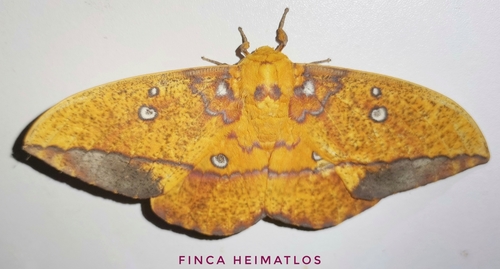
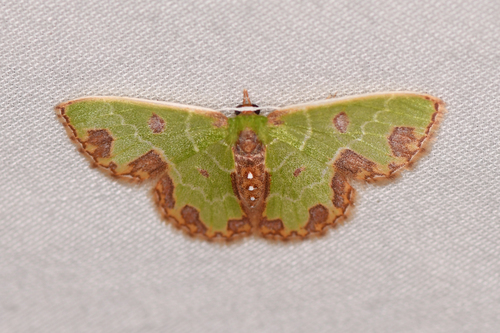
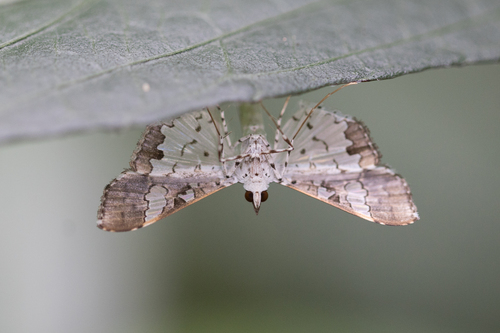
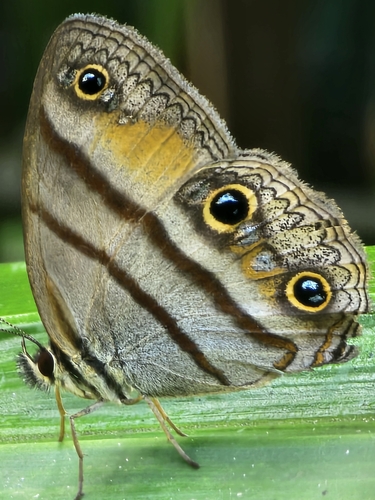
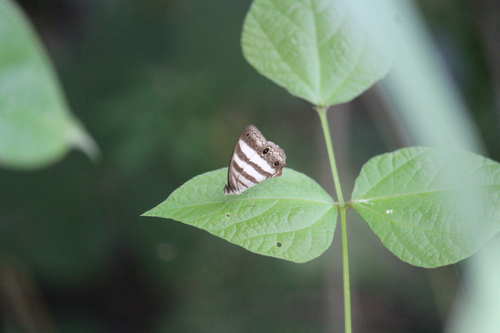
Mournful Sphinx

Mournful Sphinx

Enyo lugubris

Daily sighting probability ~30% · Possible
at Brownsberg Nature Park

In 3 days ~70% in a week ~90%

6 Verified sightings at Brownsberg Nature Park From 2019 to 2026
46 In all 5 parks
November Best month
🌅 Crepuscular When it's spotted

About the Mournful Sphinx

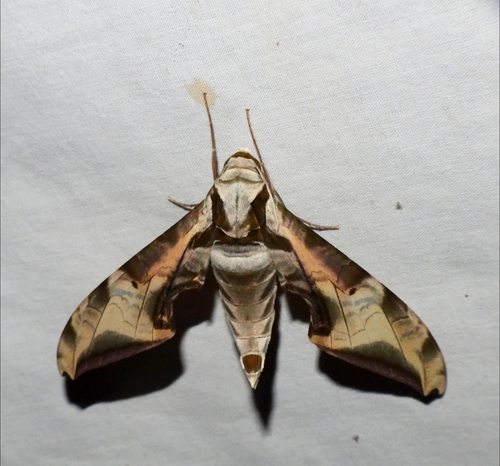
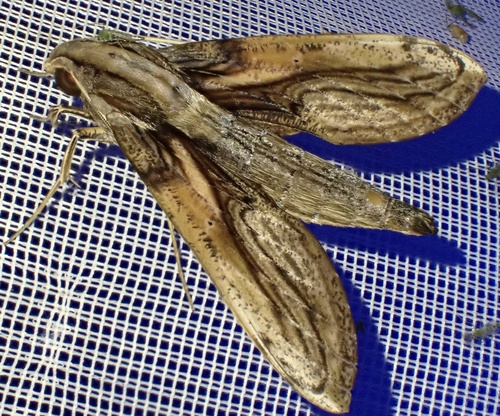
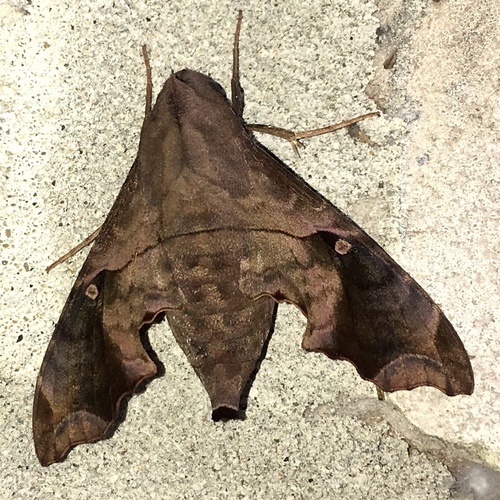
Enyo lugubris, the mournful sphinx, is a moth of the family Sphingidae. It is found from Argentina and Paraguay to Uruguay, Venezuela, Guyana, Suriname, French Guiana, Colombia, Ecuador, Peru, Brazil and the West Indies through Belize, Guatemala, Honduras, El Salvador, Nicaragua, Costa Rica and Panama to Mexico and the United States, where it has been recorded from Arizona east to Florida and north to South Carolina. Strays have been recorded from Arkansas, north to Illinois, Michigan and New York.

The wingspan is 50–60 mm. Adults are on wing year-round in the tropics (including southern Florida and Louisiana). Further north, they are on wing from August to November. The larvae probably feed on Vitus tiliifolia and other Vitaceae species, such as Vitis, Cissus and Ampelopsis. In Florida larvae have been reported on Cissus sicyoides and Ampelopsis arborea. Wikipedia →
Global Distribution

Parks Where Found

# Park Country Daily sighting probability
1 Brownsberg Nature Park 🇸🇷 Suriname
~30%
2 Yasuní National Park 🇪🇨 Ecuador
~10%
3 Tapantí-Macizo de la Muerte National Park 🇨🇷 Costa Rica
~10%
4 Everglades National Park 🇺🇸 United States
~10%
5 Galápagos Islands 🇪🇨 Ecuador
<5%

Cities Where Found

# City Country Daily sighting probability
1 Rio de Janeiro 🇧🇷 Brazil
~10%
2 Houston 🇺🇸 United States
~10%
3 Orlando 🇺🇸 United States
~10%
4 Miami 🇺🇸 United States
~10%
5 São Paulo 🇧🇷 Brazil
<5%
6 Austin 🇺🇸 United States
<5%

Before you go

What are the chances of seeing a Mournful Sphinx in Brownsberg Nature Park?

Possible

About 30% of wildlife watchers report a Mournful Sphinx sighting in Brownsberg Nature Park on a given day, based on 6 verified sightings from GBIF citizen-science data from 2019 to 2026. It is the 33rd most-seen of the 74 insects we can rate there. Over three days the chance rises to about 70%, and over a week to about 90%, if each day is a fresh chance.

When is the best time to see a Mournful Sphinx in Brownsberg Nature Park?

November

In that month about 60% of wildlife watchers report a Mournful Sphinx in Brownsberg Nature Park on a given day, against under 5% in January to April, the lowest months. September has too few records to rate.

What time of day is best to see a Mournful Sphinx?

Between 6 and 9 pm

Across all the parks we cover, that three-hour window holds the most Mournful Sphinx sightings with a recorded time, and about 6 in 10 of them come between 6 pm and 6 am: it is most active around dawn and dusk.

Is Brownsberg Nature Park the best place to see a Mournful Sphinx?

Yes

Of the 5 parks where we can rate Mournful Sphinx sightings, Brownsberg Nature Park has the highest daily chance: about 30%. Next come Yasuní National Park (Ecuador, about 10%) and Tapantí-Macizo de la Muerte National Park (Costa Rica, about 10%).

Which relatives of the Mournful Sphinx live in Brownsberg Nature Park?

Same family: Sphingidae

The closest relatives of the Mournful Sphinx that you can see in Brownsberg Nature Park (family Sphingidae, Sphinx Moths) are Florestan Sphinx (about 40%), Protambulyx goeldii (about 30%) and Xylophanes media (about 30%), with each one's daily chance of a sighting.

Where does the Mournful Sphinx sighting chance come from?

GBIF citizen-science records

It is estimated from how often the Mournful Sphinx is recorded against all the insects logged in Brownsberg Nature Park (6 verified sightings from 2019 to 2026), calibrated against known sighting rates. Figures are rounded to the nearest 10% because citizen-science data supports honest approximations, not decimals, and months with records from fewer than five people show "—". How it works.

← Back to Brownsberg Nature Park