Eurasian Drone Fly

Eurasian Drone Fly

Eristalis arbustorum

Daily sighting probability ~10% · With luck
at Cairngorms National Park

In 3 days ~20% in a week ~30%

7 Verified sightings at Cairngorms National Park From 2019 to 2026
105 In all 11 parks
August Best month
☀️ Diurnal When it's spotted

About the Eurasian Drone Fly

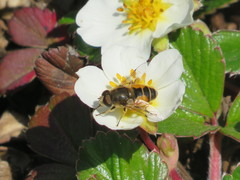
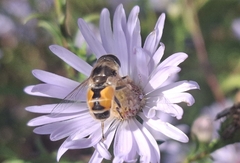
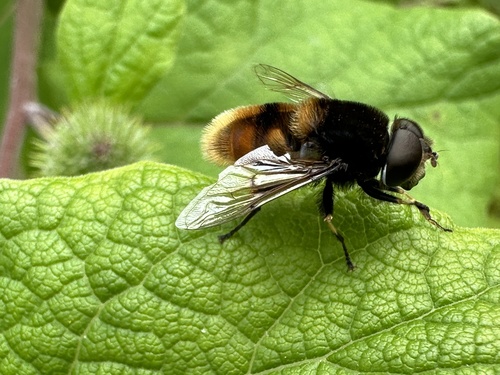
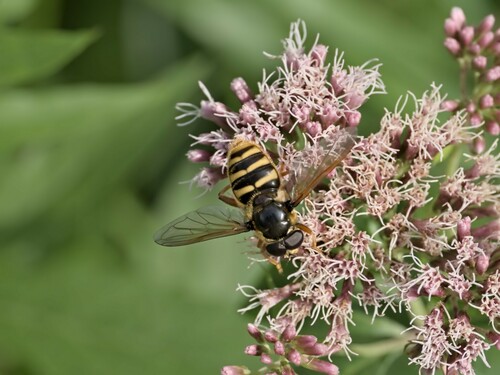
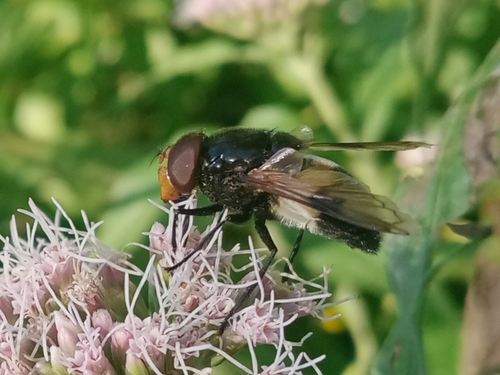
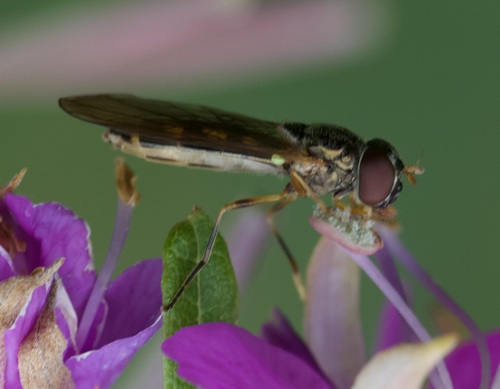
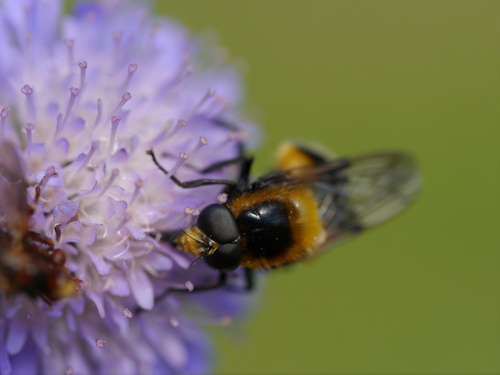
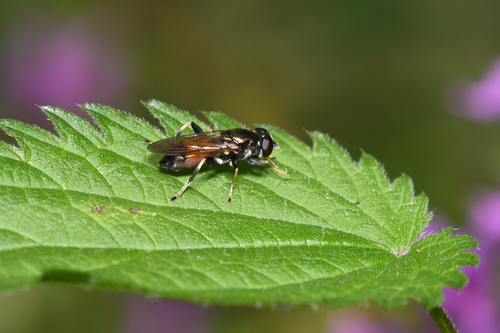
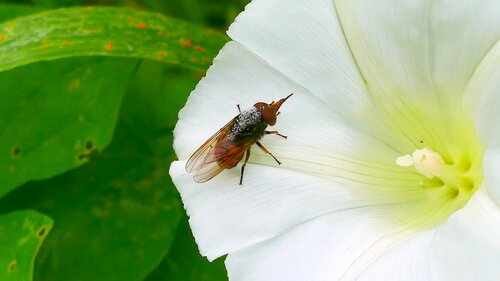
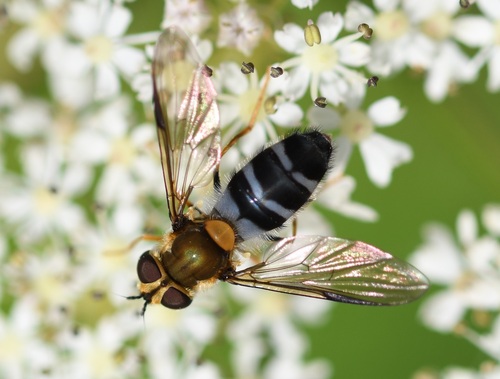
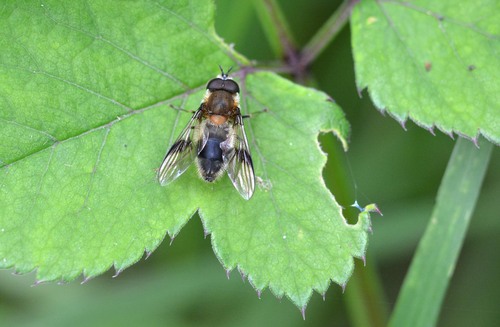
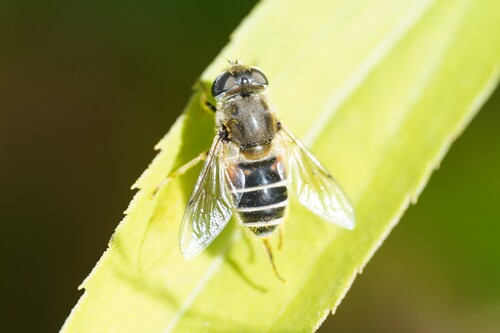
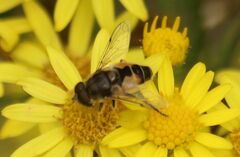
Eristalis arbustorum, the European drone fly, is an abundant Northern Hemisphere species of syrphid fly, originally officially described by Linnaeus in 1758 as Musca arbustorum. The name "drone fly" is related to its similar appearance to the drone of the honeybee. Hoverflies get their names from the ability to remain nearly motionless while in flight. The adults are also known as flower flies as they are commonly found on and around flowers from which they get both energy-giving nectar and protein rich pollen. The larvae are aquatic filter-feeders of the long-tailed type.

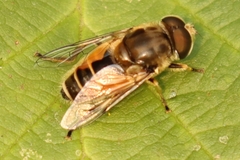
External images For terms see Morphology of Diptera The wings are 7–10 mm long. At least, the basal half of the arista is plumose. The face is entirely pale dusted; there is a shining black median stripe in rubbed specimens. The hind femora are pale at their tips only. E. arbustorum resembles E. abusiva, but they are distinguished by the plumose arista, as well as a less projecting mouth-edge and shorter hairs overall. The top quarter of tibia 2 is black.

The male genitalia are figured by Hippa et al. (2001). The larva is figured by Hartley (1961). Eristalis arbustorum is found in... Wikipedia →

Global Distribution

Parks Where Found

# Park Country Daily sighting probability
1 Sierra Nevada National Park 🇪🇸 Spain
~10%
2 Fertő-Hanság National Park 🇭🇺 Hungary
~10%
3 Shenandoah National Park 🇺🇸 United States
~10%
4 Cairngorms National Park 🇬🇧 United Kingdom
~10%
5 Acadia National Park 🇺🇸 United States
~10%
6 Wadden Sea National Park 🇩🇪 Germany
<5%
7 Bavarian Forest National Park 🇩🇪 Germany
<5%
8 Great Smoky Mountains National Park 🇺🇸 United States
<5%
9 Cévennes National Park 🇫🇷 France
<5%
10 Great Bear Rainforest 🇨🇦 Canada
<5%
11 Pyrénées National Park 🇫🇷 France
<5%

Cities Where Found

# City Country Daily sighting probability
1 New York City 🇺🇸 United States
~20%
2 London 🇬🇧 United Kingdom
~20%
3 Algiers 🇩🇿 Algeria
~10%
4 Kharkiv 🇺🇦 Ukraine
~10%
5 Denver 🇺🇸 United States
~10%
6 Tashkent 🇺🇿 Uzbekistan
~10%
7 Portland 🇺🇸 United States
~10%
8 Tehran 🇮🇷 Iran
~10%
9 Detroit 🇺🇸 United States
~10%
10 Salt Lake City 🇺🇸 United States
~10%

Before you go

What are the chances of seeing a Eurasian Drone Fly in Cairngorms National Park?

With luck

About 10% of wildlife watchers report a Eurasian Drone Fly sighting in Cairngorms National Park on a given day, based on 7 verified sightings from GBIF citizen-science data from 2019 to 2026. It is the 241st most-seen of the 300 insects we can rate there. Over three days the chance rises to about 20%, and over a week to about 30%, if each day is a fresh chance.

When is the best time to see a Eurasian Drone Fly in Cairngorms National Park?

June to August

In those months about 10% of wildlife watchers report a Eurasian Drone Fly in Cairngorms National Park on a given day, against under 5% in September to May, the lowest months.

What time of day is best to see a Eurasian Drone Fly?

Between 11 am and 2 pm

Across all the parks we cover, that three-hour window holds the most Eurasian Drone Fly sightings with a recorded time, and nearly all of them come between 6 am and 6 pm: it is a daytime animal.

Is Cairngorms National Park the best place to see a Eurasian Drone Fly?

Among the best

Of the 11 parks where we can rate Eurasian Drone Fly sightings, Cairngorms National Park ranks 4th at about 10%, level with the leaders once rounded. The best odds are in Sierra Nevada National Park (Spain, about 10%), Fertő-Hanság National Park (Hungary, about 10%) and Shenandoah National Park (United States, about 10%).

Which relatives of the Eurasian Drone Fly live in Cairngorms National Park?

Same genus: Eristalis

The closest relatives of the Eurasian Drone Fly that you can see in Cairngorms National Park (genus Eristalis, Drone Flies) are Tapered Drone Fly (about 20%), Common Drone Fly (about 10%) and Furry Dronefly (about 10%), with each one's daily chance of a sighting.

Where does the Eurasian Drone Fly sighting chance come from?

GBIF citizen-science records

It is estimated from how often the Eurasian Drone Fly is recorded against all the insects logged in Cairngorms National Park (7 verified sightings from 2019 to 2026), calibrated against known sighting rates. Figures are rounded to the nearest 10% because citizen-science data supports honest approximations, not decimals, and months with records from fewer than five people show "—". How it works.
← Back to Cairngorms National Park