Tree Bumble Bee
Daily sighting probability ~10% · With luck
at Cairngorms National Park

In 3 days ~30% in a week ~60%

20 Verified sightings at Cairngorms National Park From 2019 to 2026
101 In all 6 parks
July Best month
☀️ Diurnal When it's spotted

About the Tree Bumble Bee

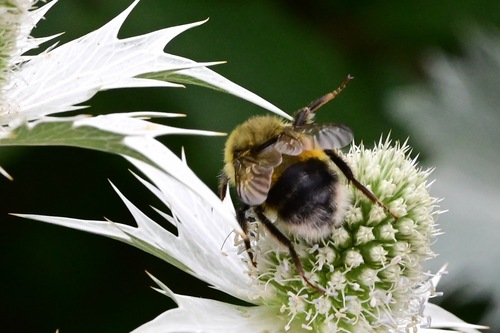
The tree bumblebee or new garden bumblebee (Bombus hypnorum) is a species of bumblebee common [on] the European continent and parts of Asia. Since the start of the twenty-first century, it has spread to Great Britain and Ireland. These bumblebees prefer habitats that others do not, allowing them to pollinate flowers in areas that many other species do not get to.

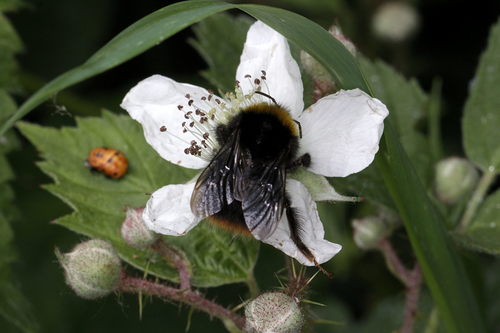
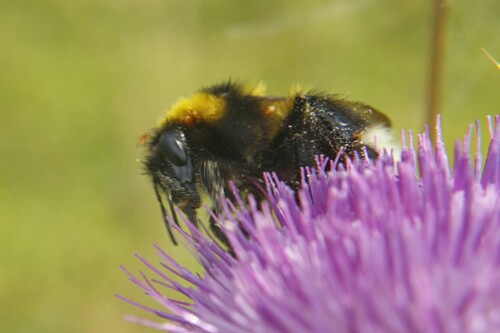
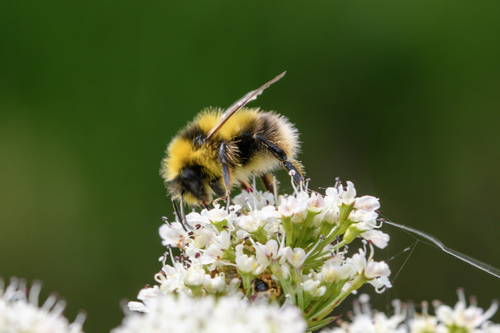
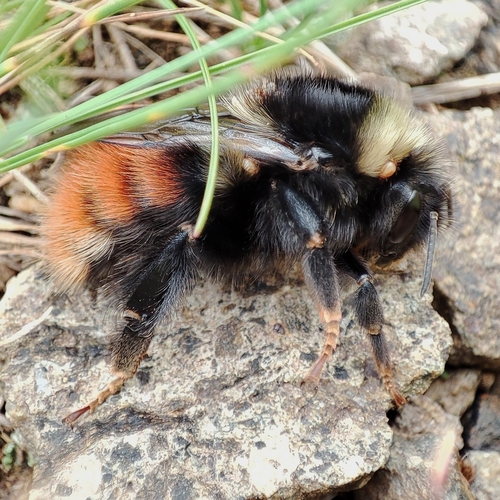
Bombus hypnorum has a short proboscis and a rounded head. The thorax is usually of a uniformly ginger color (but examples with a darker, or even black thorax occur), the abdomen is covered in black hair, and the tail is always white. In workers, the first tergite (abdominal segment) is black-haired, but a proportion of males may have ginger hairs intermixed with the black hair, both on the face and on the first abdominal tergum. On the European continent, individuals with extended yellow coloration exist. Workers are often (but not always) small, while drones are much bigger in comparison. The queens vary in size.

Bombus hypnorum is part of the genus Bombus. Its closest genetic relatives are B. jonellus and B. sichelli. B. hypnorum is a common bumblebee species... Wikipedia →
Global Distribution

Parks Where Found

# Park Country Daily sighting probability
1 Cairngorms National Park 🇬🇧 United Kingdom
~10%
2 Aigüestortes National Park 🇪🇸 Spain
~10%
3 Snowdonia National Park 🇬🇧 United Kingdom
~10%
4 Bavarian Forest National Park 🇩🇪 Germany
~10%
5 Wadden Sea National Park 🇩🇪 Germany
~10%
6 Pyrénées National Park 🇫🇷 France
~10%

Cities Where Found

# City Country Daily sighting probability
1 Liverpool 🇬🇧 United Kingdom
~30%
2 Manchester 🇬🇧 United Kingdom
~20%
3 Birmingham 🇬🇧 United Kingdom
~20%
4 Helsinki 🇫🇮 Finland
~20%
5 Leeds 🇬🇧 United Kingdom
~20%
6 Warsaw 🇵🇱 Poland
~20%
7 Copenhagen 🇩🇰 Denmark
~20%
8 Novosibirsk 🇷🇺 Russia
~20%
9 Hamburg 🇩🇪 Germany
~10%
10 Minsk 🇧🇾 Belarus
~10%

Before you go

What are the chances of seeing a Tree Bumble Bee in Cairngorms National Park?

With luck

About 10% of wildlife watchers report a Tree Bumble Bee sighting in Cairngorms National Park on a given day, based on 20 verified sightings from GBIF citizen-science data from 2019 to 2026. It is the 85th most-seen of the 300 insects we can rate there. Over three days the chance rises to about 30%, and over a week to about 60%, if each day is a fresh chance.

When is the best time to see a Tree Bumble Bee in Cairngorms National Park?

July

In that month about 20% of wildlife watchers report a Tree Bumble Bee in Cairngorms National Park on a given day, against under 5% in September to March, the lowest months.

What time of day is best to see a Tree Bumble Bee?

Between noon and 3 pm

Across all the parks we cover, that three-hour window holds the most Tree Bumble Bee sightings with a recorded time, and about 9 in 10 of them come between 6 am and 6 pm: it is a daytime animal.

Is Cairngorms National Park the best place to see a Tree Bumble Bee?

Yes

Of the 6 parks where we can rate Tree Bumble Bee sightings, Cairngorms National Park has the highest daily chance: about 10%. Next come Aigüestortes National Park (Spain, about 10%) and Snowdonia National Park (United Kingdom, about 10%).

Which relatives of the Tree Bumble Bee live in Cairngorms National Park?

Same genus: Bombus

The closest relatives of the Tree Bumble Bee that you can see in Cairngorms National Park (genus Bombus, Bumble Bees) are Mountain Bumble Bee (about 30%), Common Carder Bumble Bee (about 20%) and Early Bumble Bee (about 20%), with each one's daily chance of a sighting.

Where does the Tree Bumble Bee sighting chance come from?

GBIF citizen-science records

It is estimated from how often the Tree Bumble Bee is recorded against all the insects logged in Cairngorms National Park (20 verified sightings from 2019 to 2026), calibrated against known sighting rates. Figures are rounded to the nearest 10% because citizen-science data supports honest approximations, not decimals, and months with records from fewer than five people show "—". How it works.

← Back to Cairngorms National Park