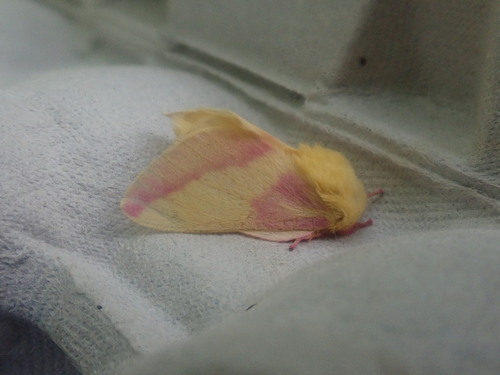
Banded Tussock Moth

Banded Tussock Moth

Halysidota tessellaris

Daily sighting probability ~20% · Possible
at Cape Breton Highlands National Park

In 3 days ~40% in a week ~70%

13 Verified sightings at Cape Breton Highlands National Park From 2019 to 2026
492 In all 6 parks
September Best month
☀️ Diurnal When it's spotted

About the Banded Tussock Moth

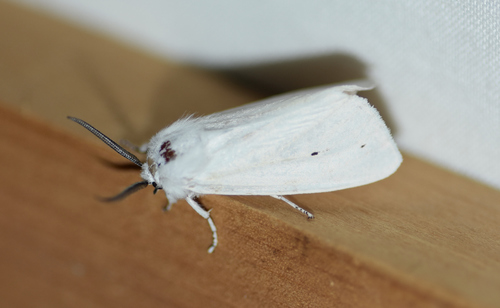
Halysidota tessellaris, also called the pale tiger moth, banded tussock moth, and tessellated halisidota, is in the family Erebidae and the tribe Arctiini, the tiger moths. The species was first described by James Edward Smith in 1797. Like many related species, adult moths have chemical defenses acquired from its host plants, in this case, alkaloids. Larval behaviors suggest that they are chemically protected; they have not been analyzed for alkaloid content.

This moth is found in North America from southern Canada south through Texas and central Florida. One generation per year occurs in the north, and two or more occur in the south. Eggs are laid in masses on the undersides of leaves.

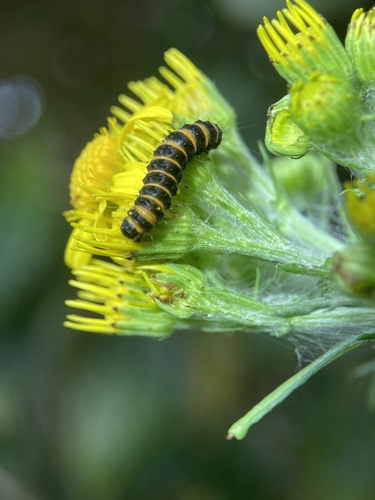
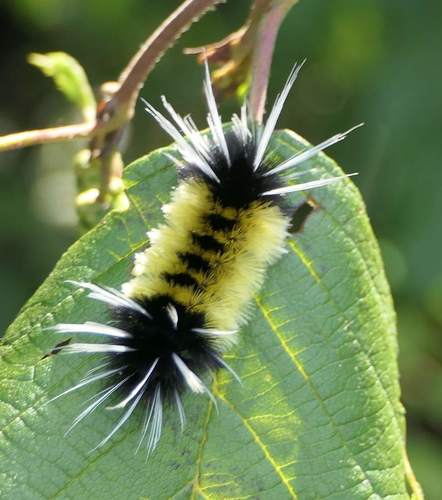
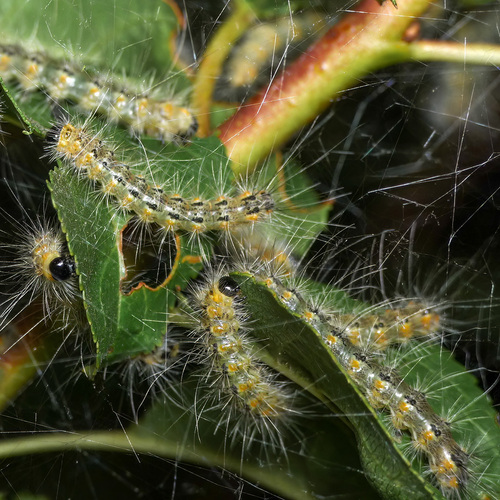
Caterpillars are covered with long setae, in tufts. They vary from yellowish and orange through dark gray. Extra long hair-pencils of white, black, and/or orange occur at both the front and rear of a caterpillar. Larval head capsules are bright orange. In the north, mature caterpillars are found from July to frost. Caterpillars frequently rest on the upper surface of leaves, and though not gregarious, they are very conspicuous. They grow to a length... Wikipedia →
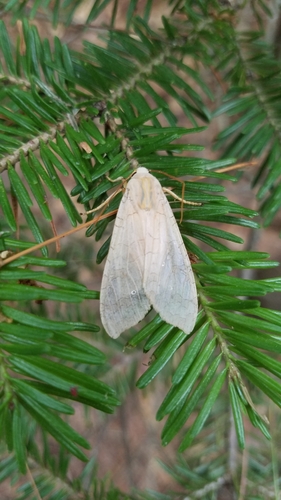
Global Distribution

Parks Where Found

# Park Country Daily sighting probability
1 Congaree National Park 🇺🇸 United States
~30%
2 Great Smoky Mountains National Park 🇺🇸 United States
~30%
3 Shenandoah National Park 🇺🇸 United States
~20%
4 Acadia National Park 🇺🇸 United States
~20%
5 Cape Breton Highlands National Park 🇨🇦 Canada
~20%
6 Point Pelee National Park 🇨🇦 Canada
~10%

Cities Where Found

# City Country Daily sighting probability
1 Montreal 🇨🇦 Canada
~10%
2 Washington 🇺🇸 United States
~10%
3 Baltimore 🇺🇸 United States
~10%
4 Minneapolis [Saint Paul] 🇺🇸 United States
~10%
5 Toronto 🇨🇦 Canada
~10%
6 Boston 🇺🇸 United States
~10%
7 Philadelphia 🇺🇸 United States
<5%
8 Chicago 🇺🇸 United States
<5%
9 New York City 🇺🇸 United States
<5%
10 Houston 🇺🇸 United States
<5%

Before you go

What are the chances of seeing a Banded Tussock Moth in Cape Breton Highlands National Park?

Possible

About 20% of wildlife watchers report a Banded Tussock Moth sighting in Cape Breton Highlands National Park on a given day, based on 13 verified sightings from GBIF citizen-science data from 2019 to 2026. It is the 20th most-seen of the 68 insects we can rate there. Over three days the chance rises to about 40%, and over a week to about 70%, if each day is a fresh chance.

When is the best time to see a Banded Tussock Moth in Cape Breton Highlands National Park?

September and October

In those months about 30% of wildlife watchers report a Banded Tussock Moth in Cape Breton Highlands National Park on a given day, against under 5% in February–June and November–December, the lowest months.

What time of day is best to see a Banded Tussock Moth?

Between 11 am and 2 pm

Across all the parks we cover, that three-hour window holds the most Banded Tussock Moth sightings with a recorded time, and about 9 in 10 of them come between 6 am and 6 pm: it is a daytime animal.

Is Cape Breton Highlands National Park the best place to see a Banded Tussock Moth?

5th of 6

Of the 6 parks where we can rate Banded Tussock Moth sightings, Cape Breton Highlands National Park ranks 5th at about 20%. The best odds are in Congaree National Park (United States, about 30%), Great Smoky Mountains National Park (United States, about 30%) and Shenandoah National Park (United States, about 20%).

Which relatives of the Banded Tussock Moth live in Cape Breton Highlands National Park?

Same family: Erebidae

The closest relatives of the Banded Tussock Moth that you can see in Cape Breton Highlands National Park (family Erebidae, Underwing, Tiger, Tussock, and Allied Moths) are Virginia Ctenucha Moth (about 30%), Cinnabar Moth (about 20%) and Isabella Tiger Moth (about 20%), with each one's daily chance of a sighting.

Where does the Banded Tussock Moth sighting chance come from?

GBIF citizen-science records

It is estimated from how often the Banded Tussock Moth is recorded against all the insects logged in Cape Breton Highlands National Park (13 verified sightings from 2019 to 2026), calibrated against known sighting rates. Figures are rounded to the nearest 10% because citizen-science data supports honest approximations, not decimals, and months with records from fewer than five people show "—". How it works.

← Back to Cape Breton Highlands National Park