Rosy Tabby

Rosy Tabby

Endotricha flammealis

Daily sighting probability ~10% · With luck
at Cévennes National Park

In 3 days ~30% in a week ~60%

79 Verified sightings at Cévennes National Park From 2019 to 2026
294 In all 9 parks
July Best month
🌙 Nocturnal When it's spotted

About the Rosy Tabby

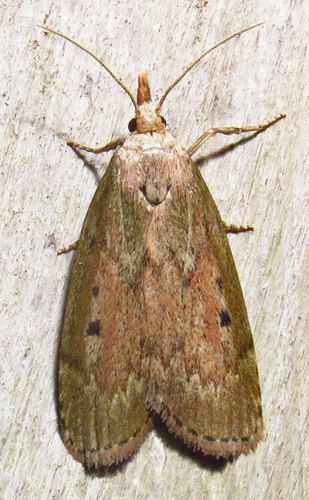
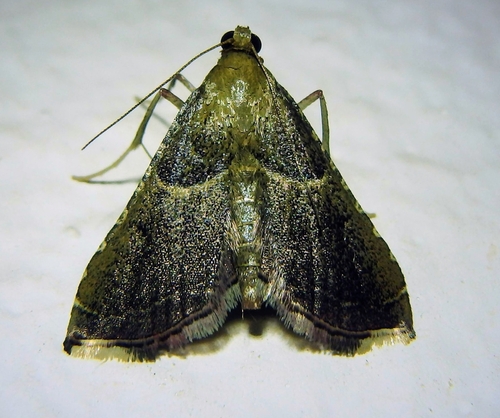
Endotricha flammealis, the rose-flounced tabby, is a species of snout moth, family Pyralidae. The proposed subspecies carnealis and several supposed varieties seem to be indistinguishable from typical individuals found in Austria.

This species can be found in western, central and southern Europe and nearby regions. Its range extends to Turkey, Crimea, Cyprus, Iran (via the Caucasus), to Lebanon and Syria, and to Algeria and Tunisia. These moths inhabit grassland, heathland, woodland, fens, scrub and gardens.

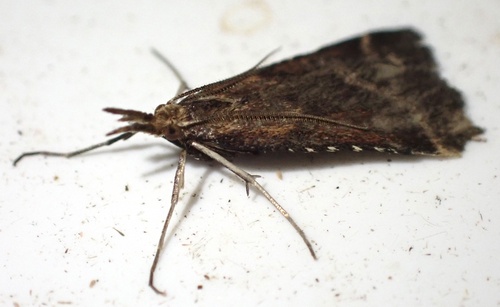
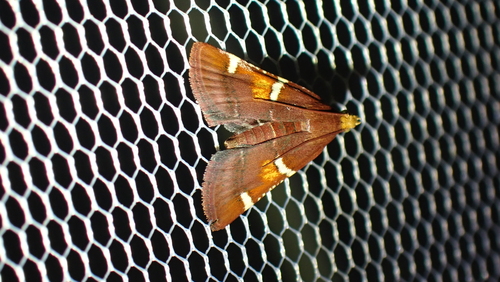
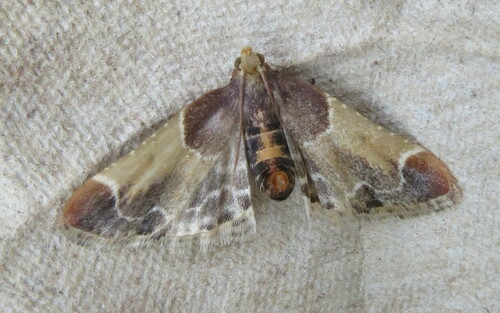
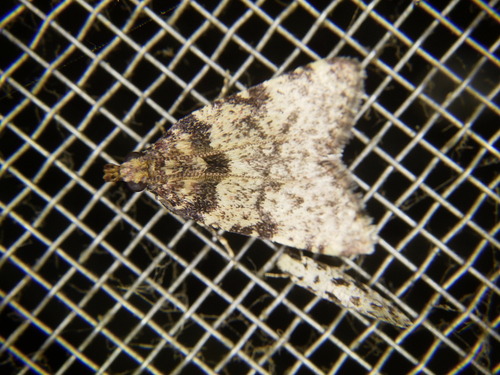
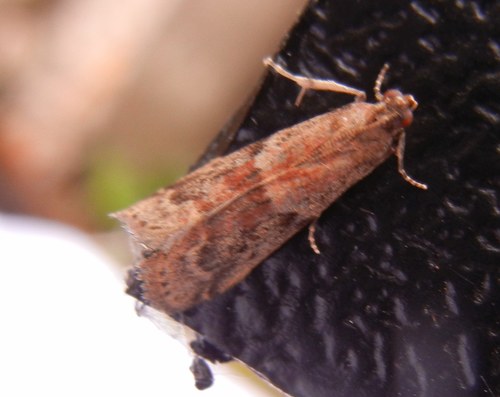
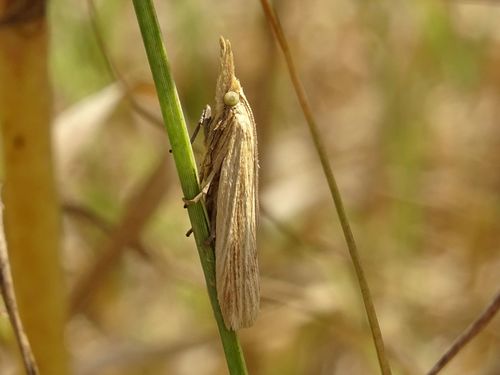
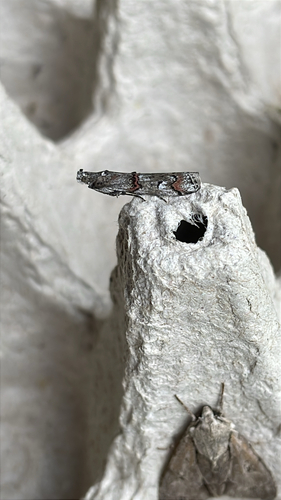
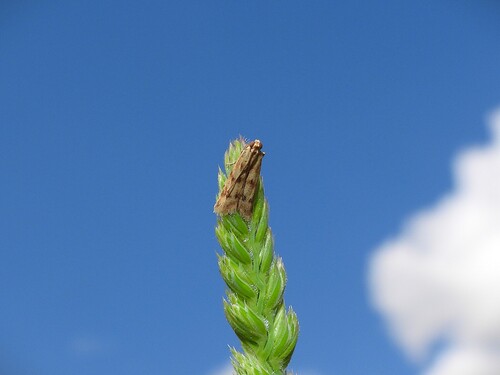
Endotricha flammealis has a wingspan of 18–23 mm. The forewings are oblong, rather pointed at the tip. The antennae of males are pubescent. The basic colour of the wings is extremely variable. It is usually ochre in colour, brown or pale brown, but it may also be pinkish brown. On the edge of the forewings there are characteristic darker brown markings and bright or pinkish lines. The front edge of the forewings shows also a series of small white spots. Sometimes the moths may be light coloured without almost no markings. These moths have usually a distinctive resting posture, with the head and the front part of... Wikipedia →
Global Distribution

Parks Where Found

# Park Country Daily sighting probability
1 Sierra Nevada National Park 🇪🇸 Spain
~20%
2 Aigüestortes National Park 🇪🇸 Spain
~10%
3 Triglav National Park 🇸🇮 Slovenia
~10%
4 Cévennes National Park 🇫🇷 France
~10%
5 Mercantour National Park 🇫🇷 France
~10%
6 Wadden Sea National Park 🇩🇪 Germany
~10%
7 Bavarian Forest National Park 🇩🇪 Germany
~10%
8 Pyrénées National Park 🇫🇷 France
~10%
9 Sierra de Guadarrama National Park 🇪🇸 Spain
~10%

Cities Where Found

# City Country Daily sighting probability
1 London 🇬🇧 United Kingdom
~10%
2 Budapest 🇭🇺 Hungary
~10%
3 Jerusalem 🇮🇱 Israel
~10%
4 Porto 🇵🇹 Portugal
~10%
5 Sofia 🇧🇬 Bulgaria
~10%
6 Lyon 🇫🇷 France
~10%
7 Paris 🇫🇷 France
~10%
8 Vienna 🇦🇹 Austria
~10%
9 Prague 🇨🇿 Czechia
~10%
10 Kyiv 🇺🇦 Ukraine
~10%

Before you go

What are the chances of seeing a Rosy Tabby in Cévennes National Park?

With luck

About 10% of wildlife watchers report a Rosy Tabby sighting in Cévennes National Park on a given day, based on 79 verified sightings from GBIF citizen-science data from 2019 to 2026. It is the 193rd most-seen of the 996 insects we can rate there. Over three days the chance rises to about 30%, and over a week to about 60%, if each day is a fresh chance.

When is the best time to see a Rosy Tabby in Cévennes National Park?

July and August

In those months about 20% of wildlife watchers report a Rosy Tabby in Cévennes National Park on a given day, against under 5% in September to May, the lowest months. Those are among Cévennes National Park's driest months, with about 45 mm of rain a month against 260 mm in October.

What time of day is best to see a Rosy Tabby?

Between 10 pm and 1 am

Across all the parks we cover, that three-hour window holds the most Rosy Tabby sightings with a recorded time, and about 8 in 10 of them come between 6 pm and 6 am: it is mostly seen at night.

Which relatives of the Rosy Tabby live in Cévennes National Park?

Same family: Pyralidae

The closest relatives of the Rosy Tabby that you can see in Cévennes National Park (family Pyralidae, Pyralid Snout Moths) are Twin-Barred Knot-Horn (about 10%), Long-Legged Tabby (about 10%) and Rosy-Striped Knot-Horn (about 10%), with each one's daily chance of a sighting.

Where does the Rosy Tabby sighting chance come from?

GBIF citizen-science records

It is estimated from how often the Rosy Tabby is recorded against all the insects logged in Cévennes National Park (79 verified sightings from 2019 to 2026), calibrated against known sighting rates. Figures are rounded to the nearest 10% because citizen-science data supports honest approximations, not decimals, and months with records from fewer than five people show "—". How it works.

← Back to Cévennes National Park