










All 2 in 3 days here: ~60%
Chagres National Park
🇵🇦 Panama
Canal Watershed, Panama 1149 spp. recorded
Chagres National Park protects 129,000 hectares of tropical rainforest in the watershed that feeds the Panama Canal. The park is home to Emberá indigenous communities accessible by dugout canoe, and its old-growth forests shelter harpy eagles, jaguars, and abundant primate troops.
9.378° N 79.426° W
🦜 Nature

612 Species sighted
67,585 Verified sightings From 2019 to 2026
Nov Best month
⭐ Iconic Species
📊 Most Spotted
⭐ Iconic Species
📊 Most Spotted
⭐ Iconic Species
📊 Most Spotted
📊 Most Spotted
📊 Most Spotted
📊 Most Spotted
🌙 Most active after dark
+ 595 more species with insufficient data
Challenges you can complete here


All 5 in 3 days here: ~10%
Recent sightings in Chagres National Park
LIVEiNaturalistSighting Calendar
How many species you'd see in a day
53Jan
55Feb
57Mar
55Apr
62May
55Jun
48Jul
49Aug
60Sep
59Oct
62Nov
56Dec
Sighting Zones
Warmer areas are where all species together are recorded most often.
-
Las Nubes
Daily sight. prob.vs avg -
Campo Chagres
Daily sight. prob.vs avg -
Los Altos de Cerro Azul
Daily sight. prob.vs avg Brown-throated Sloth~80%+30%
 Red-tailed Squirrel~70%+30%
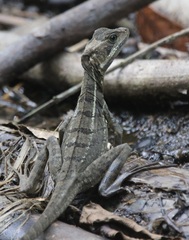 Common Basilisk~60%+20%
 Geoffroy’s Tamarin~60%+10%
 Bay-headed Tanager~50%-20%
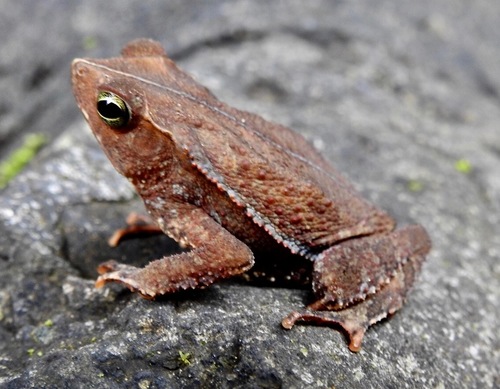
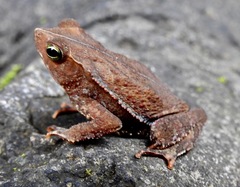 Forest Toad~50%+20%
 Golden-hooded Tanager~50%-20%
 Central American Agouti~50%+10%
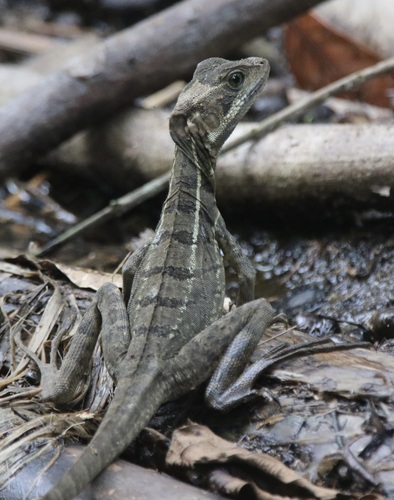
 Helmeted Iguana~50%+30%
 Giant Marine Toad~50%+10%
 Red Tanager~40%-20%
 Crimson-backed Tanager~40%-30%
-
Parará Puru
Daily sight. prob.vs avg Turkey Vulture~50%-10%
 Blue-gray Tanager~50%-20%
 Clay-colored Thrush~40%-30%
- Crimson-backed Tanager~30%-40%
 Palm Tanager~30%-30%
 Rufous-tailed Hummingbird~20%-50%
 Southern House Wren~20%-40%
 Keel-billed Toucan~10%-40%
- Golden-hooded Tanager~10%-60%
 Snowy-bellied Hummingbird~10%-50%
 Yellow-faced Grassquit<5%-60%
- Bay-headed Tanager<5%-70%


🏕️ Experience
Essentials
Entrance
Paid
Tourism
Medium
Typical stay
1–2
daysTrails
Moderate
World Heritage
No
Climate
Temp °C Rain mm
JanFebMarAprMayJunJulAugSepOctNovDec
0.0 Excellent
Wallace's Line Score
How good is this park for seeing wildlife? 🦜
Biodiversity
Very goodHow rich is the wildlife?
4.3
Species by taxon
🦅 Birds 686
🐒 Mammals 199
🦎 Reptiles 155
🐸 Amphibians 109
1149 Total Species
828 Global average across 316 parks
36 Threatened 60 Endemic
🔭
Sighting
Very goodHow likely to see animals?
3.8
🎯
Top-12 Avg Probability
66% 📊
Coverage (331 species at ≥5% of 1149 in the inventory)
29% 🔀
Taxon variety in top 12 (12 bird)
0% 🔭
Species per 10 outings (distinct species a visitor would meet over 10 outings — effort held equal across parks)
183 🌟
Iconic-group species (≥15%) (every species from the 19 iconic groups — monkeys, cats, toucans, macaws, sloths, crocodilians… — not just the 4 highlighted above)
13 ⭐
High-prob species (>40%)
36 🏕️
Experience
Very goodHow easy and pleasant is the visit?
3.6
Climate Pleasant High
Entrance Paid Low
Tourism High Low
Trails Moderate Medium
World Heritage No —
What visitors say
Red-legged Honeycreeper (male) Red-legged Honeycreeper (female) Thick-billed Euphonia** (male) If this was the welcome party, I couldn’t wait to see what lay ahead.
Traveling slowly up the left side of the river we looked for birds, especially toucans, crocodiles and anything else we could see.
Along our way back through the San Lorenzo National Park & Rainforest, we saw howler and capuchin monkeys, as well as a white nosed coati.
Our first notable birds of the day were a relatively cooperative pair of Bay-headed Tanagers, which we found at our brief stop in at the main office.
Before you go
What animals can you see in Chagres National Park?
1,149 species
Chagres National Park has 1,149 recorded vertebrate species. The ones wildlife watchers report most often on a given day are Crimson-backed Tanager (about 70%), Rufous-tailed Hummingbird (about 70%), Blue-gray Tanager (about 70%), Golden-hooded Tanager (about 70%) and Bay-headed Tanager (about 70%). Among mammals, the most-seen is Brown-throated Sloth (about 50%); among reptiles, Common Basilisk (about 40%); among amphibians, Giant Marine Toad (about 40%).
When is the best time to visit Chagres National Park for wildlife?
June and September–January
In those months the park's 12 most-seen species average about 70% on a given day, against about 50% in July.
Can you see a Geoffroy’s Tamarin in Chagres National Park?
Yes
About 50% of wildlife watchers report a Geoffroy’s Tamarin sighting in Chagres National Park on a given day, based on 29 verified sightings from GBIF citizen-science data from 2019 to 2026. The best time is October (about 70%).
Can you see a Mantled Howler Monkey in Chagres National Park?
Yes
About 30% of wildlife watchers report a Mantled Howler Monkey sighting in Chagres National Park on a given day, based on 8 verified sightings from GBIF citizen-science data from 2019 to 2026. The best time is April and September (about 40%).
Can you see a Brown-throated Sloth in Chagres National Park?
Yes
About 50% of wildlife watchers report a Brown-throated Sloth sighting in Chagres National Park on a given day, based on 35 verified sightings from GBIF citizen-science data from 2019 to 2026. The best time is April and November (about 70%).
Can you see a Keel-billed Toucan in Chagres National Park?
Yes
About 50% of wildlife watchers report a Keel-billed Toucan sighting in Chagres National Park on a given day, based on 810 verified sightings from GBIF citizen-science data from 2019 to 2026. The best time is May (about 70%).
Where in Chagres National Park is wildlife easiest to see?
Around Las Nubes
The richest sighting zone is around Las Nubes, followed by Campo Chagres and Los Altos de Cerro Azul, ranked by how many of the park's headline animals visitors can expect to see in each. See the zones on the map.
Is Chagres National Park good for wildlife watching?
4.0 out of 5
On the Wallace's Line Score, Chagres National Park rates 4.0/5: 117th of 316 parks worldwide and 16th in Central America. 41 of its species are reported by about 40% or more of wildlife watchers on a given day.


