
Black-speckled Palm Pit Viper

Black-speckled Palm Pit Viper

Bothriechis nigroviridis

Silhouette: Steven Traver · PhyloPic

Daily sighting probability ~10% · With luck
at Chirripó National Park

In 3 days ~30% in a week ~60%

7 Verified sightings at Chirripó National Park From 2019 to 2026
74 In all 6 parks
October Best month
☀️ Diurnal When it's spotted

About the Black-speckled Palm Pit Viper

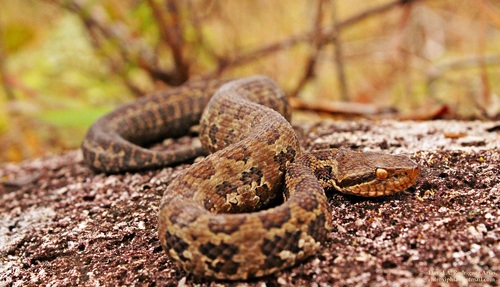
Bothriechis nigroviridis is a pit viper species found in the mountains of Costa Rica and Panama. No subspecies are currently recognized. The specific name is derived from the Latin niger (black) and viridis (green) in reference to its distinctive color pattern.

Black-speckled palm-pit viper, speckled palm viper, black-spotted palm viper, yellow-spotted palm viper. Adults may exceed 80 centimetres (31 in), although most are less than 60 centimetres (24 in) in length. They are relatively slender and have a prehensile tail. Two exceptionally large females were reported by Hammack and Antonio (1991) that measured 89.2 centimetres (35.1 in) and 93.7 centimetres (36.9 in).

The color pattern usually consists of an emerald green (rarely yellowish green) ground color with strong black mottling. There may also be pale green dorsal blotches that have black edges. The belly is yellowish green and lightly mottled with black. The head is heavily mottled with black on top, often with black parietal stripes. There is also a clearly defined postocular stripe running back towards the angle of the jaw. The iris is heavily stippled and appears almost black. The tongue... Wikipedia →

Global Distribution

Parks Where Found

# Park Country Daily sighting probability
1 Volcán Barú National Park 🇵🇦 Panama
~20%
2 Chirripó National Park 🇨🇷 Costa Rica
~10%
3 Braulio Carrillo National Park 🇨🇷 Costa Rica
~10%
4 La Amistad International Park (Panama) 🇵🇦 Panama
~10%
5 Monteverde Cloud Forest Reserve 🇨🇷 Costa Rica
~10%
6 Tapantí-Macizo de la Muerte National Park 🇨🇷 Costa Rica
~10%

Zoos & Centres Where Found

# Zoo / Centre Country
1 San Diego Zoo 🇺🇸 United States In captivity

Before you go

What are the chances of seeing a Black-speckled Palm Pit Viper in Chirripó National Park?

With luck

About 10% of wildlife watchers report a Black-speckled Palm Pit Viper sighting in Chirripó National Park on a given day, based on 7 verified sightings from GBIF citizen-science data from 2019 to 2026. It is the 11th most-seen of the 17 reptiles we can rate there. Over three days the chance rises to about 30%, and over a week to about 60%, if each day is a fresh chance.

When is the best time to see a Black-speckled Palm Pit Viper in Chirripó National Park?

October

In that month about 50% of wildlife watchers report a Black-speckled Palm Pit Viper in Chirripó National Park on a given day, against under 5% in January–May, July and November, the lowest months. That is one of Chirripó National Park's wettest months, with about 690 mm of rain against 75 mm in February.

What time of day is best to see a Black-speckled Palm Pit Viper?

Between 9 am and noon

Across all the parks we cover, that three-hour window holds the most Black-speckled Palm Pit Viper sightings with a recorded time, and about 7 in 10 of them come between 6 am and 6 pm: it is a daytime animal.

Is Chirripó National Park the best place to see a Black-speckled Palm Pit Viper?

2nd of 6

Of the 6 parks where we can rate Black-speckled Palm Pit Viper sightings, Chirripó National Park ranks 2nd at about 10%. The best odds are in Volcán Barú National Park (Panama, about 20%).

Which relatives of the Black-speckled Palm Pit Viper live in Chirripó National Park?

Same genus: Bothriechis

The closest relatives of the Black-speckled Palm Pit Viper that you can see in Chirripó National Park (genus Bothriechis, Palm Vipers) are Side-striped palm pit viper (about 20%) and Blotched Palm-pitviper (about 10%), with each one's daily chance of a sighting.

Where does the Black-speckled Palm Pit Viper sighting chance come from?

GBIF citizen-science records

It is estimated from how often the Black-speckled Palm Pit Viper is recorded against all the reptiles logged in Chirripó National Park (7 verified sightings from 2019 to 2026), calibrated against known sighting rates. Figures are rounded to the nearest 10% because citizen-science data supports honest approximations, not decimals, and months with records from fewer than five people show "—". How it works.

← Back to Chirripó National Park