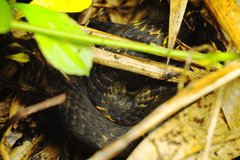
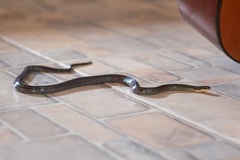
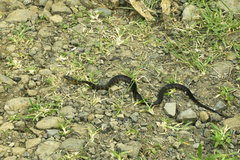

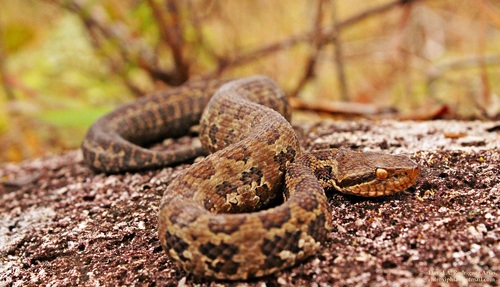
Fire-bellied Snake

Fire-bellied Snake

Erythrolamprus epinephalus

Silhouette: Alex Slavenko · PhyloPic

Daily sighting probability ~10% · With luck
at Chirripó National Park

In 3 days ~40% in a week ~70%

8 Verified sightings at Chirripó National Park From 2019 to 2026
34 In all 3 parks
September Best month
☀️ Diurnal When it's spotted

About the Fire-bellied Snake

Erythrolamprus epinephalus, the Fire-bellied snake, is a species of snake in the Colubridae family. It is found in Costa Rica, Panama, Colombia, Venezuela, Ecuador, and Peru. The snake, which was described by Edward Drinker Cope in 1862, is notable for its apparent immunity to the toxic skin of the golden poison dart frog, which it preys upon.

Erythrolamprus epinephalus belongs to the genus Erythrolamprus, which contains over 50 species. The genus Erythrolamprus belongs to the subfamily Dipsadinae, which is sometimes referred to as the family Dipsadidae. Recent phylogenetic analysis of morphological and molecular DNA evidence has shown that Erythrolamprus epinephalus is now likely paraphyletic, with respect to Erythrolamprus pseudoreginae of Tobago, named in 2019.

The relationships of Erythrolamprus species located in northern South America can be shown in the cladogram below: Wikipedia →

Global Distribution

Parks Where Found

# Park Country Daily sighting probability
1 Chirripó National Park 🇨🇷 Costa Rica
~10%
2 Soberanía National Park 🇵🇦 Panama
~10%
3 La Amistad International Park (Panama) 🇵🇦 Panama
~10%

Cities Where Found

# City Country Daily sighting probability
1 Medellín 🇨🇴 Colombia
~10%
2 Bogota 🇨🇴 Colombia
<5%

Zoos & Centres Where Found

# Zoo / Centre Country
1 La Paz Waterfall Gardens 🇨🇷 Costa Rica In captivity

Before you go

What are the chances of seeing a Fire-bellied Snake in Chirripó National Park?

With luck

About 10% of wildlife watchers report a Fire-bellied Snake sighting in Chirripó National Park on a given day, based on 8 verified sightings from GBIF citizen-science data from 2019 to 2026. It is the 8th most-seen of the 17 reptiles we can rate there. Over three days the chance rises to about 40%, and over a week to about 70%, if each day is a fresh chance.

When is the best time to see a Fire-bellied Snake in Chirripó National Park?

September

In that month about 40% of wildlife watchers report a Fire-bellied Snake in Chirripó National Park on a given day, against under 5% in February–June, August and October–November, the lowest months. That is one of Chirripó National Park's wettest months, with about 550 mm of rain against 75 mm in February.

What time of day is best to see a Fire-bellied Snake?

Between 10 am and 1 pm

Across all the parks we cover, that three-hour window holds the most Fire-bellied Snake sightings with a recorded time, and about 9 in 10 of them come between 6 am and 6 pm: it is a daytime animal.

Is Chirripó National Park the best place to see a Fire-bellied Snake?

Yes

Of the 3 parks where we can rate Fire-bellied Snake sightings, Chirripó National Park has the highest daily chance: about 10%. Next come Soberanía National Park (Panama, about 10%) and La Amistad International Park (Panama) (Panama, about 10%).

Which relatives of the Fire-bellied Snake live in Chirripó National Park?

Same family: Colubridae

The closest relatives of the Fire-bellied Snake that you can see in Chirripó National Park (family Colubridae, Colubrid Snakes) are South American Milksnake (about 20%), Black-tailed Worm Snake (about 10%) and Blunthead Tree Snake (about 10%), with each one's daily chance of a sighting.

Where does the Fire-bellied Snake sighting chance come from?

GBIF citizen-science records

It is estimated from how often the Fire-bellied Snake is recorded against all the reptiles logged in Chirripó National Park (8 verified sightings from 2019 to 2026), calibrated against known sighting rates. Figures are rounded to the nearest 10% because citizen-science data supports honest approximations, not decimals, and months with records from fewer than five people show "—". How it works.

← Back to Chirripó National Park