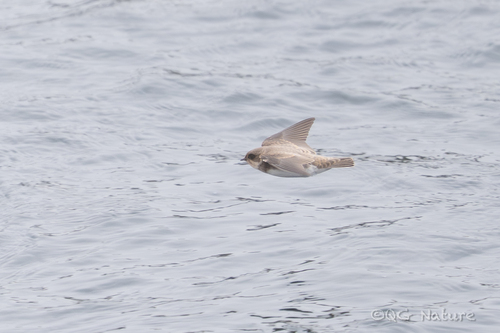
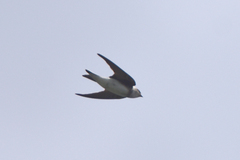
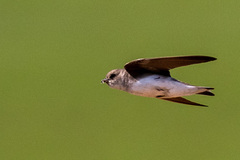
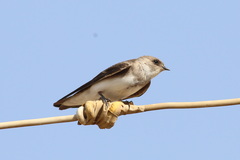

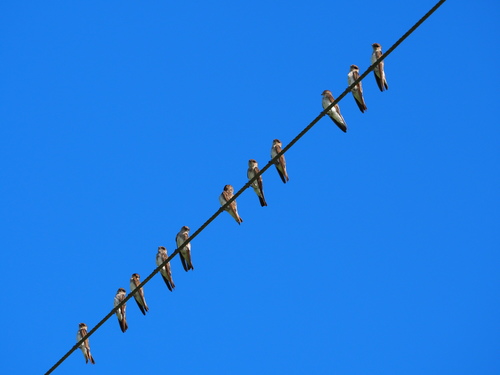

Pale Sand Martin

Pale Sand Martin

Riparia diluta

Silhouette: Andy Wilson · PhyloPic

LCLeast ConcernNTVUENCR
Daily sighting probability <5% · Rare
at Chitwan National Park

In 3 days ~10% in a week ~20%

41 Verified sightings at Chitwan National Park From 2019 to 2026
95 In all 3 parks
October Best month
☀️ Diurnal When it's spotted

About the Pale Sand Martin

The pale martin or pale sand martin (Riparia diluta) is a small passerine bird in the swallow family. It is found in open habitats such as farmland, grassland and savannah, usually near water. It is found from Central Asia to southeastern China. The species was formerly considered a subspecies of the sand martin.

Rasmussen, P.C., and J.C. Anderton. 2005. Birds of South Asia. The Ripley guide. Volume 2: attributes and status. Smithsonian Institution and Lynx Edicions, Washington D.C. and Barcelona. Wikipedia →

Sounds

Call0:06

Russian Federation · 2008

© Alexander Hellquist · XC294345 · CC BY-NC-SA 4.0

Alarm call0:57

Uzbekistan · 2014

© Albert Lastukhin · XC185016 · CC BY-NC-SA 4.0

Flight call0:26

Kazakhstan · 2018

© Fernando del Valle · XC513276 · CC BY-NC-SA 4.0

Global Distribution

Parks Where Found

# Park Country Daily sighting probability
1 Gobi Gurvansaikhan National Park 🇲🇳 Mongolia
~10%
2 Chitwan National Park 🇳🇵 Nepal
<5%
3 Jim Corbett National Park 🇮🇳 India
<5%

Cities Where Found

# City Country Daily sighting probability
1 Jinhua 🇨🇳 China
~20%
2 Chongqing 🇨🇳 China
~10%
3 Chengdu 🇨🇳 China
~10%
4 Dehradun 🇮🇳 India
<5%

Before you go

What are the chances of seeing a Pale Sand Martin in Chitwan National Park?

Rare

Under 5% of wildlife watchers report a Pale Sand Martin sighting in Chitwan National Park on a given day, based on 41 verified sightings from GBIF citizen-science data from 2019 to 2026. It is the 215th most-seen of the 367 birds we can rate there. Over three days the chance rises to about 10%, and over a week to about 20%, if each day is a fresh chance.

When is the best time to see a Pale Sand Martin in Chitwan National Park?

October

In that month about 10% of wildlife watchers report a Pale Sand Martin in Chitwan National Park on a given day, against under 5% in November to September, the lowest months. That is one of Chitwan National Park's driest months, with about 75 mm of rain against 660 mm in July.

What time of day is best to see a Pale Sand Martin?

Between noon and 3 pm

Across all the parks we cover, that three-hour window holds the most Pale Sand Martin sightings with a recorded time, and about 8 in 10 of them come between 6 am and 6 pm: it is a daytime animal.

Is Chitwan National Park the best place to see a Pale Sand Martin?

2nd of 3

Of the 3 parks where we can rate Pale Sand Martin sightings, Chitwan National Park ranks 2nd at under 5%. The best odds are in Gobi Gurvansaikhan National Park (Mongolia, about 10%).

Where does the Pale Sand Martin sighting chance come from?

GBIF citizen-science records

It is estimated from how often the Pale Sand Martin is recorded against all the birds logged in Chitwan National Park (41 verified sightings from 2019 to 2026), calibrated against known sighting rates. Figures are rounded to the nearest 10% because citizen-science data supports honest approximations, not decimals, and months with records from fewer than five people show "—". How it works.

← Back to Chitwan National Park