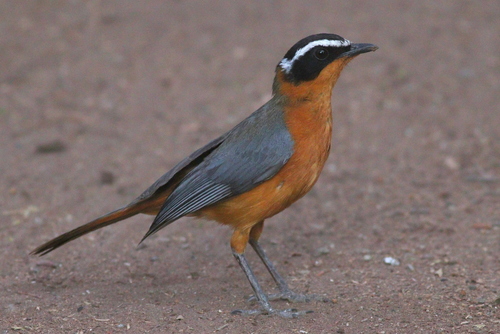
About the Tit Babbler
The chestnut-vented warbler, chestnut-vented tit-babbler or rufous-vented warbler (Curruca subcoerulea) is an Old World warbler of the family Sylviidae. The chestnut-vented warbler breeds in southern Africa in Angola, Botswana, Zimbabwe, Zambia, Namibia, South Africa, Lesotho, Mozambique and Eswatini. This is a common species found in a range of habitats including fynbos, scrub, thickets and dry riverbeds.
The first formal description of the chestnut-vented warbler was by the French naturalist Louis Pierre Vieillot in 1817. He introduced the binomial name Sylvia subcœrulea using the œ ligature. The specific epithet would normally be spelled subcaerulea or subcærulea and comes from the Latin sub meaning somewhat or beneath and caeruleus for blue. In modern Latin subcaeruleus is used to indicate pale blue. Most authorities use the standard spelling subcaerulea but some use the original spelling subcoerulea.
The chestnut-vented warbler is 14–15 cm long and weighs around 16 g. Its upperparts are grey-brown, and the tail is black with a broad white band at its tip. This warbler has a white eye ring. The throat is grey with heavy dark streaking, the breast... Wikipedia →