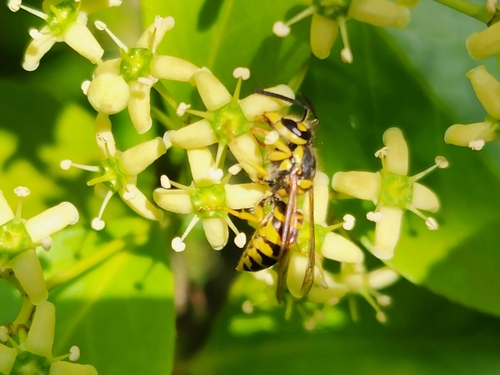
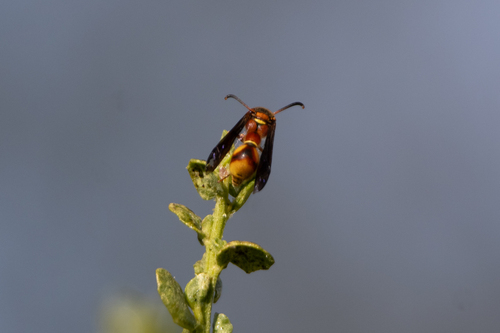
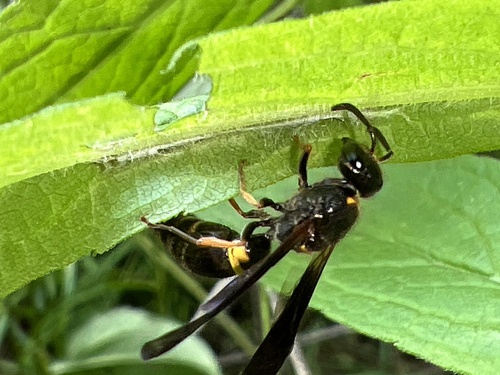
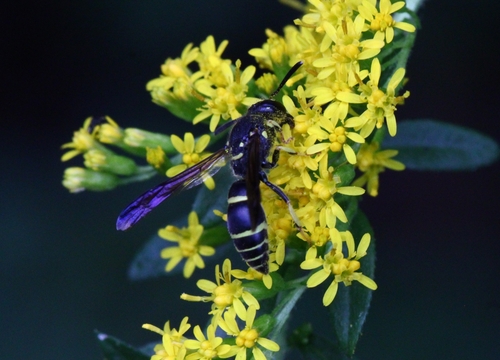
Mexican Honey Wasp

Mexican Honey Wasp

Brachygastra mellifica

Daily sighting probability ~10% · With luck
at Austin

In 3 days ~30% in a week ~50%

245 Verified sightings at Austin
42 In all 3 parks From 2019 to 2026
December Best month
☀️ Diurnal When it's spotted

About the Mexican Honey Wasp

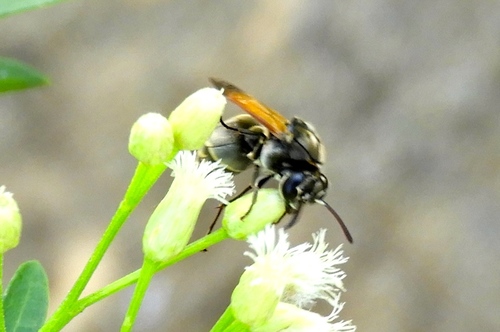
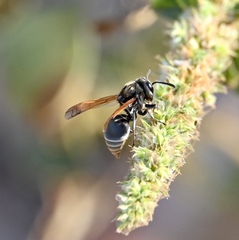
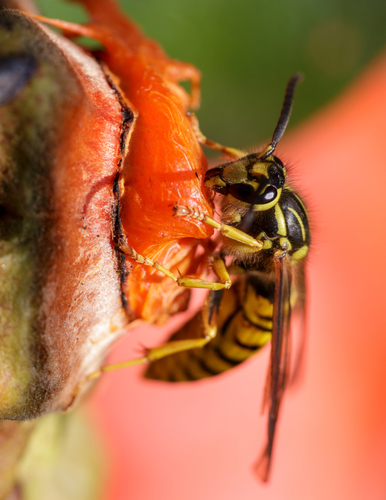
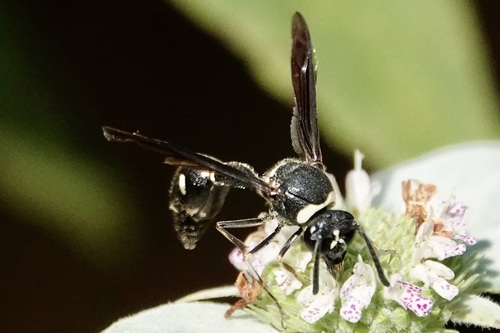
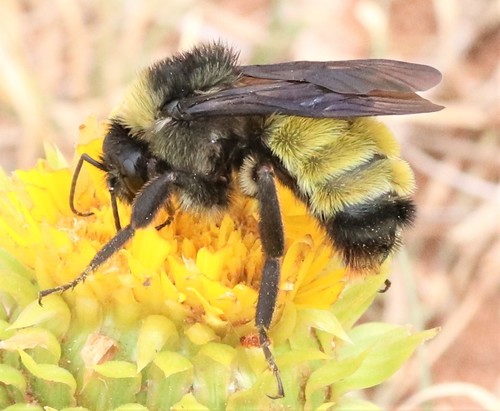
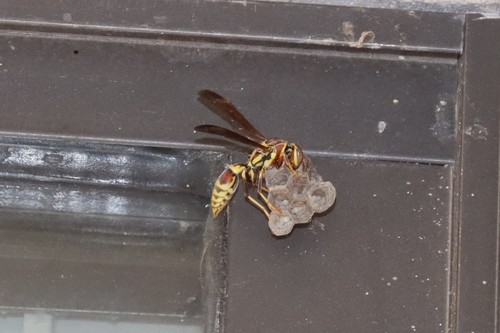
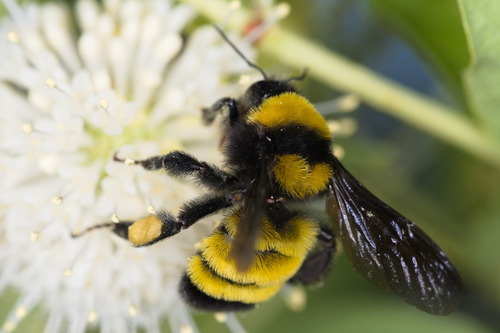
Brachygastra mellifica, commonly known as the Mexican honey wasp, is a neotropical social wasp. It can be found in North America. B. mellifica is one of few wasp species that produces honey. It is also considered a delicacy in some cultures in Mexico. This wasp species is of use to humans because it can be used to control pest species and to pollinate avocados.

The genus name Brachygastra comes from Ancient Greek βραχύς (brakhús), meaning "short", and γαστήρ (gastḗr), meaning "belly". The specific epithet mellifica means "to make honey" in Latin. The species that comprise the genus Brachygastra are neotropical social wasps. They can be found from southern United States to Northern Argentina and include a total of 16 species. B. mellifica is the only species present in the US, found in both Arizona and Texas. B. mellifica ranges from Texas to Panama. This genus is known for its easily recognizable abdomen, which can be almost as wide as it is long, and its very high scutellum that often projects over the metanotum. B. mellifica is very similar in morphology to B. lecheguana but differs in its geographic distribution. Wikipedia →

Global Distribution

Parks Where Found

# Park Country Daily sighting probability
1 Cabo Pulmo National Park 🇲🇽 Mexico
~20%
2 Ría Lagartos Biosphere Reserve 🇲🇽 Mexico
~20%
3 Cumbres de Monterrey National Park 🇲🇽 Mexico
~10%

Cities Where Found

# City Country Daily sighting probability
1 Mexico City 🇲🇽 México
~10%
2 Austin 🇺🇸 United States
~10%
3 San Antonio 🇺🇸 United States
~10%
4 San Luis Potosí 🇲🇽 México
~10%
5 Monterrey 🇲🇽 México
~10%
6 Puebla 🇲🇽 México
~10%
7 Guadalajara 🇲🇽 México
~10%
8 Houston 🇺🇸 United States
<5%

Before you go

What are the chances of seeing a Mexican Honey Wasp in Austin?

With luck

About 10% of wildlife watchers report a Mexican Honey Wasp sighting in Austin on a given day, based on 245 verified sightings from GBIF citizen-science data. It is the 123rd most-seen of the 1624 insects we can rate there. Over three days the chance rises to about 30%, and over a week to about 50%, if each day is a fresh chance.

When is the best time to see a Mexican Honey Wasp in Austin?

December to February

In those months about 20% of wildlife watchers report a Mexican Honey Wasp in Austin on a given day, against about 10% in March to November, the lowest months.

What time of day is best to see a Mexican Honey Wasp?

Between 11 am and 2 pm

Across all the parks we cover, that three-hour window holds the most Mexican Honey Wasp sightings with a recorded time, and about 9 in 10 of them come between 6 am and 6 pm: it is a daytime animal.

Is Austin the best place to see a Mexican Honey Wasp?

Among the best

Of the 8 cities where we can rate Mexican Honey Wasp sightings, Austin ranks 2nd at about 10%, level with the leaders once rounded. The best odds are in Mexico City (México, about 10%).

Where does the Mexican Honey Wasp sighting chance come from?

GBIF citizen-science records

It is estimated from how often the Mexican Honey Wasp is recorded against all the insects logged in Austin (245 verified sightings), calibrated against known sighting rates. Figures are rounded to the nearest 10% because citizen-science data supports honest approximations, not decimals, and months with records from fewer than five people show "—". How it works.

← Back to Austin