Eastern Forktail

Eastern Forktail

Ischnura verticalis

Daily sighting probability <5% · Rare
at Baltimore

In 3 days ~10% in a week ~30%

17 Verified sightings at Baltimore
108 In all 4 parks From 2019 to 2026
September Best month
☀️ Diurnal When it's spotted

About the Eastern Forktail

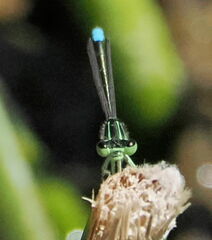
The eastern forktail (Ischnura verticalis) is a species of damselfly in the family Coenagrionidae. This species is present in the Eastern United States, from the Atlantic coast to the Midwest and from north of Florida to Southern Canada and west to Montana and New Mexico.

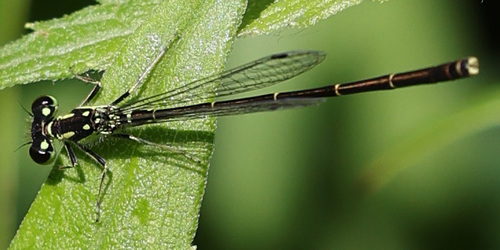
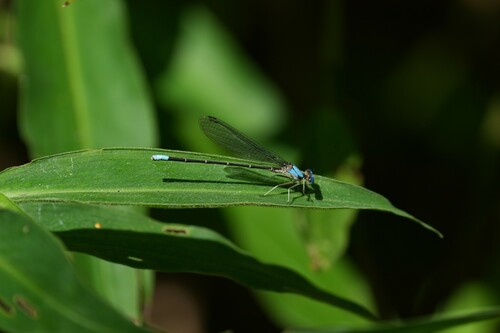
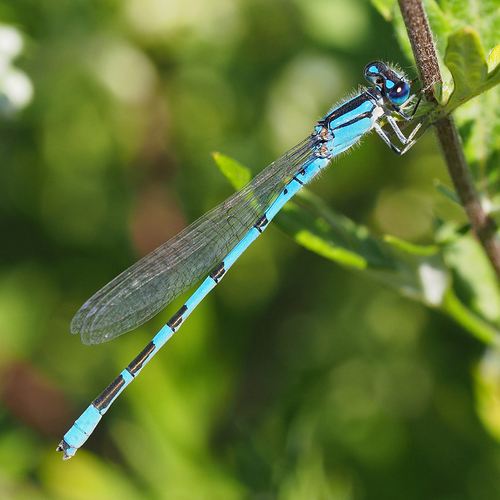
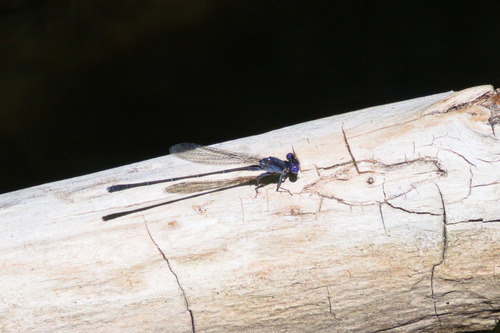
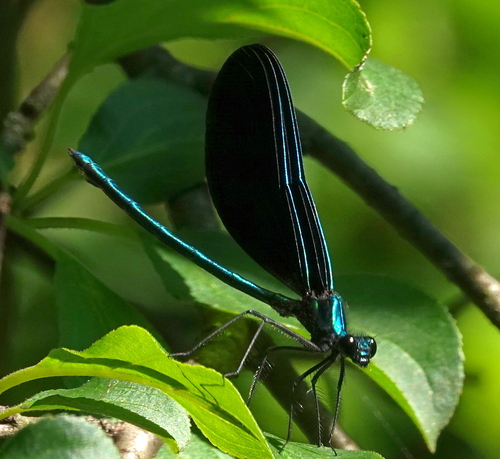
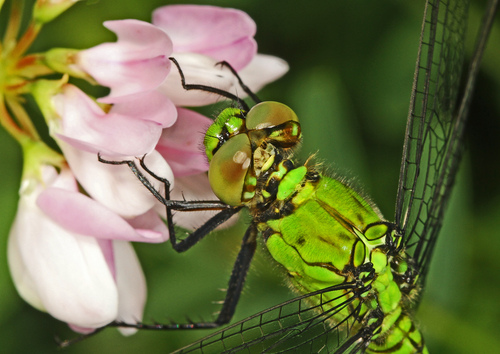
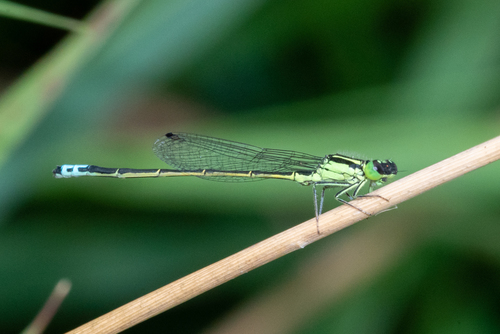
These damselflies inhabit various wetlands, especially small ponds, slow moving streams and marshes. Ischnura verticalis can reach a body length of 22–30 millimetres (0.87–1.18 in). These small green, black and blue damselflies have a slender body with four wings folding over the back. The thorax of the males is black above, with pale green sides and green shoulder stripes. Eyes are dark above, greenish below. Abdomen is mainly black, with thin pale rings. The top of the abdomen (eighth and ninth abdominal segments) is blue, with black markings on sides. The males' abdomens shows tiny projections off the tip (hence the common name verticalis of this species).

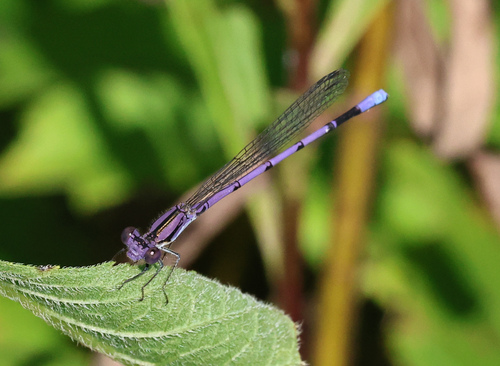
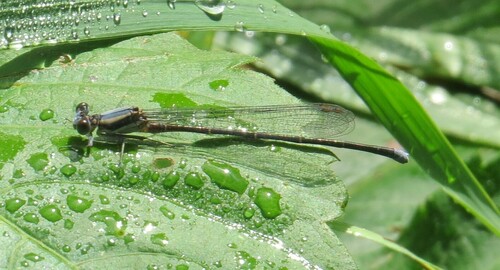
Females are usually grayish-blue, with greyish markings on the abdomen. In the immature female, the thorax is bright orange with black dorsal and shoulder stripes. The abdomen is black above and... Wikipedia →
Global Distribution

Parks Where Found

# Park Country Daily sighting probability
1 Point Pelee National Park 🇨🇦 Canada
~10%
2 Cape Breton Highlands National Park 🇨🇦 Canada
~10%
3 Acadia National Park 🇺🇸 United States
~10%
4 Shenandoah National Park 🇺🇸 United States
~10%

Cities Where Found

# City Country Daily sighting probability
1 Minneapolis [Saint Paul] 🇺🇸 United States
~10%
2 Toronto 🇨🇦 Canada
~10%
3 Montreal 🇨🇦 Canada
~10%
4 Chicago 🇺🇸 United States
~10%
5 Boston 🇺🇸 United States
~10%
6 New York City 🇺🇸 United States
~10%
7 Detroit 🇺🇸 United States
~10%
8 Washington 🇺🇸 United States
<5%
9 Baltimore 🇺🇸 United States
<5%
10 Philadelphia 🇺🇸 United States
<5%

Before you go

What are the chances of seeing an Eastern Forktail in Baltimore?

Rare

Under 5% of wildlife watchers report an Eastern Forktail sighting in Baltimore on a given day, based on 17 verified sightings from GBIF citizen-science data. It is the 334th most-seen of the 705 insects we can rate there. Over three days the chance rises to about 10%, and over a week to about 30%, if each day is a fresh chance.

When is the best time to see an Eastern Forktail in Baltimore?

July and September

In those months about 10% of wildlife watchers report an Eastern Forktail in Baltimore on a given day, against under 5% in August and October–June, the lowest months.

What time of day is best to see an Eastern Forktail?

Between 11 am and 2 pm

Across all the parks we cover, that three-hour window holds the most Eastern Forktail sightings with a recorded time, and about 8 in 10 of them come between 6 am and 6 pm: it is a daytime animal.

Is Baltimore the best place to see an Eastern Forktail?

9th of 10

Of the 10 cities where we can rate Eastern Forktail sightings, Baltimore ranks 9th at under 5%. The best odds are in Minneapolis [Saint Paul] (United States, about 10%), Toronto (Canada, about 10%) and Montreal (Canada, about 10%).

Where does the Eastern Forktail sighting chance come from?

GBIF citizen-science records

It is estimated from how often the Eastern Forktail is recorded against all the insects logged in Baltimore (17 verified sightings), calibrated against known sighting rates. Figures are rounded to the nearest 10% because citizen-science data supports honest approximations, not decimals, and months with records from fewer than five people show "—". How it works.

← Back to Baltimore