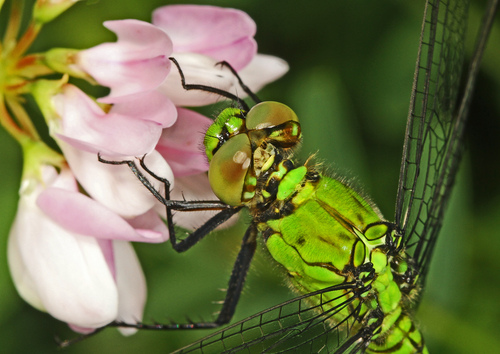
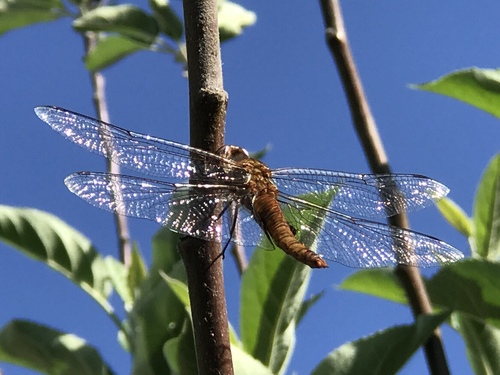
Blue-Fronted Dancer

Blue-Fronted Dancer

Argia apicalis

Daily sighting probability ~10% · With luck
at Baltimore

In 3 days ~20% in a week ~30%

26 Verified sightings at Baltimore
42 In all 4 parks From 2019 to 2026
July Best month
☀️ Diurnal When it's spotted

About the Blue-Fronted Dancer

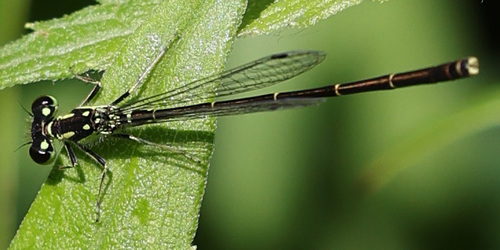
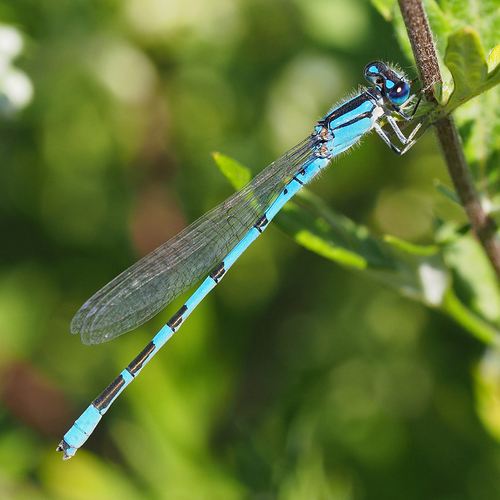
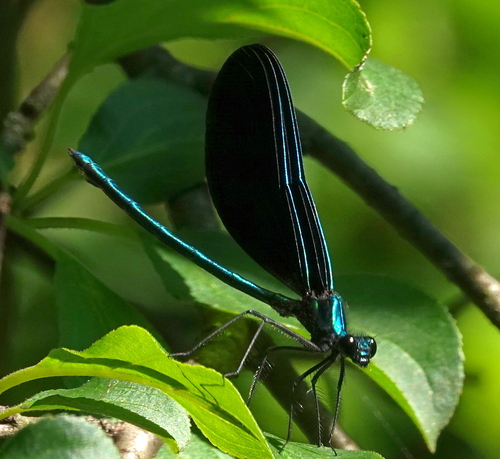
The blue-fronted dancer (Argia apicalis) is a species of damselfly in the family Coenagrionidae, native to parts of North America. It was first described by the American zoologist Thomas Say in 1840. It is a common species with a wide range and the International Union for Conservation of Nature has assessed its conservation status as being of "least concern".

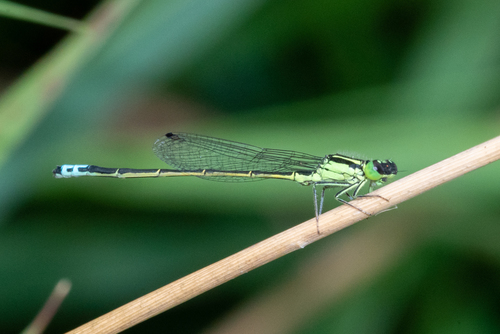
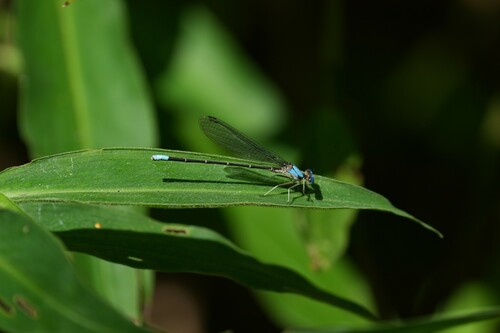
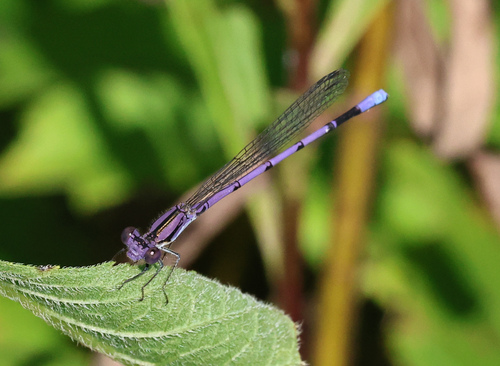
This damselfly ranges in length between about 33 and 40 mm (1.3 and 1.6 in). Most males have a blue thorax, the plates being separated by a few black lines, and also have a color-tipped abdomen, segments eight, nine and ten being bright blue. The remaining segments are dark brown. However the color of the thorax of Argia apicalis is variable and some males can be greyish-black rather than blue. They can change from one phase to the other and back again over the course of several days, with several intervening variations on the way; neither color phase seems to be particularly related to age or sexual maturity.

Females exhibit three thoracic color phases: brown, turquoise and grayish-black. Again the phase change often takes place in steps, and none of the phases seems to be associated with a particular age or... Wikipedia →

Global Distribution

Parks Where Found

# Park Country Daily sighting probability
1 Congaree National Park 🇺🇸 United States
~10%
2 Big Bend National Park 🇺🇸 United States
~10%
3 Great Smoky Mountains National Park 🇺🇸 United States
~10%
4 Shenandoah National Park 🇺🇸 United States
~10%

Cities Where Found

# City Country Daily sighting probability
1 Houston 🇺🇸 United States
~10%
2 Chicago 🇺🇸 United States
~10%
3 Boston 🇺🇸 United States
~10%
4 Washington 🇺🇸 United States
~10%
5 Philadelphia 🇺🇸 United States
~10%
6 Dallas 🇺🇸 United States
~10%
7 Baltimore 🇺🇸 United States
~10%
8 Austin 🇺🇸 United States
<5%
9 Detroit 🇺🇸 United States
<5%
10 Minneapolis [Saint Paul] 🇺🇸 United States
<5%

Before you go

What are the chances of seeing a Blue-Fronted Dancer in Baltimore?

With luck

About 10% of wildlife watchers report a Blue-Fronted Dancer sighting in Baltimore on a given day, based on 26 verified sightings from GBIF citizen-science data. It is the 235th most-seen of the 705 insects we can rate there. Over three days the chance rises to about 20%, and over a week to about 30%, if each day is a fresh chance.

When is the best time to see a Blue-Fronted Dancer in Baltimore?

June–July and September

In those months about 10% of wildlife watchers report a Blue-Fronted Dancer in Baltimore on a given day, against under 5% in August and October–May, the lowest months.

What time of day is best to see a Blue-Fronted Dancer?

Between 11 am and 2 pm

Across all the parks we cover, that three-hour window holds the most Blue-Fronted Dancer sightings with a recorded time, and nearly all of them come between 6 am and 6 pm: it is a daytime animal.

Is Baltimore the best place to see a Blue-Fronted Dancer?

Among the best

Of the 13 cities where we can rate Blue-Fronted Dancer sightings, Baltimore ranks 7th at about 10%, level with the leaders once rounded. The best odds are in Houston (United States, about 10%), Chicago (United States, about 10%) and Boston (United States, about 10%).

Which relatives of the Blue-Fronted Dancer live in Baltimore?

Same genus: Argia

The closest relatives of the Blue-Fronted Dancer that you can see in Baltimore (genus Argia, Dancers) are Variable Dancer (about 10%) and Powdered Dancer (about 10%), with each one's daily chance of a sighting.

Where does the Blue-Fronted Dancer sighting chance come from?

GBIF citizen-science records

It is estimated from how often the Blue-Fronted Dancer is recorded against all the insects logged in Baltimore (26 verified sightings), calibrated against known sighting rates. Figures are rounded to the nearest 10% because citizen-science data supports honest approximations, not decimals, and months with records from fewer than five people show "—". How it works.
← Back to Baltimore