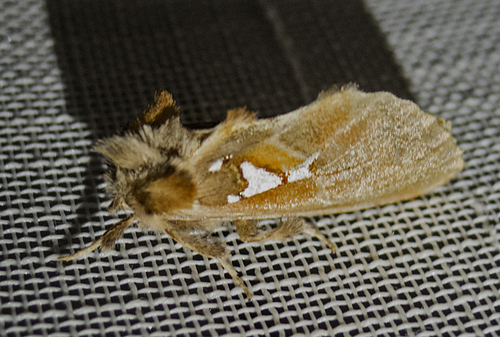
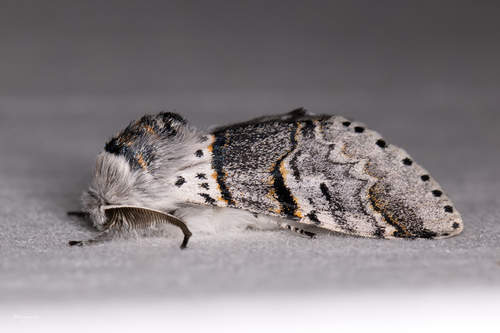


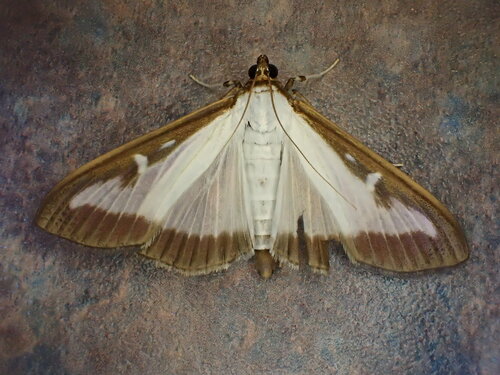

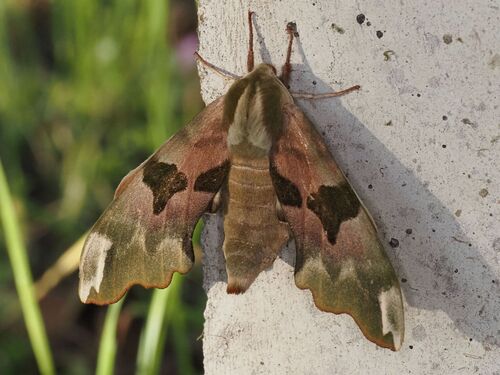

Pale Prominent

Pale Prominent

Pterostoma palpina

Daily sighting probability <5% · Rare
at Berlin

In 3 days ~10% in a week ~20%

12 Verified sightings at Berlin
118 In all 7 parks From 2019 to 2026
May Best month
☀️🌙 Day & Night When it's spotted

About the Pale Prominent

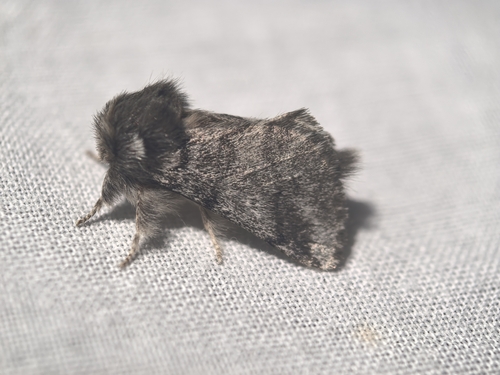
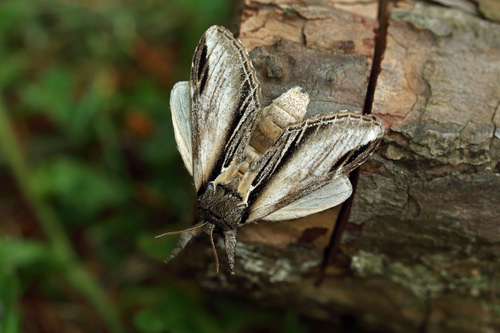
Pterostoma palpina, the pale prominent, is a moth from the family Notodontidae. The species was first described by Carl Alexander Clerck in 1759. The moth can be found in Europe and Central Asia (Palearctic realm). Pterostoma palpina has a wingspan of 35 to 52 mm. Beyond the black scaled tooth-like forewing projection the inner margin is notched. Long labial palps and tufts on the tail segment, give an elongated appearance. The antennae of the female are pectinated, but the teeth are shorter than those of the male; and the blackish streak on the wings are usually less defined. Except that some specimens are more strongly marked than others there is little variation. The larva is bluish green, with white dorsal and lateral lines, and a black edged yellow stripe along the spiracles; this stripe is marked with reddish on the three anterior segments.

Seitz- The specimens of the first brood larger, predominantly grey-brown, those of the second brood smaller, light straw-colour. The transverse bands of the forewing only indicated by black vein-dots, the postdiscal band more complete than the other, being marked by double dots separated by white and placed... Wikipedia →

Global Distribution

Parks Where Found

# Park Country Daily sighting probability
1 Biebrza National Park 🇵🇱 Poland
~20%
2 Sierra Nevada National Park 🇪🇸 Spain
~10%
3 Bavarian Forest National Park 🇩🇪 Germany
~10%
4 Snowdonia National Park 🇬🇧 United Kingdom
~10%
5 Wadden Sea National Park 🇩🇪 Germany
~10%
6 Pyrénées National Park 🇫🇷 France
~10%
7 Sierra de Guadarrama National Park 🇪🇸 Spain
~10%

Cities Where Found

# City Country Daily sighting probability
1 Liverpool 🇬🇧 United Kingdom
~10%
2 Porto 🇵🇹 Portugal
~10%
3 Manchester 🇬🇧 United Kingdom
~10%
4 London 🇬🇧 United Kingdom
~10%
5 Birmingham 🇬🇧 United Kingdom
<5%
6 Kyiv 🇺🇦 Ukraine
<5%
7 Berlin 🇩🇪 Germany
<5%
8 Warsaw 🇵🇱 Poland
<5%
9 Prague 🇨🇿 Czechia
<5%
10 Copenhagen 🇩🇰 Denmark
<5%

Before you go

What are the chances of seeing a Pale Prominent in Berlin?

Rare

Under 5% of wildlife watchers report a Pale Prominent sighting in Berlin on a given day, based on 12 verified sightings from GBIF citizen-science data. It is the 562nd most-seen of the 1065 insects we can rate there. Over three days the chance rises to about 10%, and over a week to about 20%, if each day is a fresh chance.

When is the best time to see a Pale Prominent in Berlin?

May and July

In those months about 10% of wildlife watchers report a Pale Prominent in Berlin on a given day, against under 5% in June and August–April, the lowest months.

What time of day is best to see a Pale Prominent?

Between 10 pm and 1 am

Across all the parks we cover, that three-hour window holds the most Pale Prominent sightings with a recorded time, and about 6 in 10 of them come between 6 pm and 6 am: it is seen both by day and at night.

Is Berlin the best place to see a Pale Prominent?

7th of 12

Of the 12 cities where we can rate Pale Prominent sightings, Berlin ranks 7th at under 5%. The best odds are in Liverpool (United Kingdom, about 10%), Porto (Portugal, about 10%) and Manchester (United Kingdom, about 10%).

Which relatives of the Pale Prominent live in Berlin?

Same family: Notodontidae

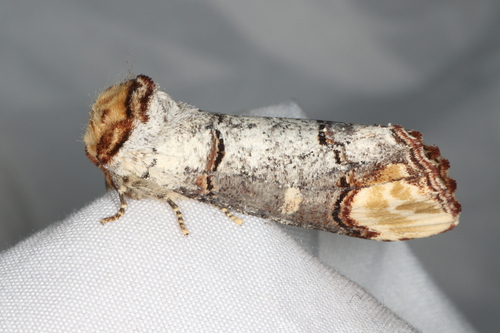
The closest relatives of the Pale Prominent that you can see in Berlin (family Notodontidae, Prominent Moths) are Oak Processionary (about 10%) and Buff-Tip (about 10%), with each one's daily chance of a sighting.

Where does the Pale Prominent sighting chance come from?

GBIF citizen-science records

It is estimated from how often the Pale Prominent is recorded against all the insects logged in Berlin (12 verified sightings), calibrated against known sighting rates. Figures are rounded to the nearest 10% because citizen-science data supports honest approximations, not decimals, and months with records from fewer than five people show "—". How it works.

← Back to Berlin