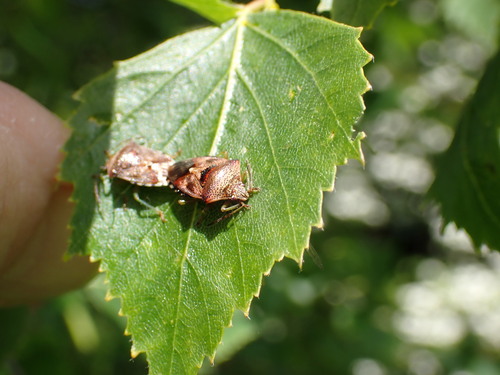
Common Froghopper

Common Froghopper

Cercopis vulnerata

Daily sighting probability ~10% · With luck
at Birmingham

In 3 days ~20% in a week ~50%

41 Verified sightings at Birmingham
367 In all 8 parks From 2019 to 2026
May Best month
☀️ Diurnal When it's spotted

About the Common Froghopper

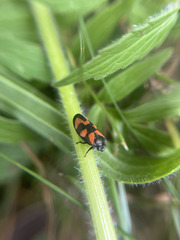
Cercopis vulnerata (also known as the black-and-red froghopper or red-and-black froghopper) is a species of froghopper in the family Cercopidae. This species is present in most of Europe (Albania, Austria, Belgium, Bulgaria, Serbia, Croatia, Czech Republic, France, Greece, Spain, the former Yugoslavia, Moldova, the Netherlands, Norway, Poland, Romania, Russia, Slovakia, Slovenia, Germany, Switzerland, Hungary, Great Britain and Italy).

These froghoppers inhabit sunny southern slopes of the mountains, grasslands, meadows, spruce forest edges, moors, verges, clearings and city parks. They can be found on woody or herbaceous plants, mainly in wooded areas.

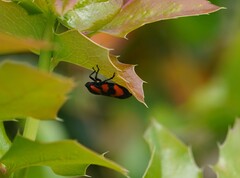
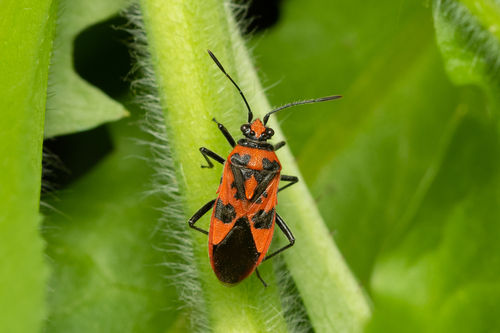
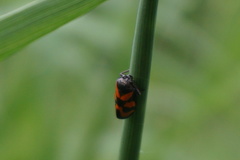
The male of Cercopis vulnerata is 8.9–10.5 millimetres (0.35–0.41 in) in length, and the female 8.2–10.5 millimetres (0.32–0.41 in). These froghoppers have an elongate and strongly shielded body. They are shining black, with bright red marks on the elytra, one triangular mark at the base, one square mark in the middle and a stripe at the apex. These colors serves as a warning of their unpleasant taste.

The hind wings are brownish, smoky and translucent. Upper abdomen is black with narrow... Wikipedia →

Global Distribution

Parks Where Found

# Park Country Daily sighting probability
1 Tatra National Park 🇸🇰 Slovakia
~30%
2 Cévennes National Park 🇫🇷 France
~20%
3 Bavarian Forest National Park 🇩🇪 Germany
~20%
4 Hohe Tauern National Park 🇦🇹 Austria
~20%
5 Triglav National Park 🇸🇮 Slovenia
~20%
6 Pyrénées National Park 🇫🇷 France
~10%
7 Snowdonia National Park 🇬🇧 United Kingdom
~10%
8 Wadden Sea National Park 🇩🇪 Germany
~10%

Cities Where Found

# City Country Daily sighting probability
1 Turin 🇮🇹 Italy
~10%
2 Hamburg 🇩🇪 Germany
~10%
3 Manchester 🇬🇧 United Kingdom
~10%
4 Lyon 🇫🇷 France
~10%
5 Birmingham 🇬🇧 United Kingdom
~10%
6 Istanbul 🇹🇷 Turkey
~10%
7 Paris 🇫🇷 France
~10%
8 Essen 🇩🇪 Germany
~10%
9 Cologne 🇩🇪 Germany
~10%
10 Brussels 🇧🇪 Belgium
~10%

Before you go

What are the chances of seeing a Common Froghopper in Birmingham?

With luck

About 10% of wildlife watchers report a Common Froghopper sighting in Birmingham on a given day, based on 41 verified sightings from GBIF citizen-science data. It is the 210th most-seen of the 811 insects we can rate there. Over three days the chance rises to about 20%, and over a week to about 50%, if each day is a fresh chance.

When is the best time to see a Common Froghopper in Birmingham?

May

In that month about 20% of wildlife watchers report a Common Froghopper in Birmingham on a given day, against under 5% in July to March, the lowest months.

What time of day is best to see a Common Froghopper?

Between noon and 3 pm

Across all the parks we cover, that three-hour window holds the most Common Froghopper sightings with a recorded time, and about 9 in 10 of them come between 6 am and 6 pm: it is a daytime animal.

Is Birmingham the best place to see a Common Froghopper?

Among the best

Of the 21 cities where we can rate Common Froghopper sightings, Birmingham ranks 5th at about 10%, level with the leaders once rounded. The best odds are in Turin (Italy, about 10%), Hamburg (Germany, about 10%) and Manchester (United Kingdom, about 10%).

Which relatives of the Common Froghopper live in Birmingham?

Same order: Hemiptera

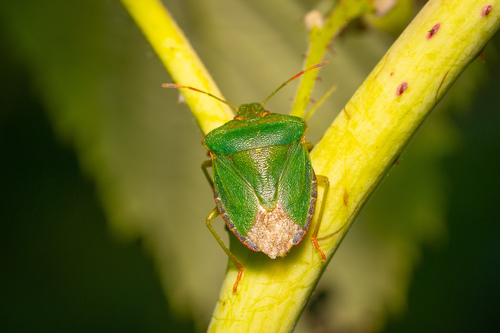
The closest relatives of the Common Froghopper that you can see in Birmingham (order Hemiptera, True Bugs, Hoppers, Aphids, and allies) are Green Shield Bug (about 40%), Dock Bug (about 30%) and Forest Bug (about 20%), with each one's daily chance of a sighting.

Where does the Common Froghopper sighting chance come from?

GBIF citizen-science records

It is estimated from how often the Common Froghopper is recorded against all the insects logged in Birmingham (41 verified sightings), calibrated against known sighting rates. Figures are rounded to the nearest 10% because citizen-science data supports honest approximations, not decimals, and months with records from fewer than five people show "—". How it works.

← Back to Birmingham