

Garden Chafer

Garden Chafer

Phyllopertha horticola

Daily sighting probability ~10% · With luck
at Birmingham

In 3 days ~20% in a week ~40%

26 Verified sightings at Birmingham
322 In all 11 parks From 2019 to 2026
June Best month
☀️ Diurnal When it's spotted

About the Garden Chafer

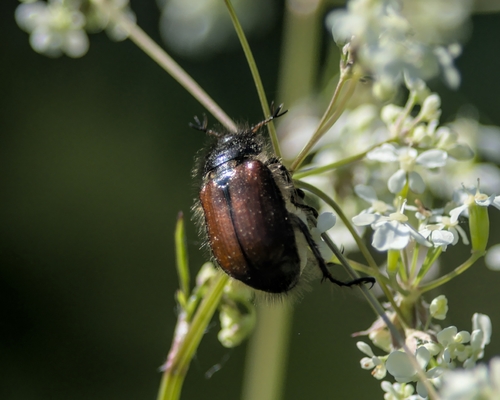
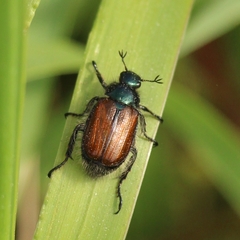
Phyllopertha horticola, the garden chafer or garden foliage beetle, is a beetle from the family Scarabaeidae. Phyllopertha horticola was described by Carl Linnaeus in his landmark 1758 10th edition of Systema Naturae. Phyllopertha horticola var. ustulatipennis A. Villa & G. B. Villa, 1833

This rather common species is widely widespread in Europe and in Asia, east to Siberia and Mongolia. In the north of Europe their distribution reaches the middle Fennoscandia and includes the British Isles, in southern Europe it mainly occurs in the mountains. It is the only European representative of the genus Phyllopertha.

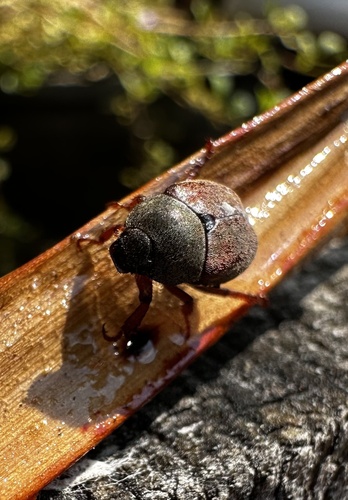
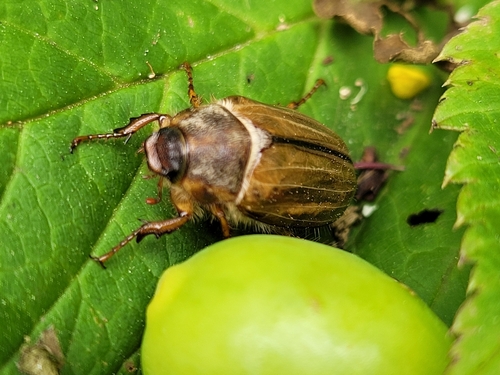
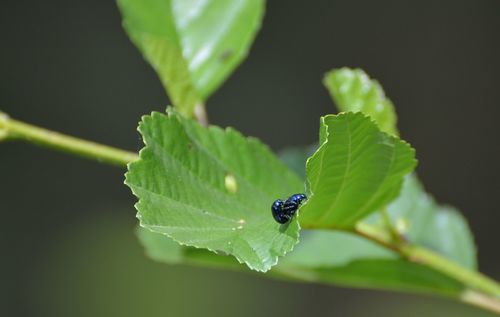
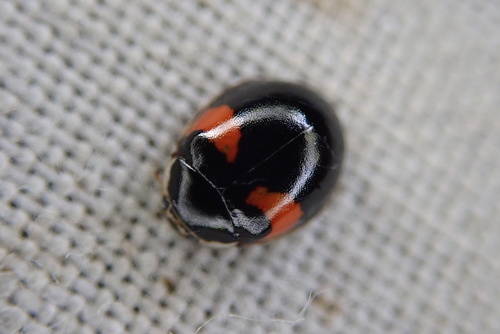
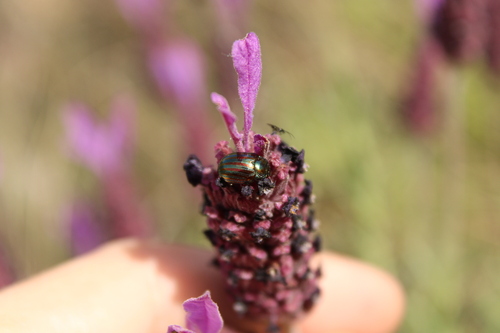
These beetles inhabit bushes, hedgerows, woodland edges, meadows and fields, from the lowlands to mountainous areas. They also live in parks and gardens, hence the common name of garden chafer. Phyllopertha horticola is approximately 8.5–11 millimetres (0.33–0.43 in) in size. Unlike Mimela of the same family, these beetles have a non-ovoid body. They have chestnut-brown wing casings which are covered with a long upright pubescence. On each elytron run six longitudinal bands of small dots. Head and thorax are finely... Wikipedia →

Global Distribution

Parks Where Found

# Park Country Daily sighting probability
1 Snowdonia National Park 🇬🇧 United Kingdom
~30%
2 Hohe Tauern National Park 🇦🇹 Austria
~20%
3 Vanoise National Park 🇫🇷 France
~20%
4 Bavarian Forest National Park 🇩🇪 Germany
~10%
5 Białowieża National Park 🇵🇱 Poland
~10%
6 Triglav National Park 🇸🇮 Slovenia
~10%
7 Aigüestortes National Park 🇪🇸 Spain
~10%
8 Pyrénées National Park 🇫🇷 France
~10%
9 Ecrins National Park 🇫🇷 France
~10%
10 Wadden Sea National Park 🇩🇪 Germany
~10%
11 Cévennes National Park 🇫🇷 France
<5%

Cities Where Found

# City Country Daily sighting probability
1 Amsterdam 🇳🇱 Netherlands
~10%
2 Warsaw 🇵🇱 Poland
~10%
3 Hamburg 🇩🇪 Germany
~10%
4 Kyiv 🇺🇦 Ukraine
~10%
5 Liverpool 🇬🇧 United Kingdom
~10%
6 Novosibirsk 🇷🇺 Russia
~10%
7 Rotterdam [The Hague] 🇳🇱 Netherlands
~10%
8 Birmingham 🇬🇧 United Kingdom
~10%
9 Copenhagen 🇩🇰 Denmark
~10%
10 Essen 🇩🇪 Germany
~10%

Before you go

What are the chances of seeing a Garden Chafer in Birmingham?

With luck

About 10% of wildlife watchers report a Garden Chafer sighting in Birmingham on a given day, based on 26 verified sightings from GBIF citizen-science data. It is the 300th most-seen of the 811 insects we can rate there. Over three days the chance rises to about 20%, and over a week to about 40%, if each day is a fresh chance.

When is the best time to see a Garden Chafer in Birmingham?

May and June

In those months about 10% of wildlife watchers report a Garden Chafer in Birmingham on a given day, against under 5% in July to April, the lowest months.

What time of day is best to see a Garden Chafer?

Between 10 am and 1 pm

Across all the parks we cover, that three-hour window holds the most Garden Chafer sightings with a recorded time, and about 9 in 10 of them come between 6 am and 6 pm: it is a daytime animal.

Is Birmingham the best place to see a Garden Chafer?

Among the best

Of the 19 cities where we can rate Garden Chafer sightings, Birmingham ranks 8th at about 10%, level with the leaders once rounded. The best odds are in Amsterdam (Netherlands, about 10%), Warsaw (Poland, about 10%) and Hamburg (Germany, about 10%).

Which relatives of the Garden Chafer live in Birmingham?

Same family: Scarabaeidae

The closest relatives of the Garden Chafer that you can see in Birmingham (family Scarabaeidae, Scarabs) are Welsh Chafer (about 20%), Summer Chafer (about 10%) and Common Cockchafer (about 10%), with each one's daily chance of a sighting.

Where does the Garden Chafer sighting chance come from?

GBIF citizen-science records

It is estimated from how often the Garden Chafer is recorded against all the insects logged in Birmingham (26 verified sightings), calibrated against known sighting rates. Figures are rounded to the nearest 10% because citizen-science data supports honest approximations, not decimals, and months with records from fewer than five people show "—". How it works.

← Back to Birmingham