

Black Firefly

Black Firefly

Lucidota atra

Daily sighting probability ~10% · With luck
at Boston

In 3 days ~30% in a week ~60%

264 Verified sightings at Boston
116 In all 6 parks From 2019 to 2026
June Best month
☀️ Diurnal When it's spotted

About the Black Firefly

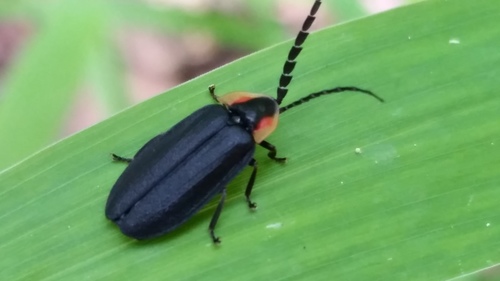
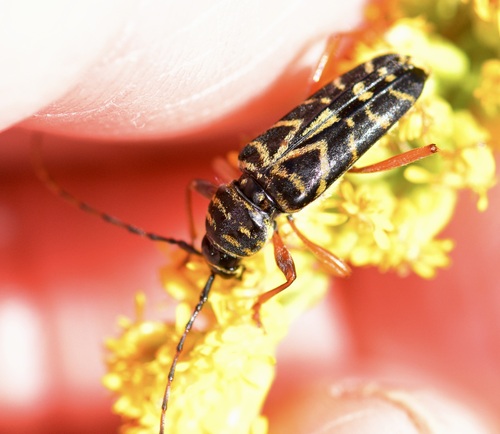
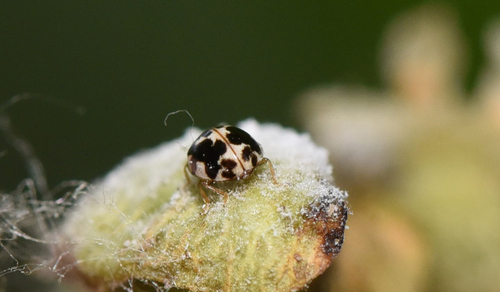
Lucidota atra, the woodland lucy or black firefly, is a diurnal species of firefly — a member of the Lampyridae family of beetles (order Coleoptera). Lucidota atra are found in eastern North America. Their range extends west to Kansas, Nebraska, Oklahoma and Texas and south to Mexico.

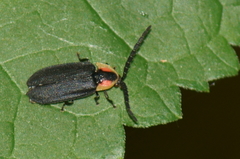
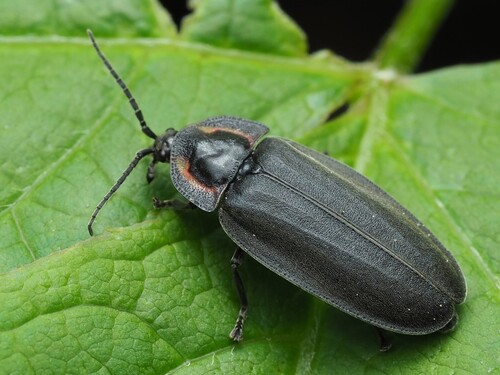
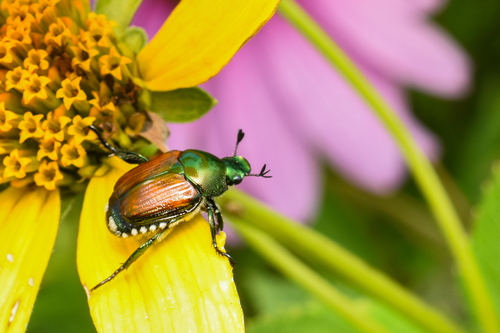
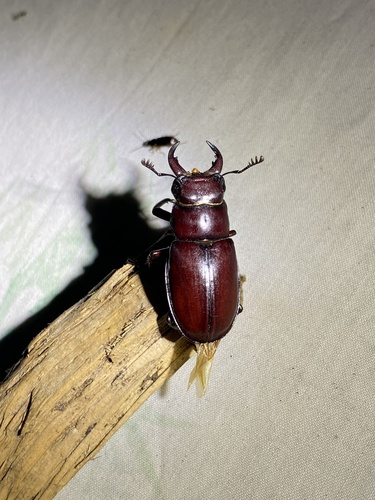
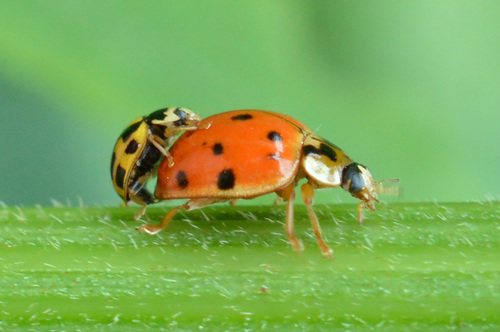
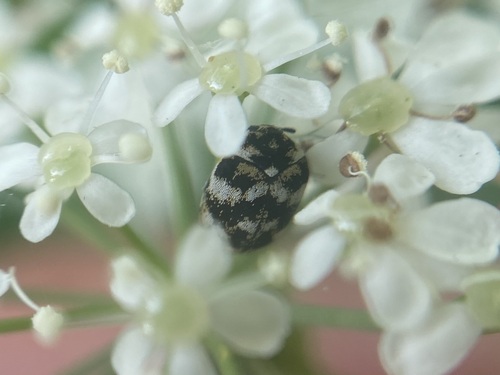
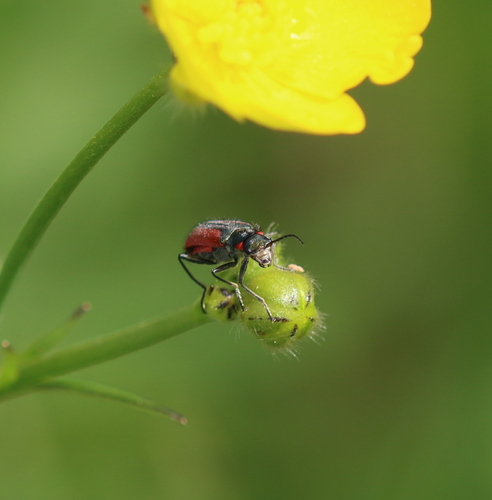
Adult body length is 9 to 12 mm (0.35 to 0.47 in). This firefly has segmented, conspicuous, black antennae that are serrate, with males having larger antennae. The pronotum extends over the head and is usually red and yellow with a medial black stripe or patch, but may be dark overall in some individuals. The compound eyes are smaller than those of nocturnal species like Photinus pyralis. The elytra are black or brown-black and have granulated texture. The light organ is greatly reduced and difficult to discern in the adult.

This is a firefly that flies actively in daylight. Males fly low, about one to six feet (0.30 to 1.83 m) from the ground, through forests in midday, seeking females, which are often perched on low vegetation. Most are seen in the late morning to early afternoon. Male Lucidota atra can identify female mating partners by sensing the... Wikipedia →

Global Distribution

Parks Where Found

# Park Country Daily sighting probability
1 Isle Royale National Park 🇺🇸 United States
~20%
2 Cape Breton Highlands National Park 🇨🇦 Canada
~10%
3 Acadia National Park 🇺🇸 United States
~10%
4 Great Smoky Mountains National Park 🇺🇸 United States
~10%
5 Shenandoah National Park 🇺🇸 United States
~10%
6 Point Pelee National Park 🇨🇦 Canada
~10%

Cities Where Found

# City Country Daily sighting probability
1 Boston 🇺🇸 United States
~10%
2 Montreal 🇨🇦 Canada
~10%
3 Minneapolis [Saint Paul] 🇺🇸 United States
~10%
4 Toronto 🇨🇦 Canada
~10%
5 Chicago 🇺🇸 United States
~10%
6 Washington 🇺🇸 United States
<5%
7 New York City 🇺🇸 United States
<5%
8 Baltimore 🇺🇸 United States
<5%
9 Philadelphia 🇺🇸 United States
<5%

Before you go

What are the chances of seeing a Black Firefly in Boston?

With luck

About 10% of wildlife watchers report a Black Firefly sighting in Boston on a given day, based on 264 verified sightings from GBIF citizen-science data. It is the 56th most-seen of the 1200 insects we can rate there. Over three days the chance rises to about 30%, and over a week to about 60%, if each day is a fresh chance.

When is the best time to see a Black Firefly in Boston?

June

In that month about 40% of wildlife watchers report a Black Firefly in Boston on a given day, against under 5% in August to May, the lowest months.

What time of day is best to see a Black Firefly?

Between 11 am and 2 pm

Across all the parks we cover, that three-hour window holds the most Black Firefly sightings with a recorded time, and about 9 in 10 of them come between 6 am and 6 pm: it is a daytime animal.

Is Boston the best place to see a Black Firefly?

Yes

Of the 9 cities where we can rate Black Firefly sightings, Boston has the highest daily chance: about 10%. Next come Montreal (Canada, about 10%) and Minneapolis [Saint Paul] (United States, about 10%).

Where does the Black Firefly sighting chance come from?

GBIF citizen-science records

It is estimated from how often the Black Firefly is recorded against all the insects logged in Boston (264 verified sightings), calibrated against known sighting rates. Figures are rounded to the nearest 10% because citizen-science data supports honest approximations, not decimals, and months with records from fewer than five people show "—". How it works.

← Back to Boston