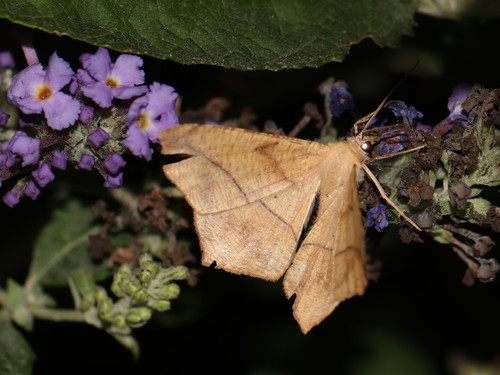
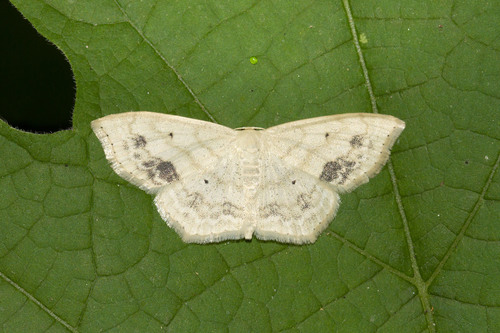
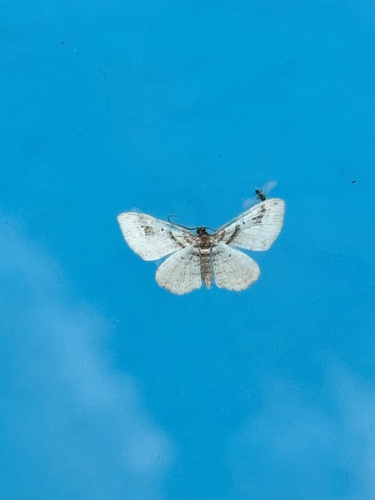
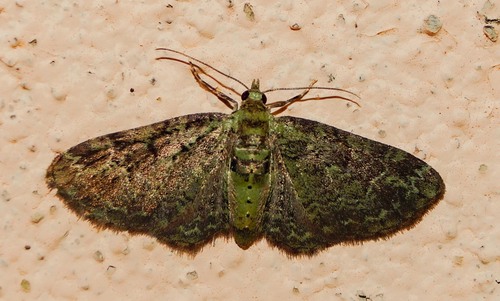
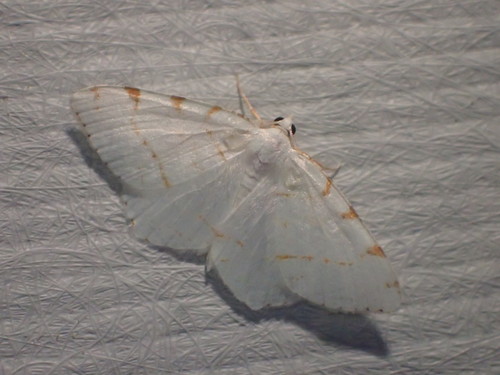
Pale Beauty

Pale Beauty

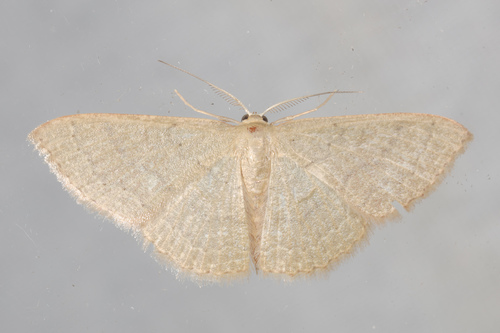
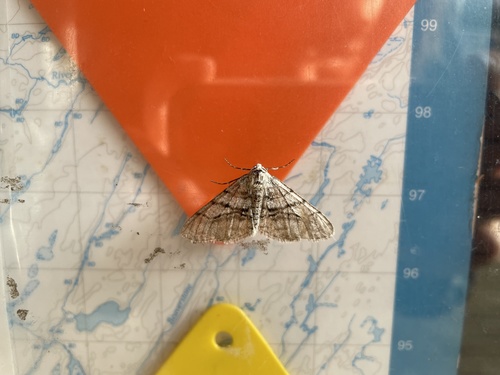
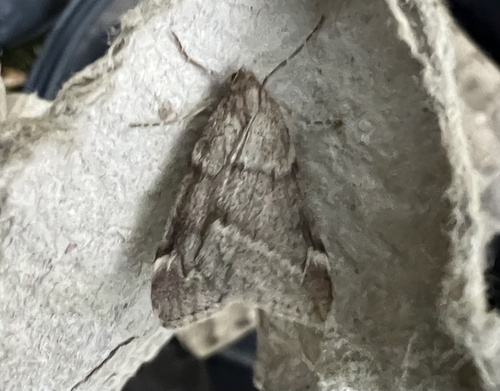
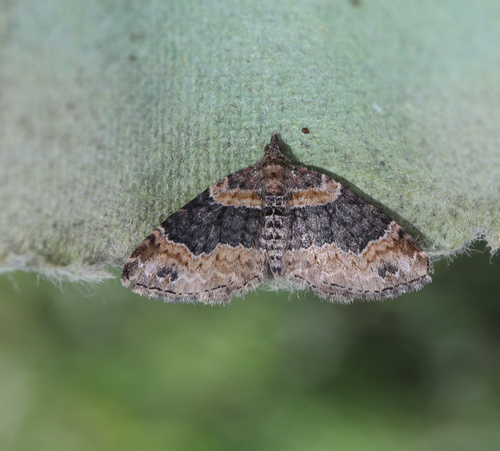
Campaea perlata

Daily sighting probability ~10% · With luck
at Boston

In 3 days ~20% in a week ~40%

112 Verified sightings at Boston
358 In all 12 parks From 2019 to 2026
September Best month
☀️🌙 Day & Night When it's spotted

About the Pale Beauty

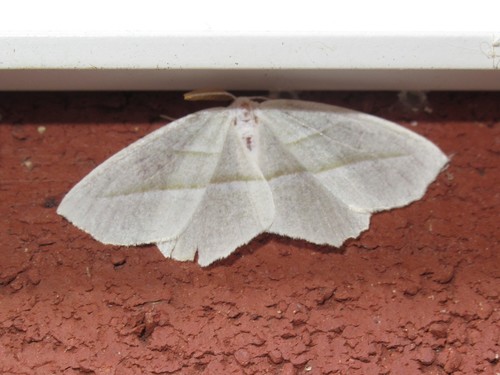
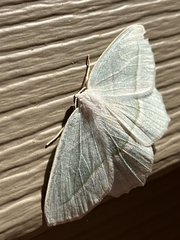
Campaea perlata, the pale beauty, also known as the fringed looper (caterpillar), is a species of moth in the family Geometridae, known as geometer moths, found in North America. Some sources also name it the light emerald, though this may be confused with the related European moth Campaea margaritata. It is common throughout its range.

The name "perlata" comes from post-classical Latin for "pearly". The pale beauty is a medium-sized moth with an average wingspan of about 28–51 mm. The female tends to be much larger than the male. It is pale greenish to white, with postmedial and antemedial faint lines that run continuously across the forewings and hindwings.

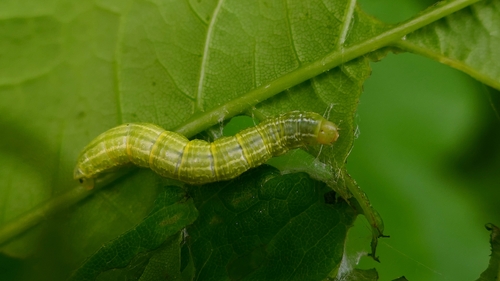
The larva of the pale beauty falls in the category of "inchworms" or "loopers". The looping gait of these caterpillars is the result of having appendages only at the front and back of the body. The caterpillars are about 4 cm in length and mottled gray to reddish, pale underneath, with a dark band from the top of the head to the eye. It has a fringe-like row of setae on the lower sides of the body and an extra set of prolegs on the fifth segment of the abdomen (i.e. the 8th segment of the animal). The caterpillars... Wikipedia →

Global Distribution

Parks Where Found

# Park Country Daily sighting probability
1 Great Smoky Mountains National Park 🇺🇸 United States
~20%
2 Gros Morne National Park 🇨🇦 Canada
~10%
3 Shenandoah National Park 🇺🇸 United States
~10%
4 Cape Breton Highlands National Park 🇨🇦 Canada
~10%
5 Acadia National Park 🇺🇸 United States
~10%
6 Redwood National Park 🇺🇸 United States
~10%
7 Elk Island National Park 🇨🇦 Canada
~10%
8 Pacific Rim National Park Reserve 🇨🇦 Canada
~10%
9 Great Bear Rainforest 🇨🇦 Canada
~10%
10 Jasper National Park 🇨🇦 Canada
~10%
11 Olympic National Park 🇺🇸 United States
~10%
12 Banff National Park 🇨🇦 Canada
<5%

Cities Where Found

# City Country Daily sighting probability
1 Anchorage 🇺🇸 United States
~10%
2 Boston 🇺🇸 United States
~10%
3 Detroit 🇺🇸 United States
~10%
4 Toronto 🇨🇦 Canada
~10%
5 Montreal 🇨🇦 Canada
~10%
6 Baltimore 🇺🇸 United States
~10%
7 Seattle 🇺🇸 United States
<5%
8 Edmonton 🇨🇦 Canada
<5%
9 Vancouver 🇨🇦 Canada
<5%
10 Washington 🇺🇸 United States
<5%

Before you go

What are the chances of seeing a Pale Beauty in Boston?

With luck

About 10% of wildlife watchers report a Pale Beauty sighting in Boston on a given day, based on 112 verified sightings from GBIF citizen-science data. It is the 139th most-seen of the 1200 insects we can rate there. Over three days the chance rises to about 20%, and over a week to about 40%, if each day is a fresh chance.

When is the best time to see a Pale Beauty in Boston?

September

In that month about 20% of wildlife watchers report a Pale Beauty in Boston on a given day, against under 5% in July and October–April, the lowest months.

What time of day is best to see a Pale Beauty?

Between 9 pm and midnight

Across all the parks we cover, that three-hour window holds the most Pale Beauty sightings with a recorded time, and about 7 in 10 of them come between 6 am and 6 pm: it is seen both by day and at night.

Is Boston the best place to see a Pale Beauty?

Among the best

Of the 15 cities where we can rate Pale Beauty sightings, Boston ranks 2nd at about 10%, level with the leaders once rounded. The best odds are in Anchorage (United States, about 10%).

Which relatives of the Pale Beauty live in Boston?

Same family: Geometridae

The closest relatives of the Pale Beauty that you can see in Boston (family Geometridae, Geometer Moths) are Single-Dotted Wave (about 10%), Winter Moth (about 10%) and Common Tan Wave (about 10%), with each one's daily chance of a sighting.

Where does the Pale Beauty sighting chance come from?

GBIF citizen-science records

It is estimated from how often the Pale Beauty is recorded against all the insects logged in Boston (112 verified sightings), calibrated against known sighting rates. Figures are rounded to the nearest 10% because citizen-science data supports honest approximations, not decimals, and months with records from fewer than five people show "—". How it works.

← Back to Boston