Two-Spotted Bumble Bee

Two-Spotted Bumble Bee

Bombus bimaculatus

Daily sighting probability ~20% · Possible
at Boston

In 3 days ~50% in a week ~80%

717 Verified sightings at Boston
341 In all 5 parks From 2019 to 2026
June Best month
☀️ Diurnal When it's spotted

About the Two-Spotted Bumble Bee

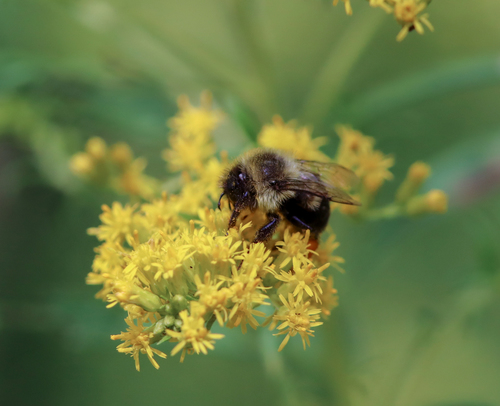
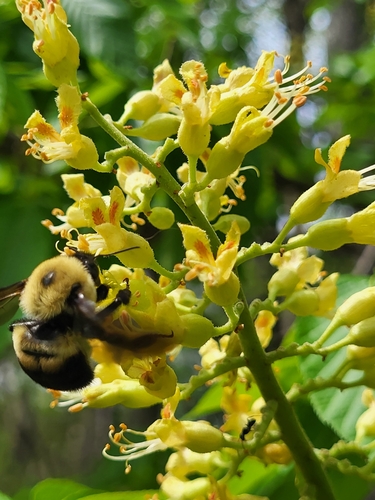
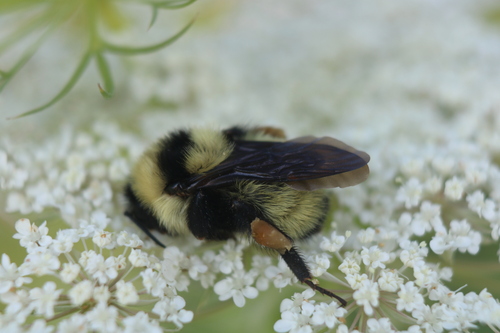
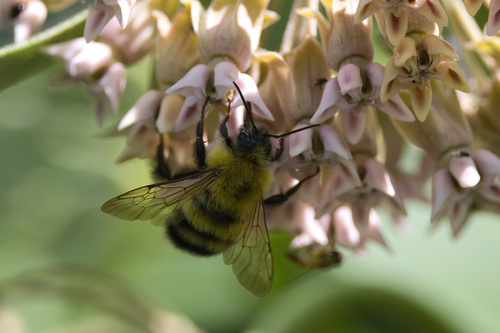
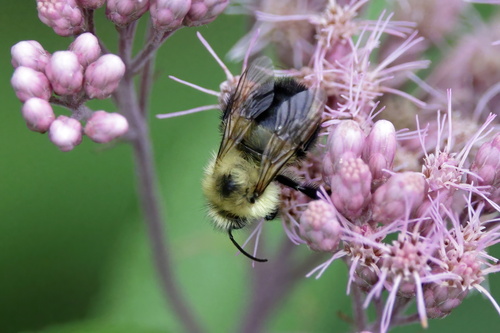
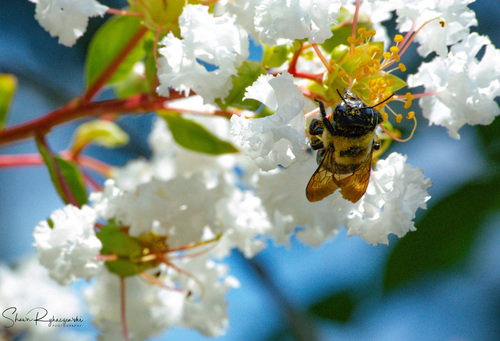
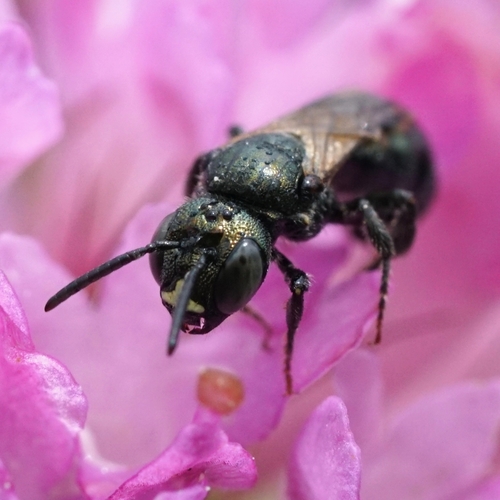
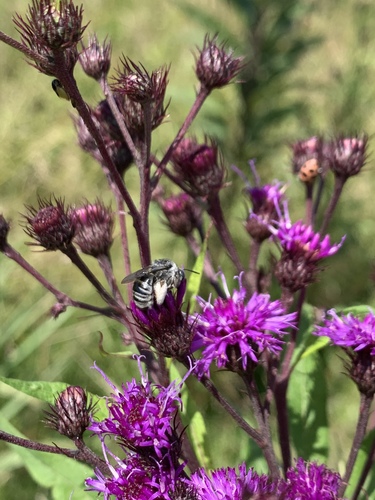
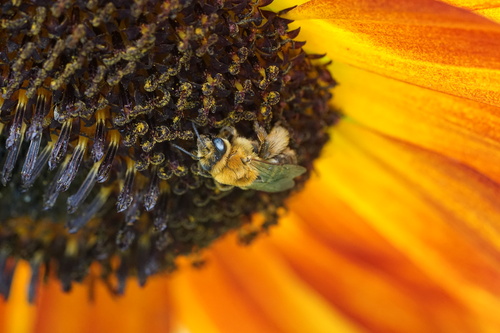
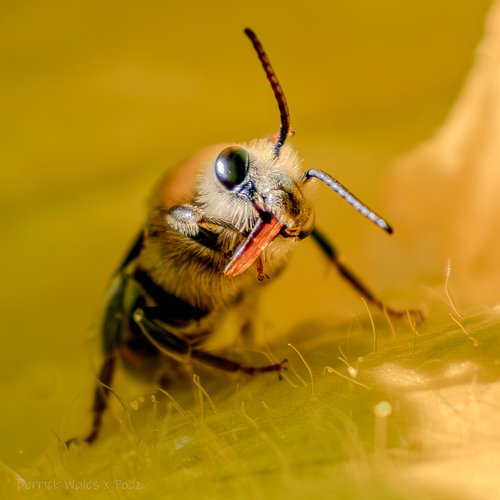
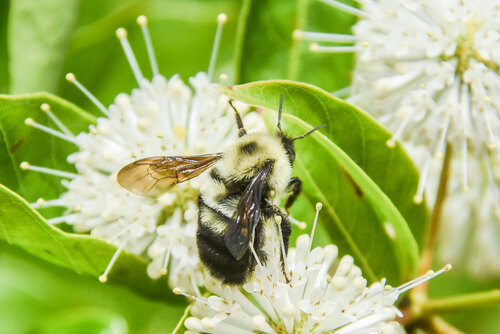
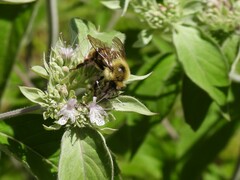
The two-spotted bumble bee (Bombus bimaculatus) is a species of social bumble bee found in the eastern half of the United States and the adjacent south-eastern part of Canada. In older literature this bee is often referred to as Bremus bimaculatus, Bremus being a synonym for Bombus. The bee's common name comes from the two yellow spots on its abdomen. Unlike many of the other species of bee in the genus Bombus, B. bimaculatus is not on the decline, but instead is very stable. They are abundant pollinators that forage at a variety of plants.

Bombus bimaculatus is in the subgenus Pyrobombus, which is closely related to the subgenera Alpinobombus and Bombus out of the 15 total. Within Pyrobombus, B. bimaculatus is most closely related to B. monticola, B. sylvicola, and B. lapponicus. Additionally, B. bimaculatus can oftentimes be confused with B. impatiens and B. griseocollis, as their colorations are very similar.

Bombus bimaculatus was first described by Ezra Townsend Cresson, an American entomologist, in 1863. Workers look very similar to queens, with the two mainly distinguished by size. Sometimes large workers can be mistaken for... Wikipedia →
Global Distribution

Parks Where Found

# Park Country Daily sighting probability
1 Acadia National Park 🇺🇸 United States
~20%
2 Great Smoky Mountains National Park 🇺🇸 United States
~10%
3 Shenandoah National Park 🇺🇸 United States
~10%
4 Point Pelee National Park 🇨🇦 Canada
~10%
5 Riding Mountain National Park 🇨🇦 Canada
~10%

Cities Where Found

# City Country Daily sighting probability
1 Minneapolis [Saint Paul] 🇺🇸 United States
~40%
2 Boston 🇺🇸 United States
~20%
3 Chicago 🇺🇸 United States
~20%
4 Montreal 🇨🇦 Canada
~20%
5 Toronto 🇨🇦 Canada
~10%
6 Philadelphia 🇺🇸 United States
~10%
7 Detroit 🇺🇸 United States
~10%
8 Washington 🇺🇸 United States
~10%
9 Baltimore 🇺🇸 United States
~10%
10 New York City 🇺🇸 United States
~10%

Before you go

What are the chances of seeing a Two-Spotted Bumble Bee in Boston?

Possible

About 20% of wildlife watchers report a Two-Spotted Bumble Bee sighting in Boston on a given day, based on 717 verified sightings from GBIF citizen-science data. It is the 10th most-seen of the 1200 insects we can rate there. Over three days the chance rises to about 50%, and over a week to about 80%, if each day is a fresh chance.

When is the best time to see a Two-Spotted Bumble Bee in Boston?

June

In that month about 40% of wildlife watchers report a Two-Spotted Bumble Bee in Boston on a given day, against under 5% in September to March, the lowest months.

What time of day is best to see a Two-Spotted Bumble Bee?

Between 11 am and 2 pm

Across all the parks we cover, that three-hour window holds the most Two-Spotted Bumble Bee sightings with a recorded time, and about 9 in 10 of them come between 6 am and 6 pm: it is a daytime animal.

Is Boston the best place to see a Two-Spotted Bumble Bee?

2nd of 10

Of the 10 cities where we can rate Two-Spotted Bumble Bee sightings, Boston ranks 2nd at about 20%. The best odds are in Minneapolis [Saint Paul] (United States, about 40%).

Where does the Two-Spotted Bumble Bee sighting chance come from?

GBIF citizen-science records

It is estimated from how often the Two-Spotted Bumble Bee is recorded against all the insects logged in Boston (717 verified sightings), calibrated against known sighting rates. Figures are rounded to the nearest 10% because citizen-science data supports honest approximations, not decimals, and months with records from fewer than five people show "—". How it works.

← Back to Boston