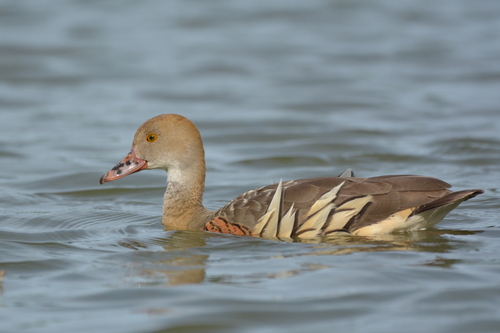
Magpie Goose

Magpie Goose

Anseranas semipalmata

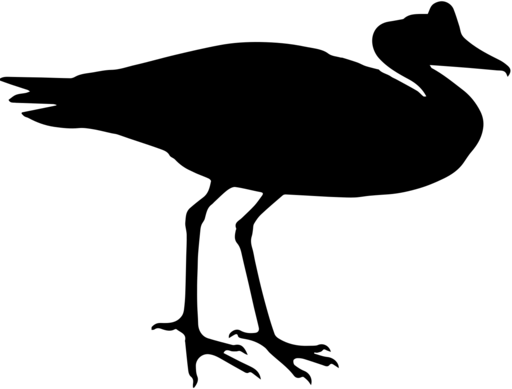
Silhouette: Neville William Cayley · PhyloPic

LCLeast ConcernNTVUENCR
Daily sighting probability ~10% · With luck
at Brisbane

In 3 days ~30% in a week ~50%

1,709 Verified sightings at Brisbane
1,434 In all 3 parks From 2019 to 2026
December Best month
☀️ Diurnal When it's spotted

About the Magpie Goose

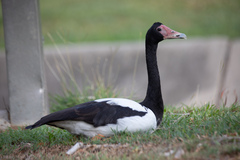
The magpie goose (Anseranas semipalmata) is the sole living representative species of the family Anseranatidae. This waterbird is found in northern Australia and southern New Guinea. The species is not truly migratory but it sometimes travels large distances to find food and water, especially when not breeding, and is sometimes recorded outside its core range. The species was once also widespread in southern Australia but disappeared from there largely due to the drainage of the wetlands where the birds once bred. Due to their importance to Aboriginal people as a seasonal food source, as subjects of recreational hunting, and as a tourist attraction, their expansive and stable presence in northern Australia has been "ensured [by] protective management".

The magpie goose has black-and-white plumage in both sexes, with a long neck and legs and a long hooked bill. The males are 75–90 cm (30–35 in) in length and weigh 2.76 kg (6.1 lb) on average. The female is smaller, being 70–80 cm (28–31 in) in length and weighing 2.07 kg (4.6 lb). The wingspan of this bird spans 130–180 cm (4.3–5.9 ft). Their voice is a loud resonant honking. Its legs and feet are orange. Wikipedia →

Sounds

Call0:14

Australia · 2022

© James Lambert · XC767373 · CC BY-NC-ND 4.0

Flight call0:51

Australia · 2020

© Marc Anderson · XC577235 · CC BY-NC-ND 4.0

Call0:19

Australia · 2022

© nick talbot · XC757203 · CC BY-NC-SA 4.0

Global Distribution

Parks Where Found

# Park Country Daily sighting probability
1 Kakadu National Park 🇦🇺 Australia
~50%
2 Daintree National Park 🇦🇺 Australia
~20%
3 Litchfield National Park 🇦🇺 Australia
~20%

Cities Where Found

# City Country Daily sighting probability
1 Brisbane 🇦🇺 Australia
~10%
2 Melbourne 🇦🇺 Australia
<5%

Zoos & Centres Where Found

# Zoo / Centre Country
1 Ragunan Zoo 🇮🇩 Indonesia In captivity
2 Busch Gardens Tampa 🇺🇸 United States In captivity
3 Prague Zoo 🇨🇿 Czechia In captivity
4 Tierpark Berlin 🇩🇪 Germany In captivity
5 Cincinnati Zoo and Botanical Garden 🇺🇸 United States In captivity
6 Le Pal 🇫🇷 France In captivity
7 Australia Zoo 🇦🇺 Australia In captivity
8 Zlín-Lešná Zoo 🇨🇿 Czechia In captivity
9 Zoobotánico Jerez 🇪🇸 Spain In captivity
10 Territory Wildlife Park 🇦🇺 Australia In captivity
11 Zoo Miami 🇺🇸 United States In captivity
12 San Diego Zoo Safari Park 🇺🇸 United States In captivity
13 Taman Safari Indonesia 🇮🇩 Indonesia In captivity
14 Columbus Zoo and Aquarium 🇺🇸 United States In captivity
15 Tama Zoological Park 🇯🇵 Japan In captivity
16 Wildlife World Zoo 🇺🇸 United States In captivity
17 Parco Natura Viva 🇮🇹 Italy In captivity
18 Berlin Zoological Garden 🇩🇪 Germany In captivity
19 Catoctin Wildlife Preserve and Zoo 🇺🇸 United States In captivity
20 Taronga Zoo 🇦🇺 Australia In captivity
21 Singapore Zoo 🇸🇬 Singapore In captivity
22 Cleland Wildlife Park 🇦🇺 Australia In captivity
23 Currumbin Wildlife Sanctuary 🇦🇺 Australia In captivity
24 Centro Cicogne e Anatidi 🇮🇹 Italy In captivity
25 San Antonio Zoo 🇺🇸 United States In captivity
26 Cologne Zoological Garden 🇩🇪 Germany In captivity
27 Phillip Island Wildlife Park 🇦🇺 Australia In captivity
28 Bird Paradise 🇸🇬 Singapore In captivity
29 Rainforest Wild Asia 🇸🇬 Singapore In captivity
30 East Coast Natureworld 🇦🇺 Australia In captivity
31 Biotropica 🇫🇷 France In captivity
32 Vogelpark Avifauna 🇳🇱 Netherlands In captivity
33 Gorge Wildlife Park 🇦🇺 Australia In captivity
34 Living Treasures "Wild" Animal Park 🇺🇸 United States In captivity
35 Featherdale Sydney Wildlife Park 🇦🇺 Australia In captivity
36 Bali Bird Park 🇮🇩 Indonesia In captivity
37 Ipswich Nature Centre 🇦🇺 Australia In captivity
38 Aquarium Berlin 🇩🇪 Germany In captivity
39 Rákosův pavilon 🇨🇿 Czechia In captivity
40 Velemlokárium 🇨🇿 Czechia In captivity
41 Caversham Wildlife Park 🇦🇺 Australia In captivity
42 Cologne Zoo Aquarium 🇩🇪 Germany In captivity
43 Vogelpark Turnersee 🇦🇹 Austria In captivity
44 Warrawong Wildlife Sanctuary 🇦🇺 Australia In captivity
45 Wildlife Habitat Port Douglas 🇦🇺 Australia In captivity

Before you go

What are the chances of seeing a Magpie Goose in Brisbane?

With luck

About 10% of wildlife watchers report a Magpie Goose sighting in Brisbane on a given day, based on 1,709 verified sightings from GBIF citizen-science data. It is the 85th most-seen of the 237 birds we can rate there. Over three days the chance rises to about 30%, and over a week to about 50%, if each day is a fresh chance.

When is the best time to see a Magpie Goose in Brisbane?

December to March

In those months about 20% of wildlife watchers report a Magpie Goose in Brisbane on a given day, against under 5% in May to August, the lowest months. Those are among Brisbane's wettest months, with about 140 mm of rain a month against 40 mm in July.

What time of day is best to see a Magpie Goose?

Between 9 am and noon

Across all the parks we cover, that three-hour window holds the most Magpie Goose sightings with a recorded time, and about 9 in 10 of them come between 6 am and 6 pm: it is a daytime animal.

Is Brisbane the best place to see a Magpie Goose?

Yes

Of the 2 cities where we can rate Magpie Goose sightings, Brisbane has the highest daily chance: about 10%. Next come Melbourne (Australia, under 5%).

Which relatives of the Magpie Goose live in Brisbane?

Same order: Anseriformes

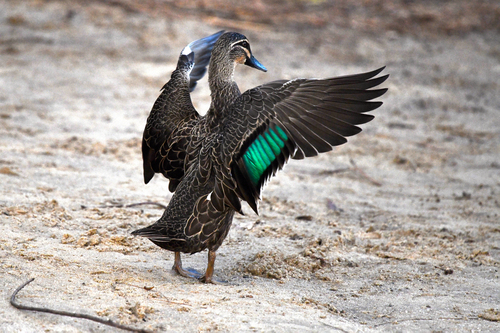
The closest relatives of the Magpie Goose that you can see in Brisbane (order Anseriformes, Waterfowl) are Pacific Black Duck (about 60%), Australian Wood Duck (about 40%) and Grey Teal (about 10%), with each one's daily chance of a sighting.

Where does the Magpie Goose sighting chance come from?

GBIF citizen-science records

It is estimated from how often the Magpie Goose is recorded against all the birds logged in Brisbane (1,709 verified sightings), calibrated against known sighting rates. Figures are rounded to the nearest 10% because citizen-science data supports honest approximations, not decimals, and months with records from fewer than five people show "—". How it works.

← Back to Brisbane