About the Western Gerygone
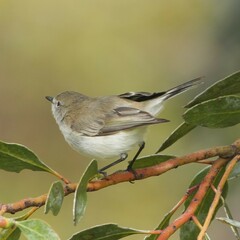
The western gerygone (Gerygone fusca) is a small, brownish-grey species of passerine bird, which is found in inland and south-west Australia. It is an arboreal, insectivore of open forest, woodland and dry shrubland. It is not currently threatened with extinction (IUCN: Least Concern).
The western gerygone is a member of the family Acanthizidae (Thornbills and Allies), which has been split from the family Pardalotidae (Pardalotes). It is a sister-species to the mangrove gerygone (Gerygone levigaster). The close relationship of this phylogenetic pair is suggested by analyses of both morphological characteristics and genetic loci. Populations of a common ancestor of the two species are thought to have diverged after becoming fragmented by severe aridity during the Pleistocene. These two species are now in secondary contact in the Carpentarian Basin, but occupy very different habitats and do not interbreed.
The common name western gerygone and scientific name Gerygone fusca are recognized by the taxonomies of the International Ornithological Congress, Clement's Checklist, the Handbook of the Birds of the World and Christidis and Boles. Wikipedia →