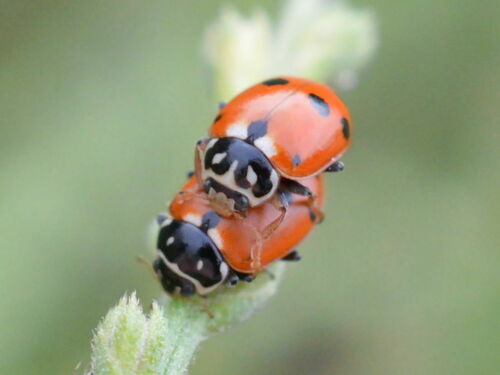
Cream-Spotted Ladybird

Cream-Spotted Ladybird

Calvia quatuordecimguttata

Daily sighting probability ~10% · With luck
at Brussels

In 3 days ~30% in a week ~50%

33 Verified sightings at Brussels
44 In all 6 parks From 2019 to 2026
April Best month
☀️🌙 Day & Night When it's spotted

About the Cream-Spotted Ladybird

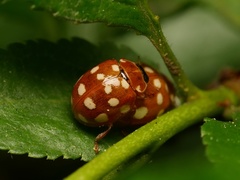
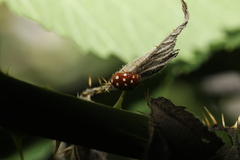
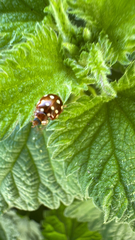
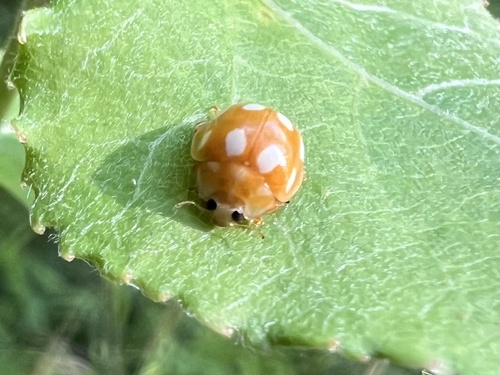
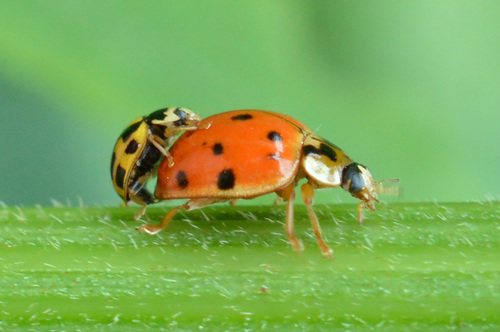
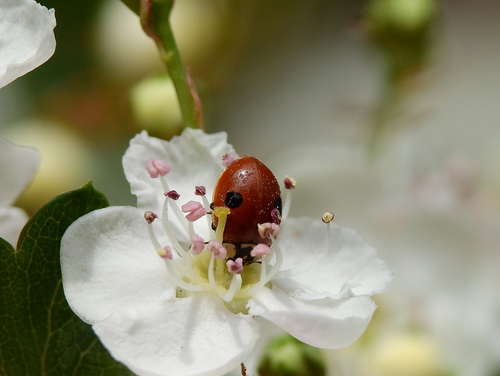
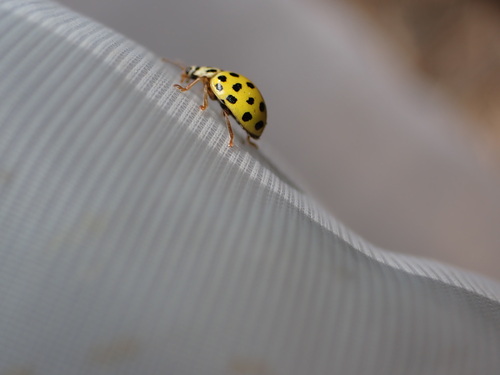
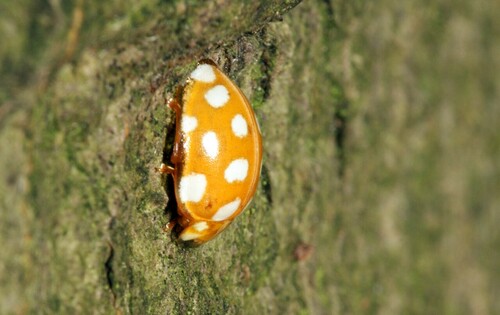
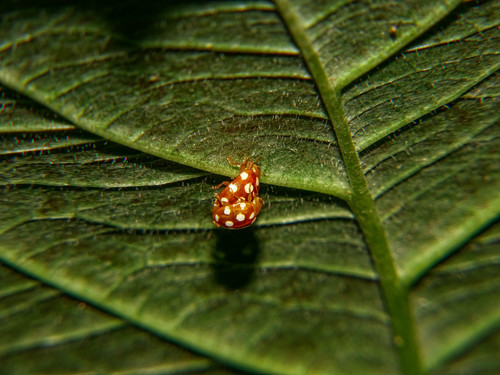
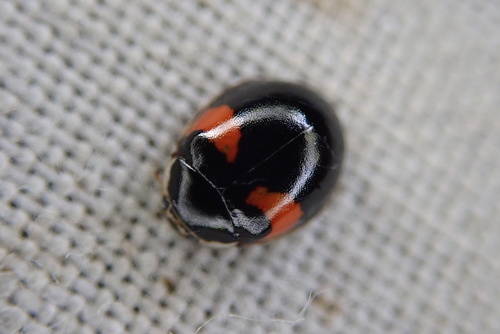
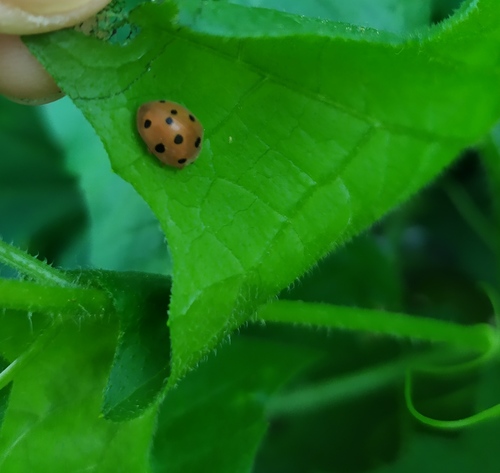
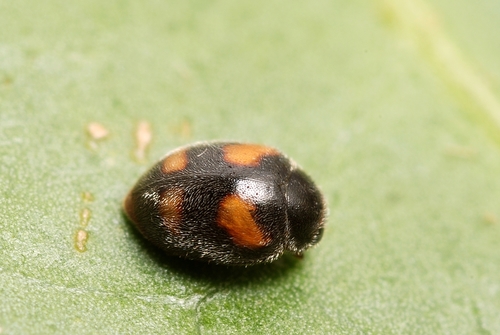
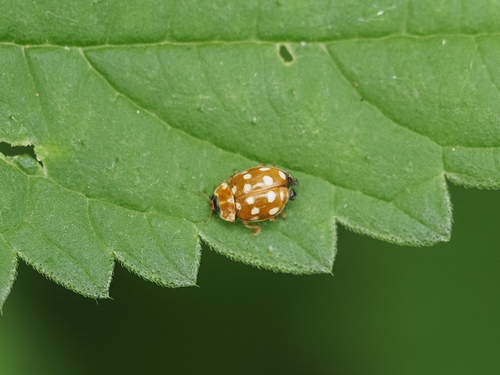
Calvia quatuordecimguttata, the cream-spot ladybird, is a species of ladybird in the family Coccinellidae. Its distribution is holarctic, it being found in North America, Europe and through the East Palearctic to Japan. This ladybird is generally 4 to 5 millimetres (0.16 to 0.20 in) in length, and varies in appearance depending on the geographical location. It usually lives in hedgerows and deciduous trees.

This ladybird was first described by Carl Linnaeus in his 1758 10th edition of Systema Naturae as Coccinella 14-guttata. As ladybirds were further studied, it was transferred to the genus Calvia which was erected in 1873 by the French entomologist Étienne Mulsant. The specific name comes from quatuordecim, the Latin for "fourteen" and guttata, the Latin for "spotted".

This ladybird is also sometimes known as the cream-spotted ladybird, polkadot ladybird or eighteen spot ladybird, and may be confused with another beetle also known as the eighteen-spot ladybird (Myrrha octodecimguttata). The latter is usually found on pine trees, is smaller and a paler brown colour, and has a characteristic M-shaped white mark on its pronotum.

The cream-spot ladybird... Wikipedia →
Global Distribution

Parks Where Found

# Park Country Daily sighting probability
1 Snowdonia National Park 🇬🇧 United Kingdom
~10%
2 Bavarian Forest National Park 🇩🇪 Germany
~10%
3 Cairngorms National Park 🇬🇧 United Kingdom
~10%
4 Pyrénées National Park 🇫🇷 France
<5%
5 Olympic National Park 🇺🇸 United States
<5%
6 Wadden Sea National Park 🇩🇪 Germany
<5%

Cities Where Found

# City Country Daily sighting probability
1 Liverpool 🇬🇧 United Kingdom
~10%
2 Birmingham 🇬🇧 United Kingdom
~10%
3 Berlin 🇩🇪 Germany
~10%
4 Hamburg 🇩🇪 Germany
~10%
5 London 🇬🇧 United Kingdom
~10%
6 Anchorage 🇺🇸 United States
~10%
7 Brussels 🇧🇪 Belgium
~10%
8 Essen 🇩🇪 Germany
~10%
9 Manchester 🇬🇧 United Kingdom
~10%
10 Leeds 🇬🇧 United Kingdom
~10%

Before you go

What are the chances of seeing a Cream-Spotted Ladybird in Brussels?

With luck

About 10% of wildlife watchers report a Cream-Spotted Ladybird sighting in Brussels on a given day, based on 33 verified sightings from GBIF citizen-science data. It is the 64th most-seen of the 337 insects we can rate there. Over three days the chance rises to about 30%, and over a week to about 50%, if each day is a fresh chance.

When is the best time to see a Cream-Spotted Ladybird in Brussels?

April

In that month about 20% of wildlife watchers report a Cream-Spotted Ladybird in Brussels on a given day, against under 5% in September–October and December–January, the lowest months. That is one of Brussels's driest months, with about 40 mm of rain against 80 mm in August.

What time of day is best to see a Cream-Spotted Ladybird?

Between 3 and 6 pm

Across all the parks we cover, that three-hour window holds the most Cream-Spotted Ladybird sightings with a recorded time, and about 7 in 10 of them come between 6 am and 6 pm: it is seen both by day and at night.

Is Brussels the best place to see a Cream-Spotted Ladybird?

Among the best

Of the 34 cities where we can rate Cream-Spotted Ladybird sightings, Brussels ranks 7th at about 10%, level with the leaders once rounded. The best odds are in Liverpool (United Kingdom, about 10%), Birmingham (United Kingdom, about 10%) and Berlin (Germany, about 10%).

Where does the Cream-Spotted Ladybird sighting chance come from?

GBIF citizen-science records

It is estimated from how often the Cream-Spotted Ladybird is recorded against all the insects logged in Brussels (33 verified sightings), calibrated against known sighting rates. Figures are rounded to the nearest 10% because citizen-science data supports honest approximations, not decimals, and months with records from fewer than five people show "—". How it works.

← Back to Brussels