Scolia hirta
Daily sighting probability ~10% · With luck
at Budapest

In 3 days ~30% in a week ~60%

29 Verified sightings at Budapest
65 In all 4 parks From 2019 to 2026
July Best month
☀️ Diurnal When it's spotted

About the Scolia hirta

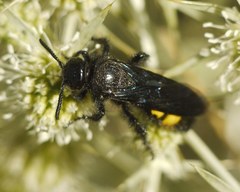
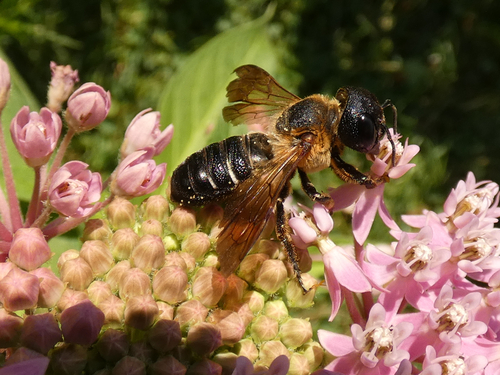
Scolia hirta is a species of wasp in the subfamily Scoliinae of the family Scoliidae. This species is present in most of mediterranean and central Europe, in the eastern Palearctic realm, in the Near East, and in North Africa.

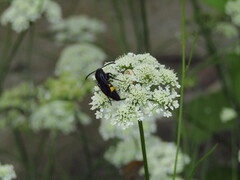
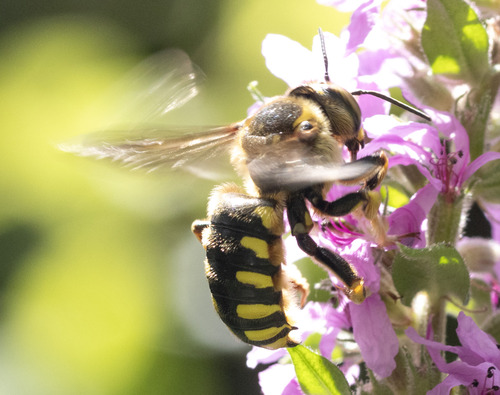
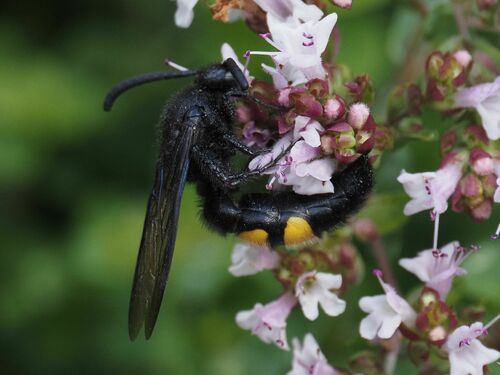
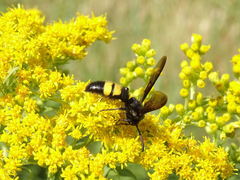
The adults grow up to 10–25 millimetres (0.39–0.98 in) long, the body is completely black, with two glossy yellow stripes on the abdomen. The wings have a smoky-dark color, with blue reflexes. Antennae of males - composed of 13 segments - are longer than in females (12 segments ). Moreover males have three large spines at the tip of their abdomen.

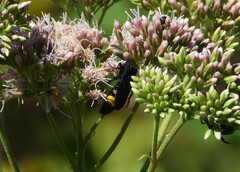
This species is rather similar to Scolia sexmaculata, which had two or three yellow spots instead of two yellow stripes. They can be encountered from July through September feeding on flowers, with a preference for flowers appearing cyan or blue to wasp's eyes and for composite flowers or aggregated inflorescences.

Among the most visited families there are Caprifoliaceae (Knautia arvensis), Asteraceae (Jacobaea vulgaris, Solidago canadensis, Solidago virgaurea, Centaurea scabiosa, Echinops spp.), Lamiaceae (Thymus serpyllum, Pycnanthemum spp.), Crassulaceae and Liliaceae... Wikipedia →
Global Distribution

Parks Where Found

# Park Country Daily sighting probability
1 Fertő-Hanság National Park 🇭🇺 Hungary
~10%
2 Cévennes National Park 🇫🇷 France
~10%
3 Pyrénées National Park 🇫🇷 France
~10%
4 Sierra de Guadarrama National Park 🇪🇸 Spain
<5%

Cities Where Found

# City Country Daily sighting probability
1 Vienna 🇦🇹 Austria
~20%
2 Athens 🇬🇷 Greece
~10%
3 Budapest 🇭🇺 Hungary
~10%
4 Prague 🇨🇿 Czechia
~10%
5 Kharkiv 🇺🇦 Ukraine
~10%
6 Lyon 🇫🇷 France
~10%
7 Berlin 🇩🇪 Germany
~10%
8 Kyiv 🇺🇦 Ukraine
~10%
9 Barcelona 🇪🇸 Spain
~10%
10 Milan 🇮🇹 Italy
~10%

Before you go

What are the chances of seeing a Scolia hirta in Budapest?

With luck

About 10% of wildlife watchers report a Scolia hirta sighting in Budapest on a given day, based on 29 verified sightings from GBIF citizen-science data. It is the 84th most-seen of the 404 insects we can rate there. Over three days the chance rises to about 30%, and over a week to about 60%, if each day is a fresh chance.

When is the best time to see a Scolia hirta in Budapest?

July

In that month about 30% of wildlife watchers report a Scolia hirta in Budapest on a given day, against under 5% in October to May, the lowest months.

What time of day is best to see a Scolia hirta?

Between 1 and 4 pm

Across all the parks we cover, that three-hour window holds the most Scolia hirta sightings with a recorded time, and about 9 in 10 of them come between 6 am and 6 pm: it is a daytime animal.

Is Budapest the best place to see a Scolia hirta?

3rd of 14

Of the 14 cities where we can rate Scolia hirta sightings, Budapest ranks 3rd at about 10%. The best odds are in Vienna (Austria, about 20%) and Athens (Greece, about 10%).

Which relatives of the Scolia hirta live in Budapest?

Same order: Hymenoptera

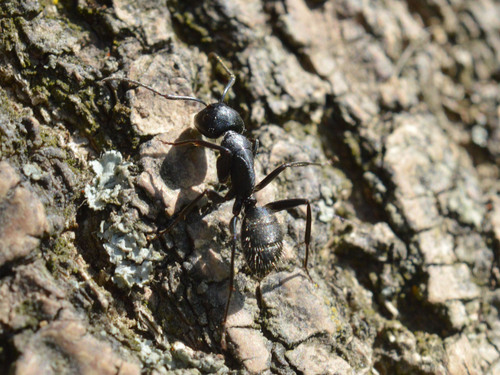
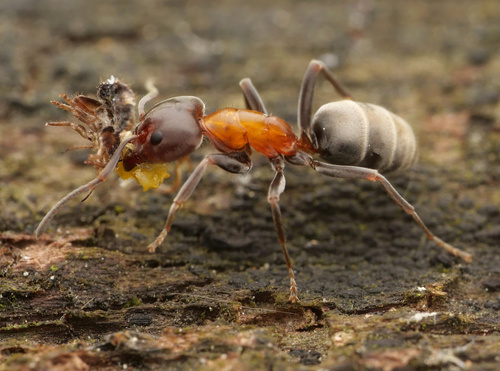
The closest relatives of the Scolia hirta that you can see in Budapest (order Hymenoptera, Ants, Bees, Wasps, and Sawflies) are European Hornet (about 20%), Hairy Carpenter Ant (about 20%) and Small-Headed Tree Ant (about 20%), with each one's daily chance of a sighting.

Where does the Scolia hirta sighting chance come from?

GBIF citizen-science records

It is estimated from how often the Scolia hirta is recorded against all the insects logged in Budapest (29 verified sightings), calibrated against known sighting rates. Figures are rounded to the nearest 10% because citizen-science data supports honest approximations, not decimals, and months with records from fewer than five people show "—". How it works.

← Back to Budapest