
Ashy Gray Lady Beetle

Ashy Gray Lady Beetle

Olla v-nigrum

Daily sighting probability ~10% · With luck
at Buenos Aires

In 3 days ~30% in a week ~60%

306 Verified sightings at Buenos Aires
79 In all 4 parks From 2019 to 2026
December Best month
☀️🌙 Day & Night When it's spotted

About the Ashy Gray Lady Beetle

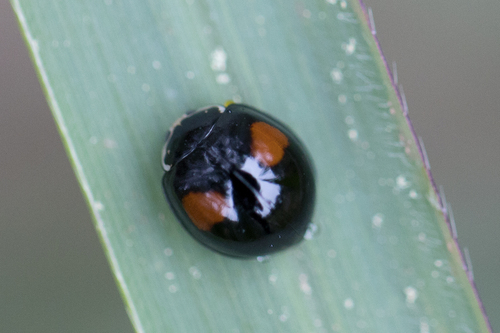
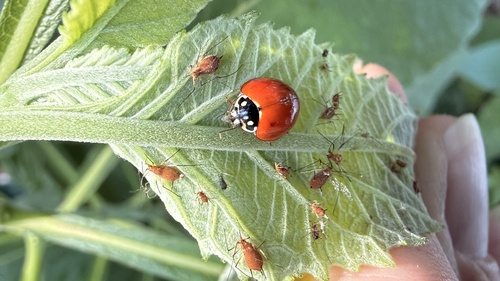
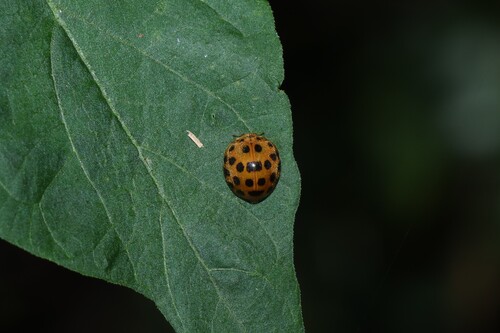
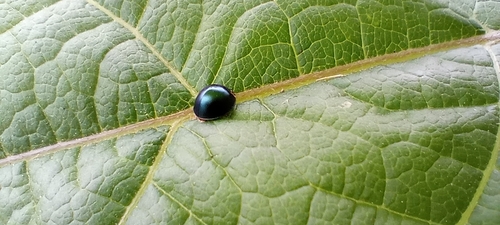
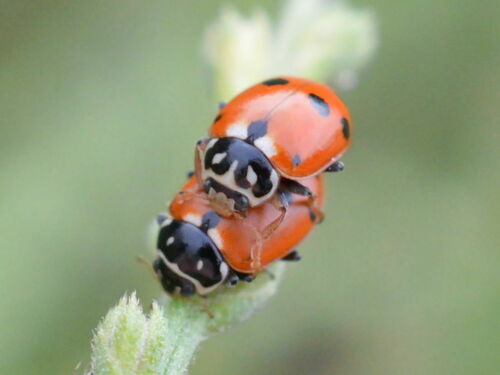
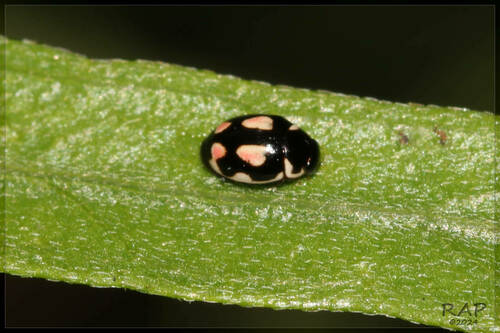
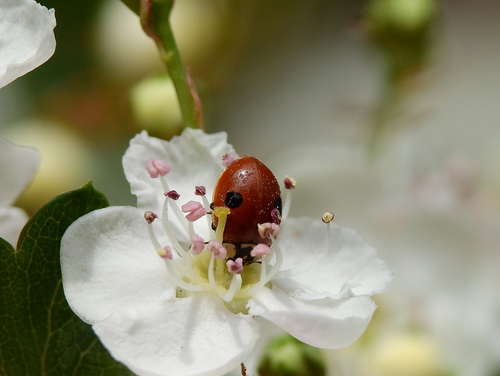
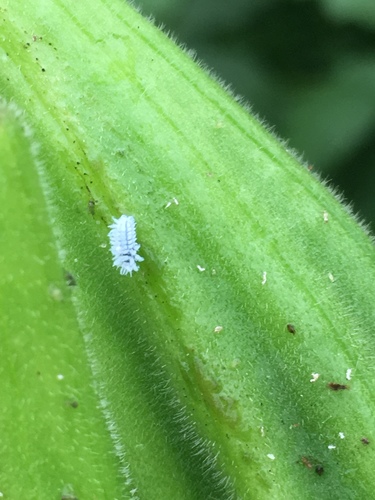
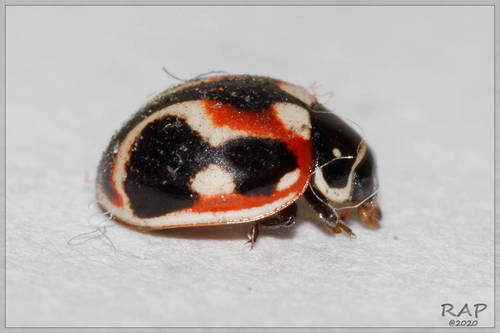
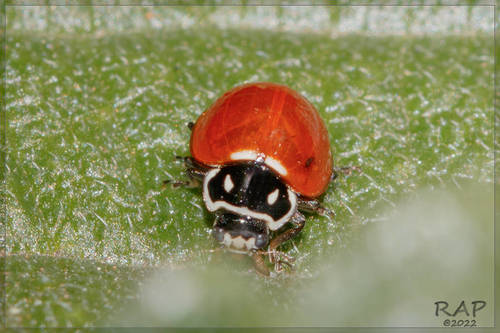
Olla v-nigrum is a species in the family Coccinellidae ("lady beetles"), in the suborder Polyphaga. The species is known generally as the ashy gray lady beetle. The distribution range of Olla v-nigrum includes Central America, North America, and Oceania. It is usually gray or pale tan with small black spots on its elytra and thorax. However, a variation can resemble Chilocorus orbus, another species of lady beetle. This form is black with two red spots on the wing covers and has white on the edge of the prothorax.

The V in its name (v-nigrum) comes from the fact that Mulsant originally described the "prothorax" (pronotum) as "adorned with a V and four black dots". Olla v-nigrum has two color variants: gray with black spots or black with red spots. They are usually anywhere between 3.7 to 6.1 mm (0.15 to 0.24 in) in length. Olla v-nigrum is often confused with Chilocorus sp. which usually have more flared elytra and a distinct shape. They do not have white marking on their heads like Olla v-nigrum. Olla v-nigrum spots tend to be triangular and slope away from where the wings meet.

Olla v-nigrum lack an infundibulum in female genitalia. Olla v... Wikipedia →

Global Distribution

Parks Where Found

# Park Country Daily sighting probability
1 Big Bend National Park 🇺🇸 United States
~10%
2 Cumbres de Monterrey National Park 🇲🇽 Mexico
~10%
3 Tijuca National Park 🇧🇷 Brazil
~10%
4 Saguaro National Park 🇺🇸 United States
<5%

Cities Where Found

# City Country Daily sighting probability
1 Mendoza 🇦🇷 Argentina
~20%
2 Monterrey 🇲🇽 México
~10%
3 Mesa 🇺🇸 United States
~10%
4 Austin 🇺🇸 United States
~10%
5 Buenos Aires 🇦🇷 Argentina
~10%
6 Montevideo 🇺🇾 Uruguay
~10%
7 São Paulo 🇧🇷 Brazil
~10%
8 San Antonio 🇺🇸 United States
~10%
9 Belo Horizonte 🇧🇷 Brazil
~10%
10 Rio de Janeiro 🇧🇷 Brazil
~10%

Before you go

What are the chances of seeing an Ashy Gray Lady Beetle in Buenos Aires?

With luck

About 10% of wildlife watchers report an Ashy Gray Lady Beetle sighting in Buenos Aires on a given day, based on 306 verified sightings from GBIF citizen-science data. It is the 40th most-seen of the 558 insects we can rate there. Over three days the chance rises to about 30%, and over a week to about 60%, if each day is a fresh chance.

When is the best time to see an Ashy Gray Lady Beetle in Buenos Aires?

December

In that month about 30% of wildlife watchers report an Ashy Gray Lady Beetle in Buenos Aires on a given day, against about 10% in January to November, the lowest months.

What time of day is best to see an Ashy Gray Lady Beetle?

Between 9 pm and midnight

Across all the parks we cover, that three-hour window holds the most Ashy Gray Lady Beetle sightings with a recorded time, and about half of them come between 6 am and 6 pm: it is seen both by day and at night.

Is Buenos Aires the best place to see an Ashy Gray Lady Beetle?

5th of 33

Of the 33 cities where we can rate Ashy Gray Lady Beetle sightings, Buenos Aires ranks 5th at about 10%. The best odds are in Mendoza (Argentina, about 20%), Monterrey (México, about 10%) and Mesa (United States, about 10%).

Which relatives of the Ashy Gray Lady Beetle live in Buenos Aires?

Same family: Coccinellidae

The closest relatives of the Ashy Gray Lady Beetle that you can see in Buenos Aires (family Coccinellidae, Lady Beetles) are Asian Lady Beetle (about 30%), Eriopis connexa (about 20%) and Spotless Lady Beetle (about 20%), with each one's daily chance of a sighting.

Where does the Ashy Gray Lady Beetle sighting chance come from?

GBIF citizen-science records

It is estimated from how often the Ashy Gray Lady Beetle is recorded against all the insects logged in Buenos Aires (306 verified sightings), calibrated against known sighting rates. Figures are rounded to the nearest 10% because citizen-science data supports honest approximations, not decimals, and months with records from fewer than five people show "—". How it works.

← Back to Buenos Aires