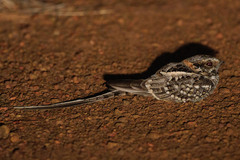
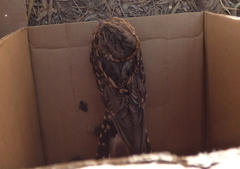
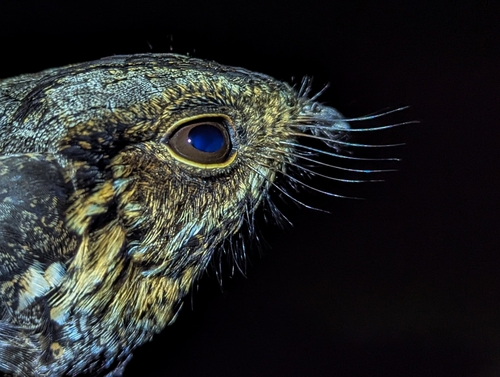
Scissor-tailed Nightjar

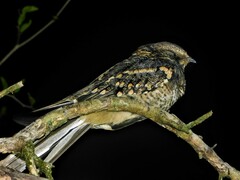
Scissor-tailed Nightjar

Hydropsalis torquata

Silhouette: Sheatherius · PhyloPic

LCLeast ConcernNTVUENCR
Daily sighting probability <5% · Rare
at Buenos Aires

In 3 days <5% in a week ~10%

165 Verified sightings at Buenos Aires
244 In all 7 parks From 2019 to 2026
November Best month
☀️🌙 Day & Night When it's spotted

About the Scissor-tailed Nightjar

The scissor-tailed nightjar (Hydropsalis torquata) is a species of nightjar in the family Caprimulgidae. It is distributed over much of eastern South America. The scissor-tailed nightjar was formally described in 1789 by the German naturalist Johann Friedrich Gmelin in his revised and expanded edition of Carl Linnaeus's Systema Naturae. He placed it with the other nightjars in the genus Caprimulgus and coined the binomial name Caprimulgus torquatus. The scissor-tailed nightjar is now placed with three other species in the genus Hydropsalis that was introduced in 1832 by the German naturalist Johann Georg Wagler. The genus name combines the Ancient Greek hudro- meaning "water-" with psalis meaning "pair of scissors". The specific epithet torquata is from Latin torquatus meaning "collared".

Two subspecies are recognised: The specific epithet brasiliana or brasilianus was formerly sometimes used. The most distinctive feature of the scissor-tailed nightjar is the male's elongated outer tail feathers... Wikipedia →

Sounds

Click0:43

Argentina · 2022

© Niels Krabbe · XC1177262 · CC BY-NC-SA 4.0

Song0:42

Brazil · 2023

© Vinícius Soares Domingues · XC825503 · CC BY-NC-SA 4.0

Call0:23

Brazil · 2022

© JAYRSON ARAUJO DE OLIVEIRA · XC722073 · CC BY-NC-SA 4.0

Global Distribution

Parks Where Found

# Park Country Daily sighting probability
1 El Impenetrable National Park 🇦🇷 Argentina
~20%
2 El Palmar National Park 🇦🇷 Argentina
~10%
3 Serra da Canastra National Park 🇧🇷 Brazil
~10%
4 Chapada dos Guimarães National Park 🇧🇷 Brazil
~10%
5 Chapada Diamantina National Park 🇧🇷 Brazil
<5%
6 Iberá National Park 🇦🇷 Argentina
<5%
7 Serra dos Órgãos National Park 🇧🇷 Brazil
<5%

Cities Where Found

# City Country Daily sighting probability
1 Cordoba 🇦🇷 Argentina
<5%
2 Buenos Aires 🇦🇷 Argentina
<5%
3 São Paulo 🇧🇷 Brazil
<5%

Before you go

What are the chances of seeing a Scissor-tailed Nightjar in Buenos Aires?

Rare

Under 5% of wildlife watchers report a Scissor-tailed Nightjar sighting in Buenos Aires on a given day, based on 165 verified sightings from GBIF citizen-science data. It is the 182nd most-seen of the 274 birds we can rate there. Over three days the chance rises to under 5%, and over a week to about 10%, if each day is a fresh chance.

When is the best time to see a Scissor-tailed Nightjar in Buenos Aires?

Any time of year

In every month with enough records, under 5% of wildlife watchers report a Scissor-tailed Nightjar in Buenos Aires on a given day, so our monthly data shows no clear season.

What time of day is best to see a Scissor-tailed Nightjar?

Between 6 and 9 pm

Across all the parks we cover, that three-hour window holds the most Scissor-tailed Nightjar sightings with a recorded time, and about half of them come between 6 pm and 6 am: it is seen both by day and at night.

Is Buenos Aires the best place to see a Scissor-tailed Nightjar?

Among the best

Of the 3 cities where we can rate Scissor-tailed Nightjar sightings, Buenos Aires ranks 2nd at under 5%, level with the leaders once rounded. The best odds are in Cordoba (Argentina, under 5%).

Where does the Scissor-tailed Nightjar sighting chance come from?

GBIF citizen-science records

It is estimated from how often the Scissor-tailed Nightjar is recorded against all the birds logged in Buenos Aires (165 verified sightings), calibrated against known sighting rates. Figures are rounded to the nearest 10% because citizen-science data supports honest approximations, not decimals, and months with records from fewer than five people show "—". How it works.

← Back to Buenos Aires