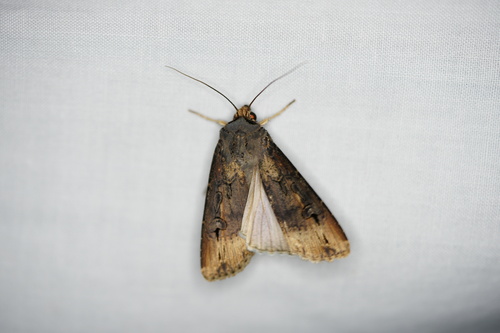
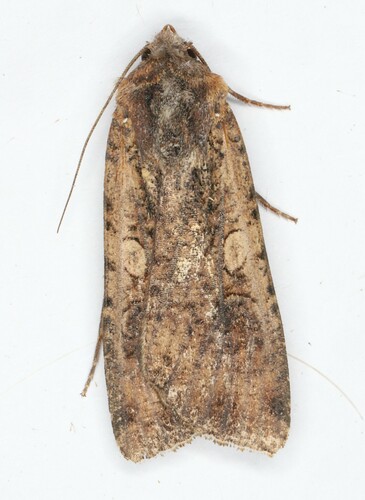
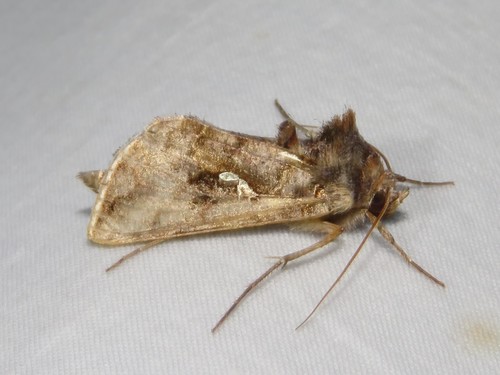
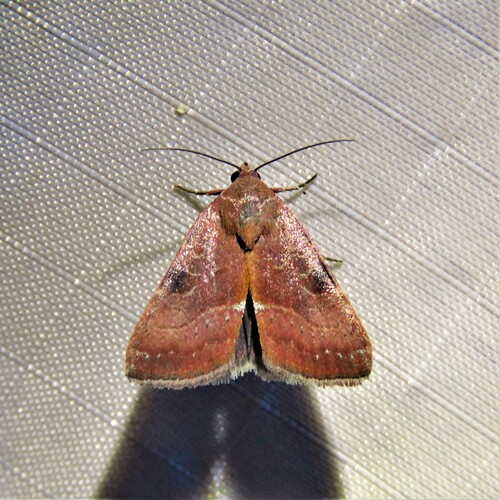
Common Pinkband

Common Pinkband

Ogdoconta cinereola

Daily sighting probability <5% · Rare
at Chicago

In 3 days ~10% in a week ~20%

8 Verified sightings at Chicago
August Best month
☀️🌙 Day & Night When it's spotted

About the Common Pinkband

Ogdoconta cinereola, the common pinkband moth, is a moth in the family Noctuidae. It is found in eastern, central, and south-western North America. It occurs from southern Ontario and Quebec south to southern Florida. At the western edge of its distribution, it occurs from Manitoba southward through the Great Plains of Nebraska and Iowa, south throughout most of Texas, and westward through southern New Mexico to south-eastern Arizona (Santa Cruz County). The distribution extends south to the state of Coahuila in northern Mexico.

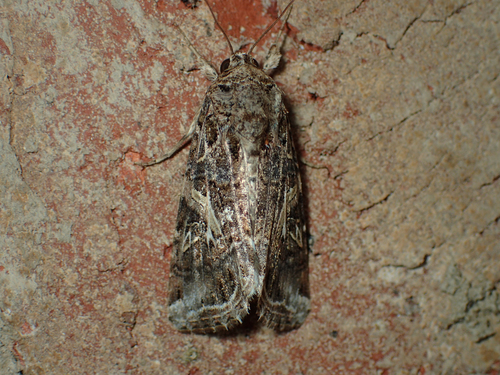
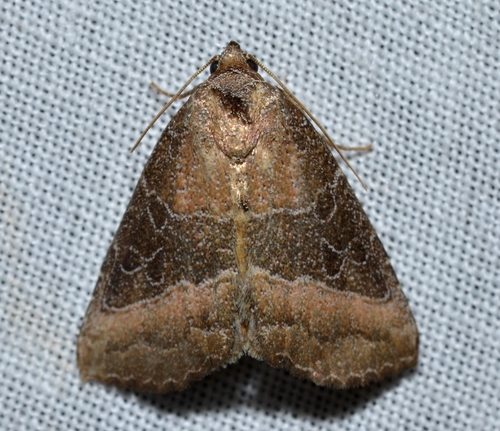
The length of the forewings is 9.5–14.5 mm. The forewing is light fuscous brown, and the subterminal region (between the postmedial and subterminal lines) is suffused with a pinkish tinge. The medial and basal areas are minutely speckled with white. The antemedial line is an obscure, scalloped white line. The reniform and orbicular spots are obscure but often discernible by fine white outlines. The claviform spot is absent. The postmedial line is a white, almost straight, oblique line with a slight basally directed bend. The subterminal line is marked primarily as a brown shade terminating the pink suffusion of the subterminal region. The hindwings are suffused with brown. Males and females are similar in appearance, although the female hindwing usually is darker. Adults are on wing from May to September

in the northern part of the range and from April to October in Texas and Florida. The larvae feed on Amaranthaceae, Asteraceae (especially Ambrosia species), Fabaceae, Labiatae and Poaceae species. Wikipedia →
Global Distribution

Parks Where Found

# Park Country Daily sighting probability

More parks will be added in future updates.

Cities Where Found

# City Country Daily sighting probability
1 Austin 🇺🇸 United States
~10%
2 Dallas 🇺🇸 United States
<5%
3 Houston 🇺🇸 United States
<5%
4 San Antonio 🇺🇸 United States
<5%
5 Washington 🇺🇸 United States
<5%
6 Chicago 🇺🇸 United States
<5%
7 Toronto 🇨🇦 Canada
<5%

Before you go

What are the chances of seeing a Common Pinkband in Chicago?

Rare

Under 5% of wildlife watchers report a Common Pinkband sighting in Chicago on a given day, based on 8 verified sightings from GBIF citizen-science data. It is the 706th most-seen of the 978 insects we can rate there. Over three days the chance rises to about 10%, and over a week to about 20%, if each day is a fresh chance.

When is the best time to see a Common Pinkband in Chicago?

Any time of year

In every month with enough records, under 5% of wildlife watchers report a Common Pinkband in Chicago on a given day, so our monthly data shows no clear season.

What time of day is best to see a Common Pinkband?

Between 9 pm and midnight

Across all the parks we cover, that three-hour window holds the most Common Pinkband sightings with a recorded time, and about 6 in 10 of them come between 6 pm and 6 am: it is seen both by day and at night.

Is Chicago the best place to see a Common Pinkband?

6th of 7

Of the 7 cities where we can rate Common Pinkband sightings, Chicago ranks 6th at under 5%. The best odds are in Austin (United States, about 10%), Dallas (United States, under 5%) and Houston (United States, under 5%).

Which relatives of the Common Pinkband live in Chicago?

Same family: Noctuidae

The closest relatives of the Common Pinkband that you can see in Chicago (family Noctuidae, Cutworm Moths and Allies) are American Dagger (about 10%), Armyworm Moth (about 10%) and Corn Earworm Moth (about 10%), with each one's daily chance of a sighting.

Where does the Common Pinkband sighting chance come from?

GBIF citizen-science records

It is estimated from how often the Common Pinkband is recorded against all the insects logged in Chicago (8 verified sightings), calibrated against known sighting rates. Figures are rounded to the nearest 10% because citizen-science data supports honest approximations, not decimals, and months with records from fewer than five people show "—". How it works.

← Back to Chicago