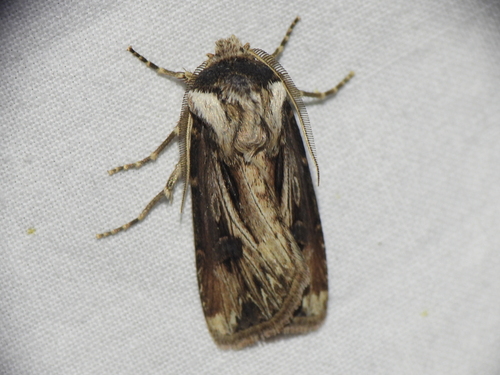
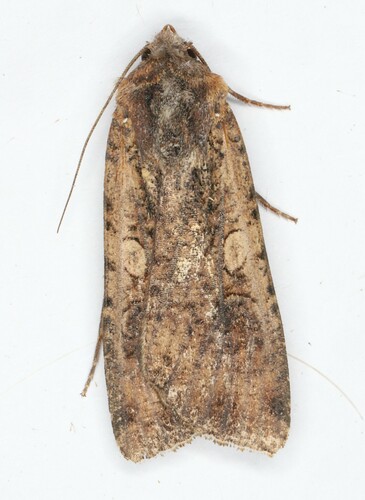
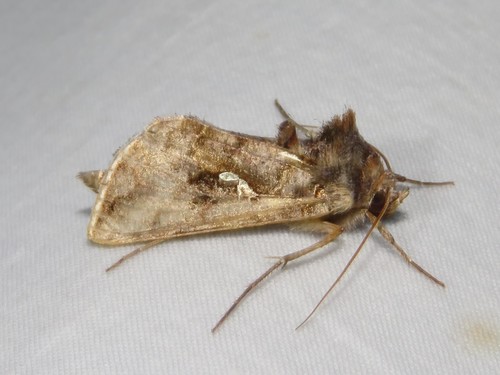
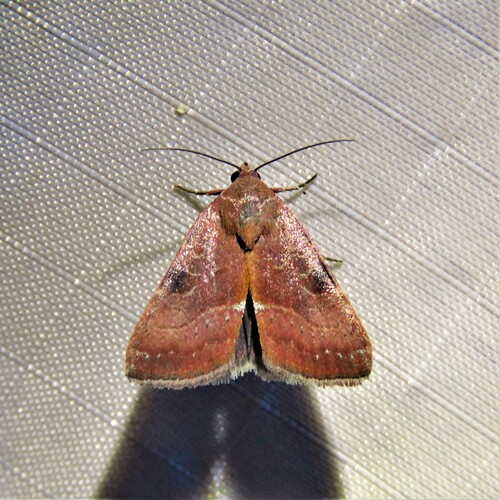
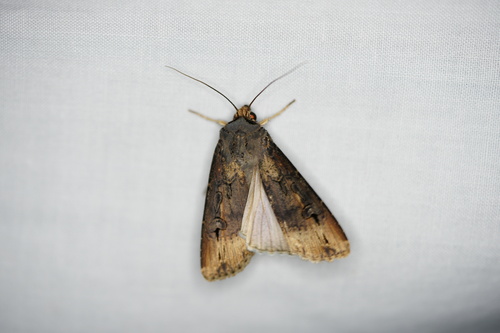
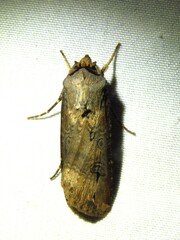
Ipsilon Dart Moth

Ipsilon Dart Moth

Agrotis ipsilon

Daily sighting probability ~10% · With luck
at Chicago

In 3 days ~20% in a week ~40%

193 Verified sightings at Chicago
227 In all 16 parks From 2019 to 2026
August Best month
☀️🌙 Day & Night When it's spotted

About the Ipsilon Dart Moth

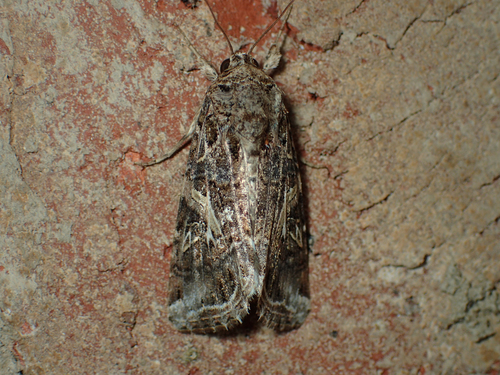
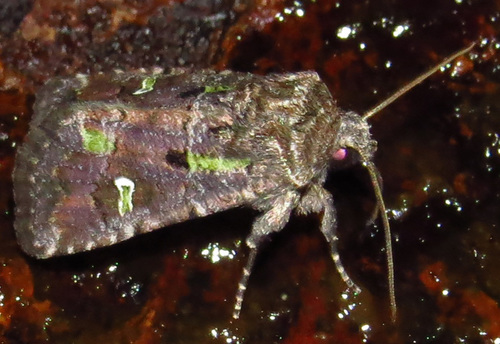
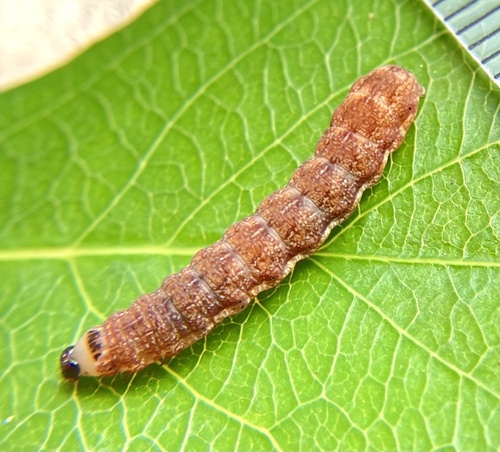
Agrotis ipsilon, the dark sword-grass, ipsilon dart, black cutworm, greasy cutworm or floodplain cutworm, is a small noctuid moth found worldwide. The moth gets its scientific name from black markings on its forewings shaped like the letter "Y" or the Greek letter upsilon. The larvae are known as "cutworms" because they cut plants and other crops. The larvae are serious agricultural pests and feed on nearly all varieties of vegetables and many important grains.

This species is a seasonal migrant that travels north in the spring and south in the fall to escape extreme temperatures in the summer and winter. The migration patterns reflect how reproduction occurs in the spring and ceases in the fall.

Females release sex pheromones to attract males for mating. Pheromone production and release in females and pheromone responsiveness in males is dependent on the juvenile hormone (JH) and pheromone biosynthesis activating neuropeptide (BPAN). In the span of 2 months, the moth progresses through the life cycle stages egg, larvae, pupa, and adult. Throughout this time period, this moth faces the risk of predation and parasitism, such as by Hexamermis arvalis or by the parasite Archytas cirphis... Wikipedia →
Global Distribution

Parks Where Found

# Park Country Daily sighting probability
1 Rakiura National Park 🇳🇿 New Zealand
~20%
2 Egmont National Park 🇳🇿 New Zealand
~20%
3 Abel Tasman National Park 🇳🇿 New Zealand
~10%
4 Fiordland National Park 🇳🇿 New Zealand
~10%
5 Arthur's Pass National Park 🇳🇿 New Zealand
~10%
6 Wadden Sea National Park 🇩🇪 Germany
~10%
7 Springbrook National Park 🇦🇺 Australia
~10%
8 Sierra Nevada National Park 🇪🇸 Spain
~10%
9 Lamington National Park 🇦🇺 Australia
~10%
10 Blue Mountains National Park 🇦🇺 Australia
~10%
11 Bavarian Forest National Park 🇩🇪 Germany
~10%
12 Cévennes National Park 🇫🇷 France
~10%
13 Acadia National Park 🇺🇸 United States
~10%
14 Pyrénées National Park 🇫🇷 France
<5%
15 Shenandoah National Park 🇺🇸 United States
<5%
16 Great Smoky Mountains National Park 🇺🇸 United States
<5%

Cities Where Found

# City Country Daily sighting probability
1 Auckland 🇳🇿 New Zealand
~20%
2 Porto 🇵🇹 Portugal
~10%
3 Baltimore 🇺🇸 United States
~10%
4 Austin 🇺🇸 United States
~10%
5 Chicago 🇺🇸 United States
~10%
6 Rome 🇮🇹 Italy
~10%
7 Boston 🇺🇸 United States
~10%
8 Madrid 🇪🇸 Spain
~10%
9 Philadelphia 🇺🇸 United States
~10%
10 Dallas 🇺🇸 United States
~10%

Before you go

What are the chances of seeing an Ipsilon Dart Moth in Chicago?

With luck

About 10% of wildlife watchers report an Ipsilon Dart Moth sighting in Chicago on a given day, based on 193 verified sightings from GBIF citizen-science data. It is the 105th most-seen of the 978 insects we can rate there. Over three days the chance rises to about 20%, and over a week to about 40%, if each day is a fresh chance.

When is the best time to see an Ipsilon Dart Moth in Chicago?

July to November

In those months about 10% of wildlife watchers report an Ipsilon Dart Moth in Chicago on a given day, against under 5% in December to June, the lowest months.

What time of day is best to see an Ipsilon Dart Moth?

Between 9 pm and midnight

Across all the parks we cover, that three-hour window holds the most Ipsilon Dart Moth sightings with a recorded time, and about 6 in 10 of them come between 6 pm and 6 am: it is seen both by day and at night.

Is Chicago the best place to see an Ipsilon Dart Moth?

5th of 36

Of the 36 cities where we can rate Ipsilon Dart Moth sightings, Chicago ranks 5th at about 10%. The best odds are in Auckland (New Zealand, about 20%), Porto (Portugal, about 10%) and Baltimore (United States, about 10%).

Where does the Ipsilon Dart Moth sighting chance come from?

GBIF citizen-science records

It is estimated from how often the Ipsilon Dart Moth is recorded against all the insects logged in Chicago (193 verified sightings), calibrated against known sighting rates. Figures are rounded to the nearest 10% because citizen-science data supports honest approximations, not decimals, and months with records from fewer than five people show "—". How it works.

← Back to Chicago