Swamp Milkweed Leaf Beetle

Swamp Milkweed Leaf Beetle

Labidomera clivicollis

Daily sighting probability ~10% · With luck
at Chicago

In 3 days ~20% in a week ~40%

210 Verified sightings at Chicago
56 In all 4 parks From 2019 to 2026
June Best month
☀️ Diurnal When it's spotted

About the Swamp Milkweed Leaf Beetle

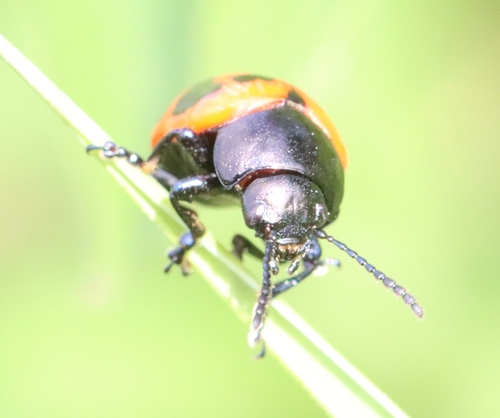
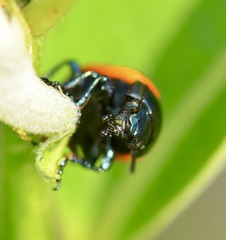
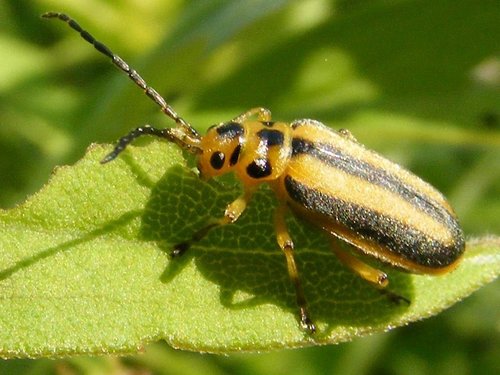
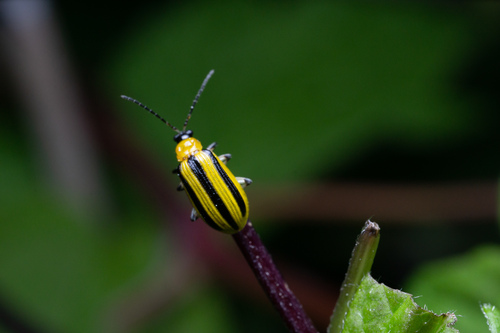
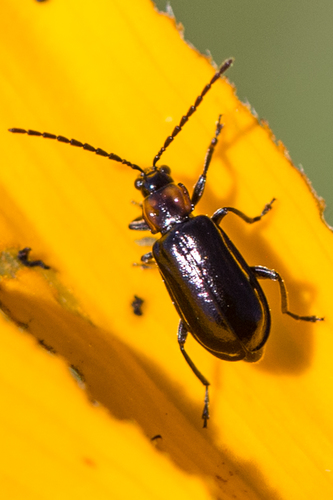
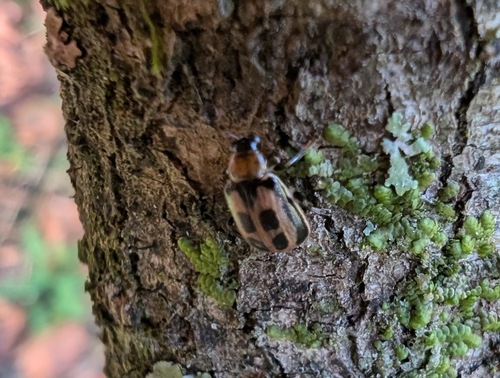
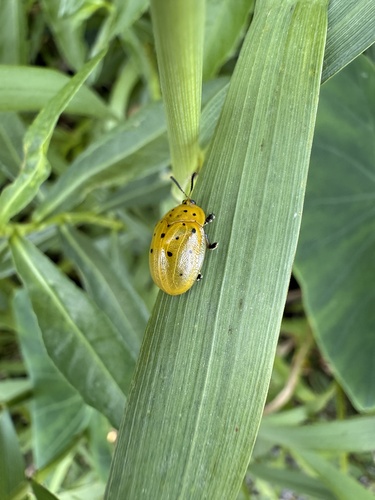
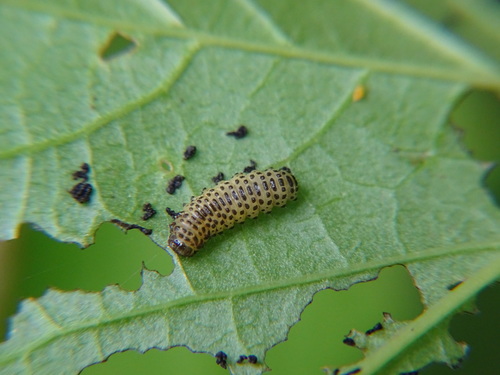
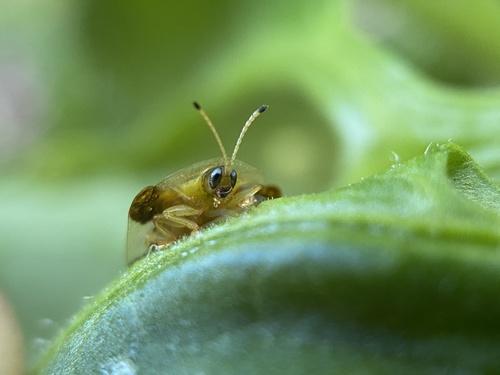
The milkweed leaf beetle, or swamp milkweed leaf beetle (Labidomera clivicollis) is a species of leaf beetle from the family Chrysomelidae. It is found in eastern Northern America. These leaf beetles are round bodied, 8–11 mm in length, with a black head and pronotum and bright orange to yellow elytra with variable mottled black patches. L. clivicollis somewhat resembles a large ladybird beetle, and though it is not in the ladybird family (Coccinellidae), it is closely related (infraorder Cucujiformia). The larvae are light orange, white, or gray with a black pronotum and prominent black spots on the spiracles. They are grub-like and can be found feeding on milkweeds, especially swamp milkweed. Milkweed leaf beetle larvae can be distinguished from visually similar and closely related species by color, host plant, and number of spots.

There are a number of L. clivicollis host plants which are toxic to most herbivores. Many are in the dogbane family (Apocynaceae) including milkweeds, especially swamp milkweed (Asclepias incarnata) and common milkweed (Asclepias syriaca); swallow-wort (Cynanchum); twinevine (Funastrum).

The female lays small groups of orange... Wikipedia →

Global Distribution

Parks Where Found

# Park Country Daily sighting probability
1 Congaree National Park 🇺🇸 United States
~20%
2 Shenandoah National Park 🇺🇸 United States
~10%
3 Point Pelee National Park 🇨🇦 Canada
~10%
4 Cumbres de Monterrey National Park 🇲🇽 Mexico
<5%

Cities Where Found

# City Country Daily sighting probability
1 Montreal 🇨🇦 Canada
~10%
2 Minneapolis [Saint Paul] 🇺🇸 United States
~10%
3 Detroit 🇺🇸 United States
~10%
4 Baltimore 🇺🇸 United States
~10%
5 Washington 🇺🇸 United States
~10%
6 Houston 🇺🇸 United States
~10%
7 Chicago 🇺🇸 United States
~10%
8 Philadelphia 🇺🇸 United States
~10%
9 Dallas 🇺🇸 United States
<5%
10 Boston 🇺🇸 United States
<5%

Before you go

What are the chances of seeing a Swamp Milkweed Leaf Beetle in Chicago?

With luck

About 10% of wildlife watchers report a Swamp Milkweed Leaf Beetle sighting in Chicago on a given day, based on 210 verified sightings from GBIF citizen-science data. It is the 84th most-seen of the 978 insects we can rate there. Over three days the chance rises to about 20%, and over a week to about 40%, if each day is a fresh chance.

When is the best time to see a Swamp Milkweed Leaf Beetle in Chicago?

May to September

In those months about 10% of wildlife watchers report a Swamp Milkweed Leaf Beetle in Chicago on a given day, against under 5% in October to April, the lowest months.

What time of day is best to see a Swamp Milkweed Leaf Beetle?

Between 11 am and 2 pm

Across all the parks we cover, that three-hour window holds the most Swamp Milkweed Leaf Beetle sightings with a recorded time, and about 9 in 10 of them come between 6 am and 6 pm: it is a daytime animal.

Is Chicago the best place to see a Swamp Milkweed Leaf Beetle?

Among the best

Of the 15 cities where we can rate Swamp Milkweed Leaf Beetle sightings, Chicago ranks 7th at about 10%, level with the leaders once rounded. The best odds are in Montreal (Canada, about 10%), Minneapolis [Saint Paul] (United States, about 10%) and Detroit (United States, about 10%).

Which relatives of the Swamp Milkweed Leaf Beetle live in Chicago?

Same family: Chrysomelidae

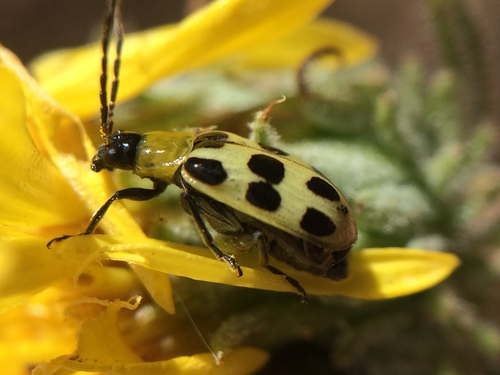
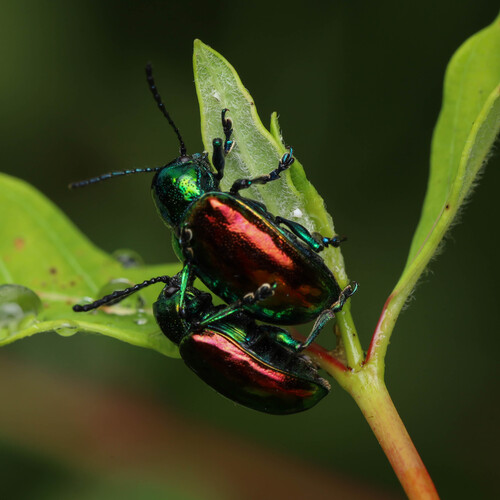
The closest relatives of the Swamp Milkweed Leaf Beetle that you can see in Chicago (family Chrysomelidae, Leaf Beetles) are Spotted Cucumber Beetle (about 10%) and Dogbane Leaf Beetle (about 10%), with each one's daily chance of a sighting.

Where does the Swamp Milkweed Leaf Beetle sighting chance come from?

GBIF citizen-science records

It is estimated from how often the Swamp Milkweed Leaf Beetle is recorded against all the insects logged in Chicago (210 verified sightings), calibrated against known sighting rates. Figures are rounded to the nearest 10% because citizen-science data supports honest approximations, not decimals, and months with records from fewer than five people show "—". How it works.

← Back to Chicago