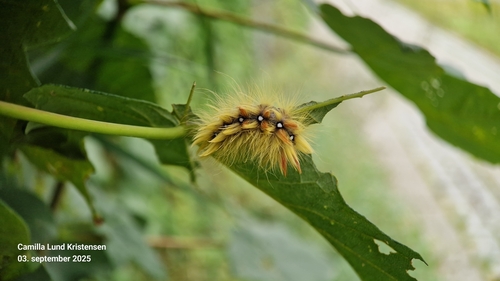
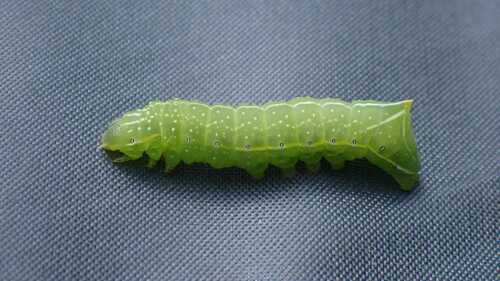
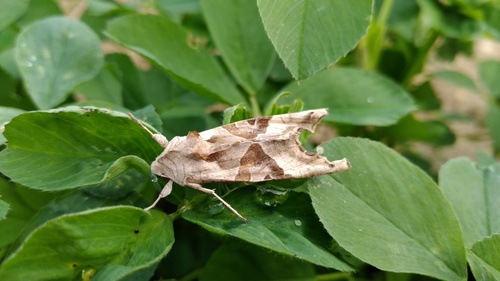
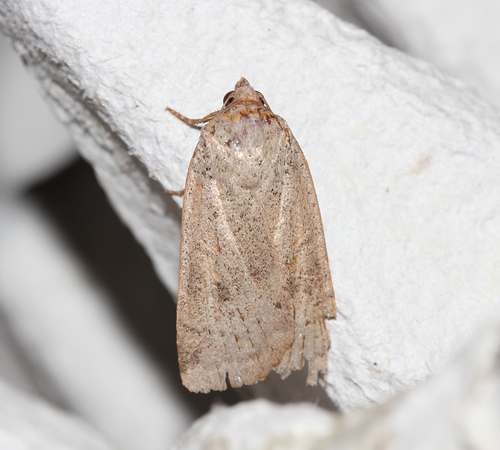
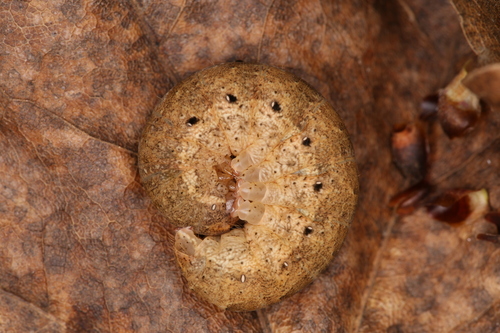
Vine's Rustic

Vine's Rustic

Hoplodrina ambigua

Daily sighting probability <5% · Rare
at Copenhagen

In 3 days ~10% in a week ~20%

5 Verified sightings at Copenhagen
83 In all 6 parks From 2019 to 2026
August Best month
☀️🌙 Day & Night When it's spotted

About the Vine's Rustic

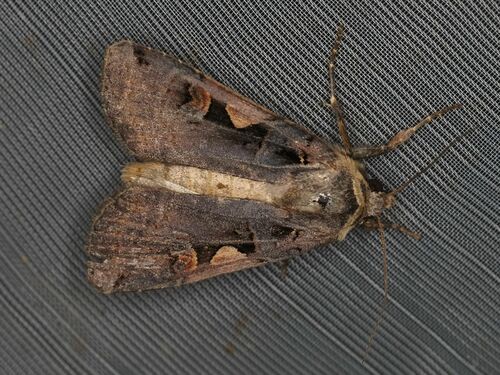
Hoplodrina ambigua, the Vine's rustic, is a moth of the family Noctuidae. It is found in the western Palearctic realm (central Europe, south Europe North Africa, Russia to Urals, south-west Siberia, Tuva, Altai Mountains, Tajikistan, Turkestan and in the Near East – Iraq, Iran, Afghanistan, and Pakistan).

The wingspan is 32–34 mm. The length of the forewings is 13–15 mm. Forewing greyish ochreous, sometimes uniformly washed with brownish; the lines and stigmata dark grey, the latter with pale annuli; submarginal line luteous preceded by a dark grey shade; hindwing dirty pale grey in male, darker in female, and darker in both sexes in the brown suffused forms: - the form sericea Speyer, from Holland and Germany, is described as having narrower silky grey forewings; -in [now full species levis Stgr.], from W. Turkestan and Asia Minor, the yellower ochreous tint is predominant and the dark markings are conspicuous but in some pale examples from Segovia, Spain- ab. ochrea ab. nov. [Warren] the dark markings tend to become effaced, the head, thorax, and forewings being pale yellow ochreous - amurensis Stgr. indicates small dark examples from Ussuri... Wikipedia →
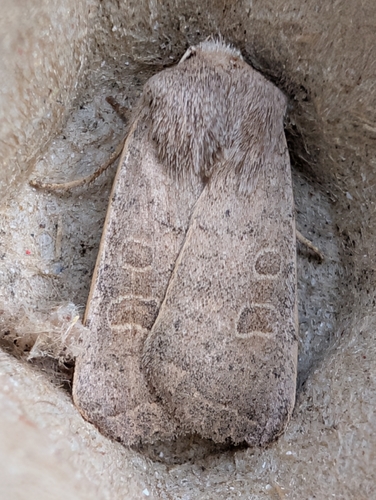

Global Distribution

Parks Where Found

# Park Country Daily sighting probability
1 Sierra Nevada National Park 🇪🇸 Spain
~10%
2 Bavarian Forest National Park 🇩🇪 Germany
~10%
3 Cévennes National Park 🇫🇷 France
~10%
4 Wadden Sea National Park 🇩🇪 Germany
~10%
5 Sierra de Guadarrama National Park 🇪🇸 Spain
~10%
6 Pyrénées National Park 🇫🇷 France
<5%

Cities Where Found

# City Country Daily sighting probability
1 Liverpool 🇬🇧 United Kingdom
~20%
2 London 🇬🇧 United Kingdom
~20%
3 Birmingham 🇬🇧 United Kingdom
~10%
4 Porto 🇵🇹 Portugal
~10%
5 Rome 🇮🇹 Italy
~10%
6 Madrid 🇪🇸 Spain
~10%
7 Essen 🇩🇪 Germany
~10%
8 Kyiv 🇺🇦 Ukraine
~10%
9 Manchester 🇬🇧 United Kingdom
~10%
10 Leeds 🇬🇧 United Kingdom
<5%

Before you go

What are the chances of seeing a Vine's Rustic in Copenhagen?

Rare

Under 5% of wildlife watchers report a Vine's Rustic sighting in Copenhagen on a given day, based on 5 verified sightings from GBIF citizen-science data. It is the 424th most-seen of the 476 insects we can rate there. Over three days the chance rises to about 10%, and over a week to about 20%, if each day is a fresh chance.

When is the best time to see a Vine's Rustic in Copenhagen?

August

In that month about 10% of wildlife watchers report a Vine's Rustic in Copenhagen on a given day, against under 5% in September to July, the lowest months. That is one of Copenhagen's wettest months, with about 85 mm of rain against 35 mm in April.

What time of day is best to see a Vine's Rustic?

Between 9 pm and midnight

Across all the parks we cover, that three-hour window holds the most Vine's Rustic sightings with a recorded time, and about 6 in 10 of them come between 6 pm and 6 am: it is seen both by day and at night.

Is Copenhagen the best place to see a Vine's Rustic?

17th of 18

Of the 18 cities where we can rate Vine's Rustic sightings, Copenhagen ranks 17th at under 5%. The best odds are in Liverpool (United Kingdom, about 20%), London (United Kingdom, about 20%) and Birmingham (United Kingdom, about 10%).

Which relatives of the Vine's Rustic live in Copenhagen?

Same family: Noctuidae

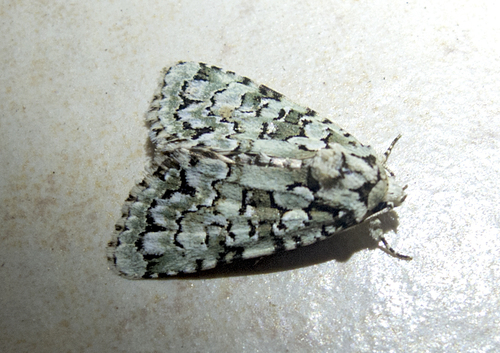
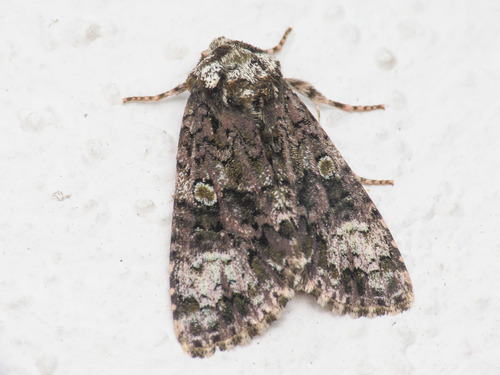
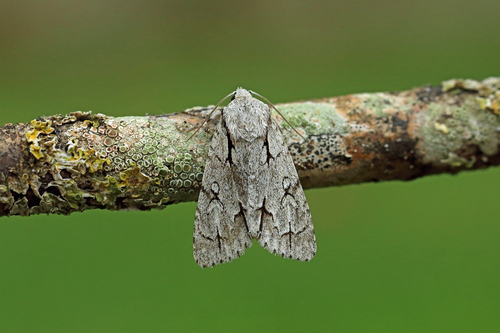
The closest relatives of the Vine's Rustic that you can see in Copenhagen (family Noctuidae, Cutworm Moths and Allies) are Large Yellow Underwing (about 20%), Silver Υ (about 10%) and Sycamore Moth (about 10%), with each one's daily chance of a sighting.

Where does the Vine's Rustic sighting chance come from?

GBIF citizen-science records

It is estimated from how often the Vine's Rustic is recorded against all the insects logged in Copenhagen (5 verified sightings), calibrated against known sighting rates. Figures are rounded to the nearest 10% because citizen-science data supports honest approximations, not decimals, and months with records from fewer than five people show "—". How it works.

← Back to Copenhagen