Eastern Calligrapher

Eastern Calligrapher

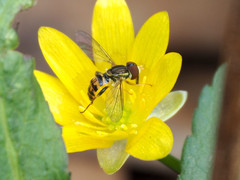
Toxomerus geminatus

Daily sighting probability <5% · Rare
at Dallas

In 3 days ~10% in a week ~30%

58 Verified sightings at Dallas
350 In all 5 parks From 2019 to 2026
February Best month
☀️ Diurnal When it's spotted

About the Eastern Calligrapher

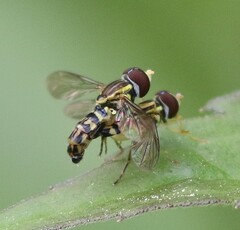
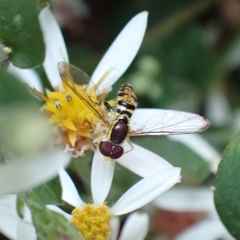
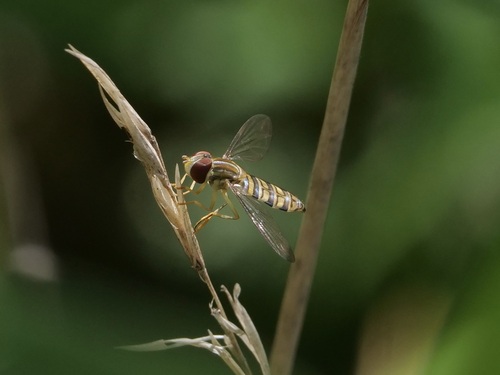
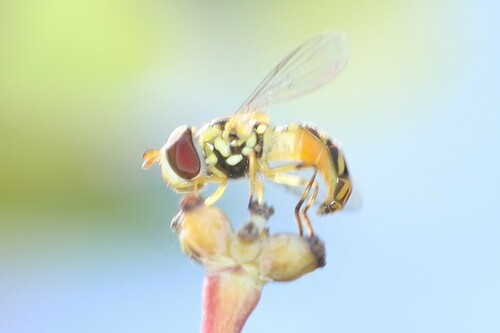
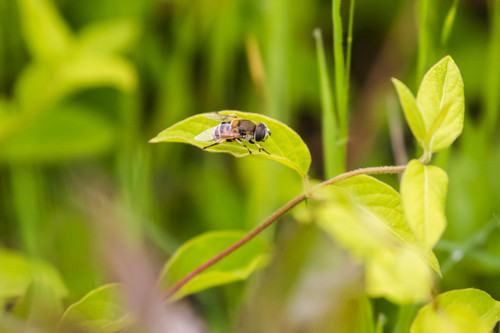
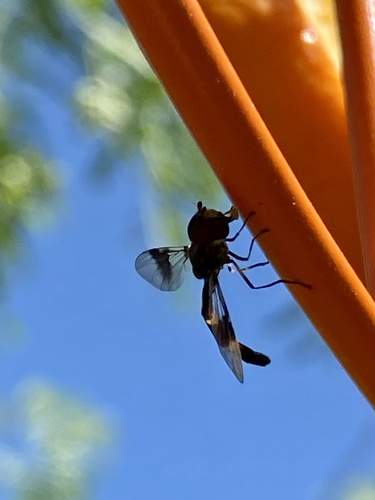
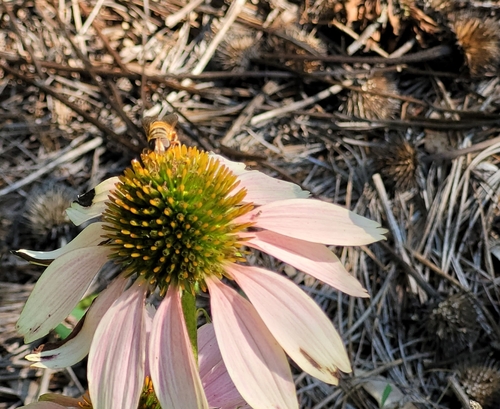
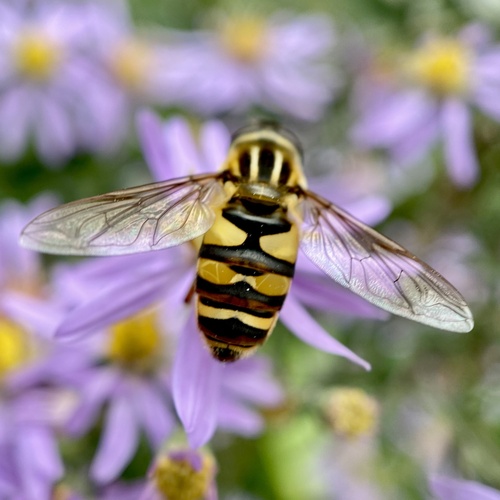
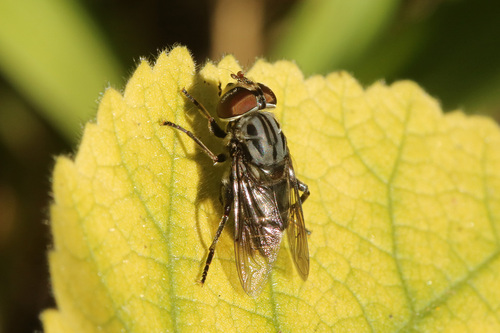
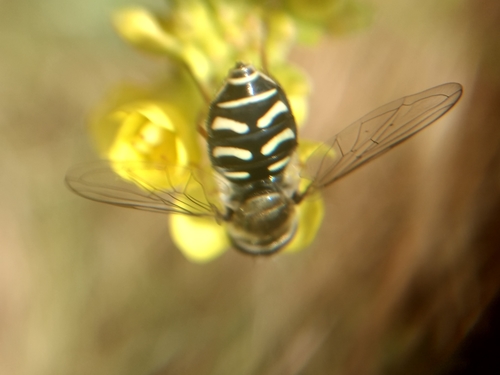
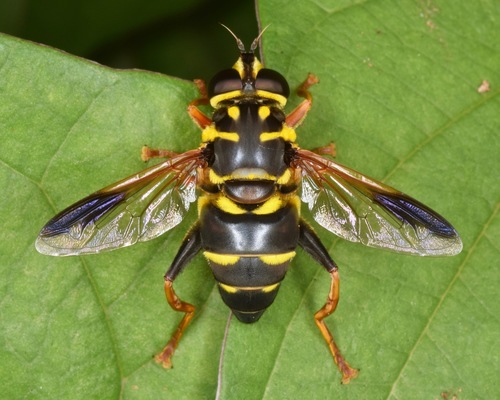
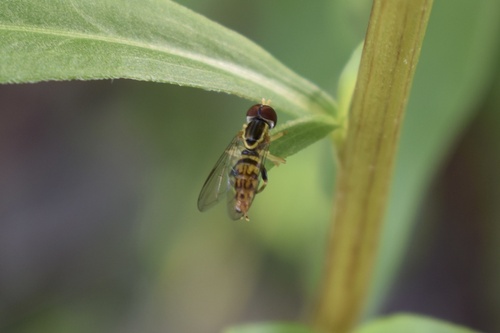
Toxomerus geminatus (Say,1823) the Eastern Calligrapher, is a common species of syrphid fly observed in the eastern and central United States and Canada. Syrphid flies are also known as Hover Flies or Flower Flies because the adults are frequently found hovering around flowers from which they feed on nectar and pollen. Adults are 6.1–7.6 mm (0.24–0.30 in) long and are very similar to the Western Calligrapher. The larvae are predators of a variety of aphids and mites.

For terminology see Speight key to genera and glossary Size Length,. 5–7.6 mm (0.20–0.30 in) Head The face, frontal triangle, and antennae are light yellow in color, and the face has white pollen on the sides. The antennae may sometimes be a little brownish. In the female, the front is much narrower above, and is shining black, with a narrow yellow line on the sides at the lower half. The posterior orbits are thickly whitish dusted, and the eye has a distinct triangular emargination on the posterior margin at or above the level of the antennae.

Thorax The scutum is shining black, with opaque linear stripes and the lateral stripes being entirely yellow and the median stripe being cinereous (ashy... Wikipedia →
Global Distribution

Parks Where Found

# Park Country Daily sighting probability
1 Acadia National Park 🇺🇸 United States
~20%
2 Great Smoky Mountains National Park 🇺🇸 United States
~20%
3 Shenandoah National Park 🇺🇸 United States
~20%
4 Point Pelee National Park 🇨🇦 Canada
~10%
5 Congaree National Park 🇺🇸 United States
~10%

Cities Where Found

# City Country Daily sighting probability
1 Boston 🇺🇸 United States
~20%
2 Washington 🇺🇸 United States
~10%
3 Minneapolis [Saint Paul] 🇺🇸 United States
~10%
4 Montreal 🇨🇦 Canada
~10%
5 New York City 🇺🇸 United States
~10%
6 Toronto 🇨🇦 Canada
~10%
7 Baltimore 🇺🇸 United States
~10%
8 Philadelphia 🇺🇸 United States
~10%
9 Chicago 🇺🇸 United States
~10%
10 Detroit 🇺🇸 United States
~10%

Before you go

What are the chances of seeing an Eastern Calligrapher in Dallas?

Rare

Under 5% of wildlife watchers report an Eastern Calligrapher sighting in Dallas on a given day, based on 58 verified sightings from GBIF citizen-science data. It is the 330th most-seen of the 1412 insects we can rate there. Over three days the chance rises to about 10%, and over a week to about 30%, if each day is a fresh chance.

When is the best time to see an Eastern Calligrapher in Dallas?

February to May

In those months about 10% of wildlife watchers report an Eastern Calligrapher in Dallas on a given day, against under 5% in June to January, the lowest months.

What time of day is best to see an Eastern Calligrapher?

Between 11 am and 2 pm

Across all the parks we cover, that three-hour window holds the most Eastern Calligrapher sightings with a recorded time, and nearly all of them come between 6 am and 6 pm: it is a daytime animal.

Is Dallas the best place to see an Eastern Calligrapher?

11th of 13

Of the 13 cities where we can rate Eastern Calligrapher sightings, Dallas ranks 11th at under 5%. The best odds are in Boston (United States, about 20%), Washington (United States, about 10%) and Minneapolis [Saint Paul] (United States, about 10%).

Which relatives of the Eastern Calligrapher live in Dallas?

Same genus: Toxomerus

The closest relatives of the Eastern Calligrapher that you can see in Dallas (genus Toxomerus, Calligrapher Flies) are Margined Calligrapher (about 10%) and Maize Calligrapher (about 10%), with each one's daily chance of a sighting.

Where does the Eastern Calligrapher sighting chance come from?

GBIF citizen-science records

It is estimated from how often the Eastern Calligrapher is recorded against all the insects logged in Dallas (58 verified sightings), calibrated against known sighting rates. Figures are rounded to the nearest 10% because citizen-science data supports honest approximations, not decimals, and months with records from fewer than five people show "—". How it works.

← Back to Dallas