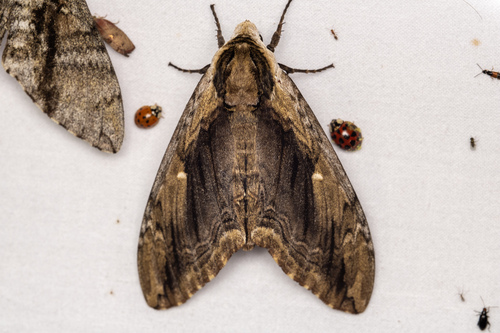
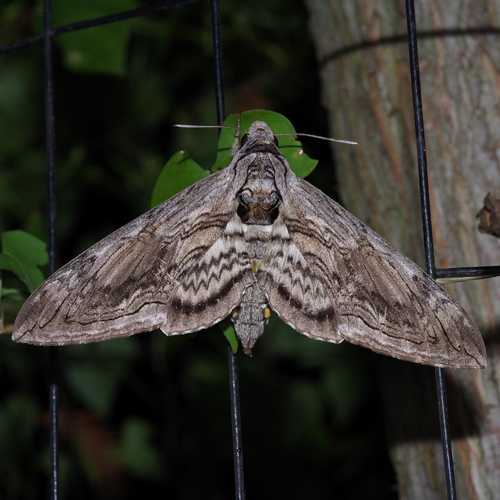
Nessus Sphinx

Nessus Sphinx

Amphion floridensis

Daily sighting probability ~10% · With luck
at Denver

In 3 days ~20% in a week ~40%

64 Verified sightings at Denver
25 In all 3 parks From 2019 to 2026
June Best month
☀️ Diurnal When it's spotted

About the Nessus Sphinx

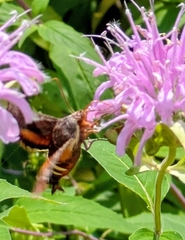
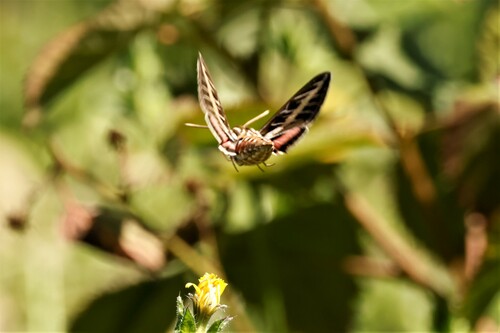
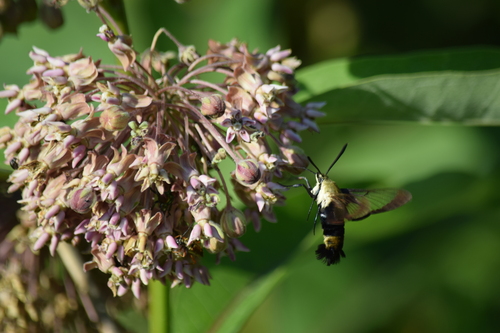
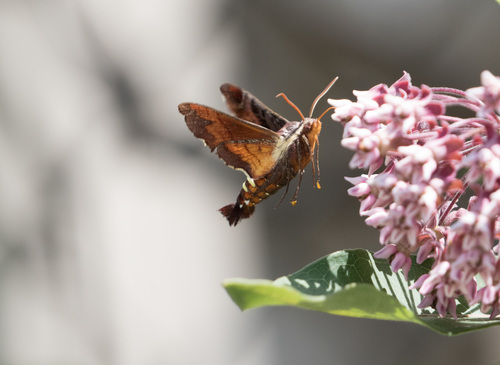
Amphion floridensis, the Nessus sphinx, is a day-flying moth of the family Sphingidae. The species was described by Pieter Cramer in 1777, and renamed in 1920. It is the only member of the genus Amphion erected by Jacob Hübner in 1819. It lives throughout the eastern United States and Canada and occasionally south into Mexico, and is one of the more commonly encountered day-flying moths in the region, easily recognized by the two bright-yellow bands across the abdomen.

The Nessus sphinx has reddish median bands on its hindwings and two prominent horizontal yellow stripes and a tail feather-like hair tuft on abdomen of both sexes. The wingspan is 37–55 mm. It has a stout body and reddish-brown upperside wings, and in some individuals the hindwings may have pale to absent median band or a yellow spot on the costal margin.

Found in the Eastern United States from Maine to Florida and as far west as Colorado.. The Canadian range extends from the southeast corner of Manitoba to Nova Scotia. Found in deciduous and mixed woodlands, cultivated orchards, along streams, and in suburbs with sufficient tree cover.

Adults are on... Wikipedia →
Global Distribution

Parks Where Found

# Park Country Daily sighting probability
1 Great Smoky Mountains National Park 🇺🇸 United States
~10%
2 Shenandoah National Park 🇺🇸 United States
~10%
3 Cumbres de Monterrey National Park 🇲🇽 Mexico
<5%

Cities Where Found

# City Country Daily sighting probability
1 Detroit 🇺🇸 United States
~10%
2 Denver 🇺🇸 United States
~10%
3 Chicago 🇺🇸 United States
~10%
4 Minneapolis [Saint Paul] 🇺🇸 United States
~10%
5 Austin 🇺🇸 United States
~10%
6 Philadelphia 🇺🇸 United States
~10%
7 Washington 🇺🇸 United States
~10%
8 New York City 🇺🇸 United States
~10%
9 Boston 🇺🇸 United States
<5%
10 Toronto 🇨🇦 Canada
<5%

Before you go

What are the chances of seeing a Nessus Sphinx in Denver?

With luck

About 10% of wildlife watchers report a Nessus Sphinx sighting in Denver on a given day, based on 64 verified sightings from GBIF citizen-science data. It is the 97th most-seen of the 461 insects we can rate there. Over three days the chance rises to about 20%, and over a week to about 40%, if each day is a fresh chance.

When is the best time to see a Nessus Sphinx in Denver?

June

In that month about 20% of wildlife watchers report a Nessus Sphinx in Denver on a given day, against under 5% in July to April, the lowest months.

What time of day is best to see a Nessus Sphinx?

Between 2 and 5 pm

Across all the parks we cover, that three-hour window holds the most Nessus Sphinx sightings with a recorded time, and nearly all of them come between 6 am and 6 pm: it is a daytime animal.

Is Denver the best place to see a Nessus Sphinx?

Among the best

Of the 15 cities where we can rate Nessus Sphinx sightings, Denver ranks 2nd at about 10%, level with the leaders once rounded. The best odds are in Detroit (United States, about 10%).

Which relatives of the Nessus Sphinx live in Denver?

Same family: Sphingidae

The closest relatives of the Nessus Sphinx that you can see in Denver (family Sphingidae, Sphinx Moths) are White-Lined Sphinx (about 20%), Waved Sphinx (about 10%) and Achemon Sphinx (about 10%), with each one's daily chance of a sighting.

Where does the Nessus Sphinx sighting chance come from?

GBIF citizen-science records

It is estimated from how often the Nessus Sphinx is recorded against all the insects logged in Denver (64 verified sightings), calibrated against known sighting rates. Figures are rounded to the nearest 10% because citizen-science data supports honest approximations, not decimals, and months with records from fewer than five people show "—". How it works.

← Back to Denver