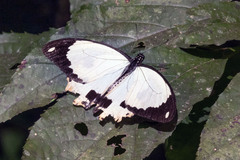
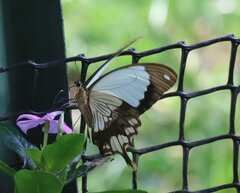
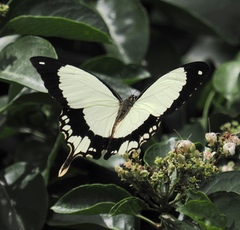
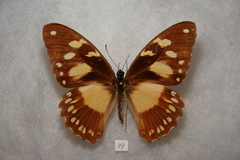
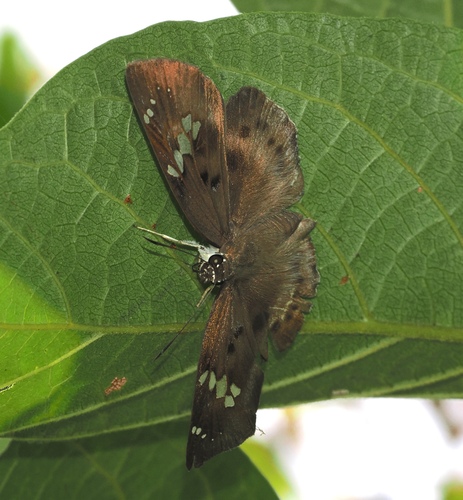
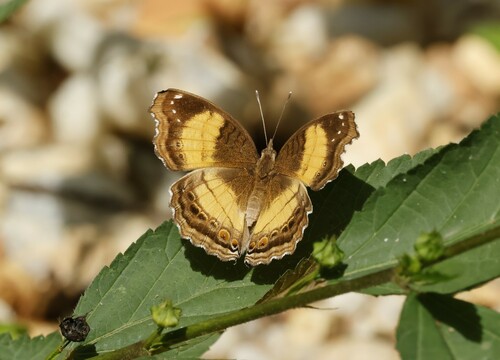
Mocker Swallowtail

Mocker Swallowtail

Papilio dardanus

Daily sighting probability ~10% · With luck
at Durban

In 3 days ~30% in a week ~60%

57 Verified sightings at Durban
212 In all 8 parks From 2019 to 2026
May Best month
☀️ Diurnal When it's spotted

About the Mocker Swallowtail

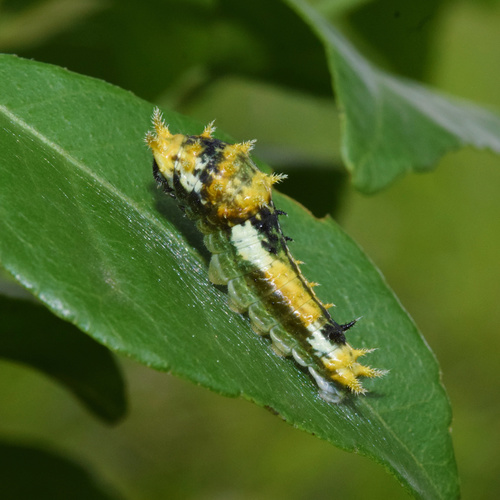
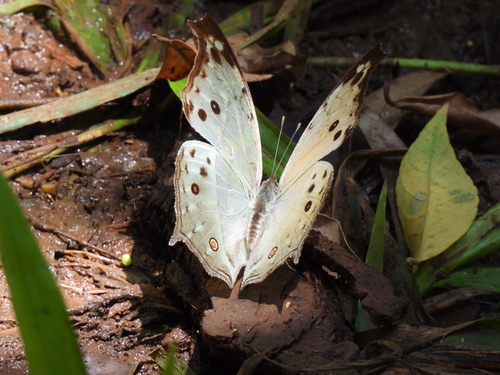
Papilio dardanus, the Saharan swallowtail, African swallowtail, mocker swallowtail or flying handkerchief, is a species of butterfly in the family Papilionidae (the swallowtails). The species is broadly distributed throughout Sub-Saharan Africa. The British entomologist E. B. Poulton described it as "the most interesting butterfly in the world".

Molecular studies have provided evidence that this species' closest relative is Papilio phorcas, with Papilio constantinus being the next closest (see images below). It is a member of the Papilio genus of which Papilio appalachiensis and Papilio xuthus are also members.

Papilio dardanus is the nominal member of the dardanus species group. Papilio rex Oberthür, 1886 Wikipedia →

Global Distribution

Parks Where Found

# Park Country Daily sighting probability
1 Kibale National Park 🇺🇬 Uganda
~30%
2 iSimangaliso Wetland Park 🇿🇦 South Africa
~20%
3 Nairobi National Park 🇰🇪 Kenya
~20%
4 Arusha National Park 🇹🇿 Tanzania
~20%
5 Bwindi Impenetrable National Park 🇺🇬 Uganda
~20%
6 Murchison Falls National Park 🇺🇬 Uganda
~20%
7 Garden Route National Park 🇿🇦 South Africa
~20%
8 Masai Mara National Reserve 🇰🇪 Kenya
~10%

Cities Where Found

# City Country Daily sighting probability
1 Lubango 🇦🇴 Angola
~50%
2 Kampala 🇺🇬 Uganda
~30%
3 Nairobi 🇰🇪 Kenya
~30%
4 Durban 🇿🇦 South Africa
~10%

Before you go

What are the chances of seeing a Mocker Swallowtail in Durban?

With luck

About 10% of wildlife watchers report a Mocker Swallowtail sighting in Durban on a given day, based on 57 verified sightings from GBIF citizen-science data. It is the 35th most-seen of the 401 insects we can rate there. Over three days the chance rises to about 30%, and over a week to about 60%, if each day is a fresh chance.

When is the best time to see a Mocker Swallowtail in Durban?

April to June

In those months about 20% of wildlife watchers report a Mocker Swallowtail in Durban on a given day, against under 5% in February, September and December, the lowest months. Those are among Durban's driest months, with about 50 mm of rain a month against 210 mm in January.

What time of day is best to see a Mocker Swallowtail?

Between 9 am and noon

Across all the parks we cover, that three-hour window holds the most Mocker Swallowtail sightings with a recorded time, and about 9 in 10 of them come between 6 am and 6 pm: it is a daytime animal.

Is Durban the best place to see a Mocker Swallowtail?

4th of 4

Of the 4 cities where we can rate Mocker Swallowtail sightings, Durban ranks 4th at about 10%. The best odds are in Lubango (Angola, about 50%), Kampala (Uganda, about 30%) and Nairobi (Kenya, about 30%).

Which relatives of the Mocker Swallowtail live in Durban?

Same genus: Papilio

The closest relatives of the Mocker Swallowtail that you can see in Durban (genus Papilio, Common Swallowtails) are Citrus Swallowtail (about 20%) and Narrow Green-Banded Swallowtail (about 10%), with each one's daily chance of a sighting.

Where does the Mocker Swallowtail sighting chance come from?

GBIF citizen-science records

It is estimated from how often the Mocker Swallowtail is recorded against all the insects logged in Durban (57 verified sightings), calibrated against known sighting rates. Figures are rounded to the nearest 10% because citizen-science data supports honest approximations, not decimals, and months with records from fewer than five people show "—". How it works.

← Back to Durban