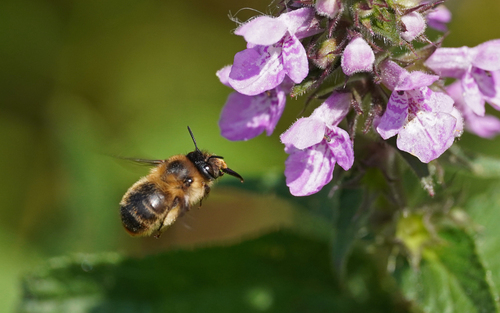
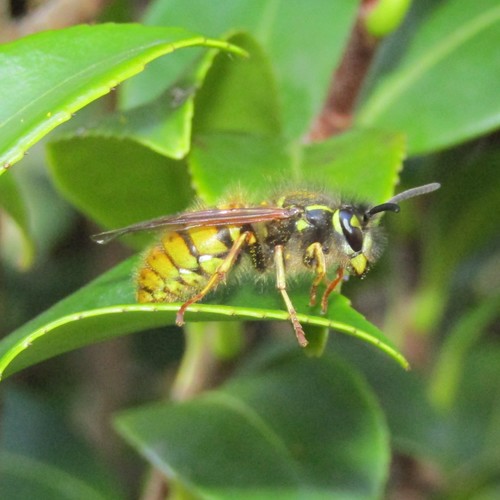
White-Tailed Bumble Bee

White-Tailed Bumble Bee

Bombus lucorum

Daily sighting probability ~10% · With luck
at Hamburg

In 3 days ~30% in a week ~50%

42 Verified sightings at Hamburg
98 In all 9 parks From 2019 to 2026
July Best month
☀️ Diurnal When it's spotted

About the White-Tailed Bumble Bee

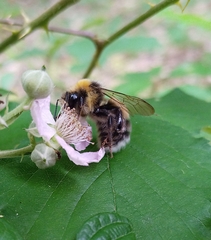
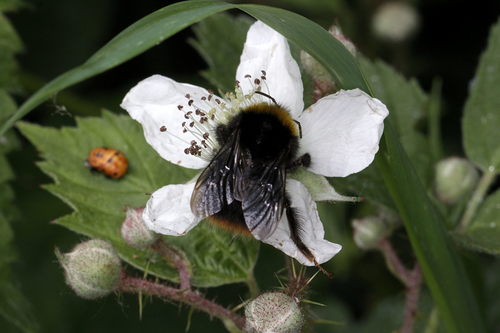
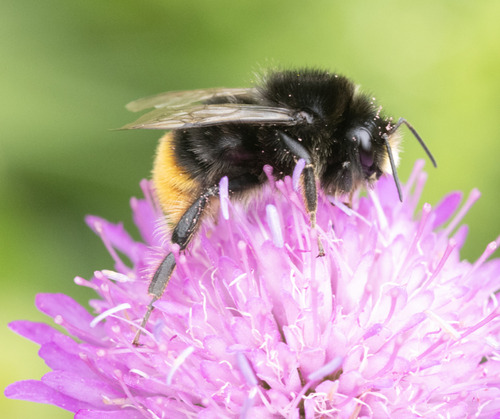
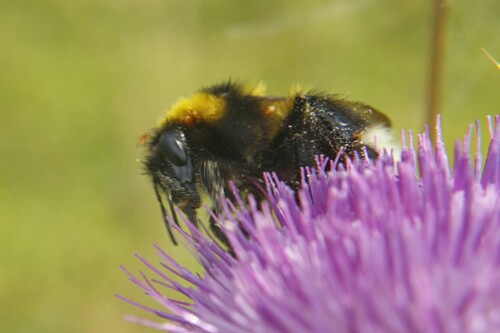
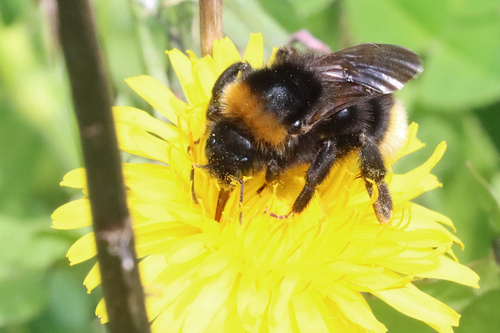
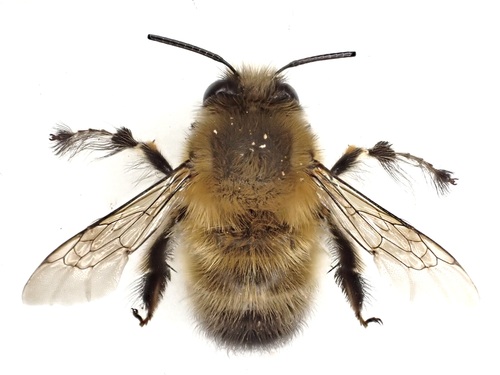
Bombus lucorum, the white-tailed bumblebee, is a species of bumblebee, widespread and common throughout Europe. This name has been widely used for a range of nearly identical-looking or cryptic species of bumblebees. In 1983, Scholl and Obrecht even coined the term Bombus lucorum complex to explain the three taxa (B. lucorum, Bombus magnus, and Bombus cryptarum) that cannot be easily differentiated from one another by their appearances. A recent review of all of these species worldwide has helped to clarify its distribution in Europe and northern Asia, almost to the Pacific. B. lucorum reaches the Barents Sea in the North. However, in southern Europe, although found in Greece it is an upland species with its distribution never quite reaching the Mediterranean.

Compared to other bumblebee species, the individuals of B. lucorum have shorter tongues, and this characteristic enable them to rob nectar. The worker bee uses the horny sheath around its tongue to make a hole through the flower, reaching the nectar without entering the flower. Therefore, the worker bee does not come in contact with the pollen while getting the nectar.

Bombus lucorum is part of the... Wikipedia →
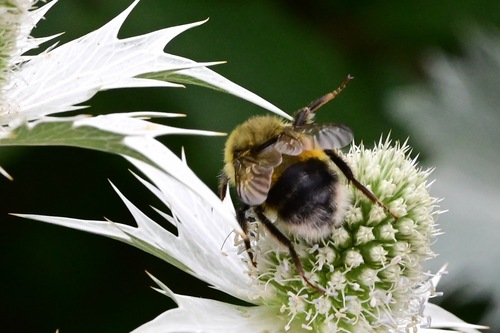
Global Distribution

Parks Where Found

# Park Country Daily sighting probability
1 Vatnajokull National Park 🇮🇸 Iceland
~10%
2 Tatra National Park 🇸🇰 Slovakia
~10%
3 Bavarian Forest National Park 🇩🇪 Germany
~10%
4 Triglav National Park 🇸🇮 Slovenia
~10%
5 Ecrins National Park 🇫🇷 France
~10%
6 Pyrénées National Park 🇫🇷 France
~10%
7 Cairngorms National Park 🇬🇧 United Kingdom
~10%
8 Cévennes National Park 🇫🇷 France
<5%
9 Wadden Sea National Park 🇩🇪 Germany
<5%

Cities Where Found

# City Country Daily sighting probability
1 Warsaw 🇵🇱 Poland
~20%
2 Novosibirsk 🇷🇺 Russia
~10%
3 Kharkiv 🇺🇦 Ukraine
~10%
4 Hamburg 🇩🇪 Germany
~10%
5 Dublin 🇮🇪 Ireland
~10%
6 Amsterdam 🇳🇱 Netherlands
~10%
7 Helsinki 🇫🇮 Finland
~10%
8 Munich 🇩🇪 Germany
~10%
9 Kyiv 🇺🇦 Ukraine
~10%
10 Brussels 🇧🇪 Belgium
~10%

Before you go

What are the chances of seeing a White-Tailed Bumble Bee in Hamburg?

With luck

About 10% of wildlife watchers report a White-Tailed Bumble Bee sighting in Hamburg on a given day, based on 42 verified sightings from GBIF citizen-science data. It is the 62nd most-seen of the 423 insects we can rate there. Over three days the chance rises to about 30%, and over a week to about 50%, if each day is a fresh chance.

When is the best time to see a White-Tailed Bumble Bee in Hamburg?

July

In that month about 30% of wildlife watchers report a White-Tailed Bumble Bee in Hamburg on a given day, against under 5% in September to May, the lowest months.

What time of day is best to see a White-Tailed Bumble Bee?

Between 1 and 4 pm

Across all the parks we cover, that three-hour window holds the most White-Tailed Bumble Bee sightings with a recorded time, and about 9 in 10 of them come between 6 am and 6 pm: it is a daytime animal.

Is Hamburg the best place to see a White-Tailed Bumble Bee?

4th of 25

Of the 25 cities where we can rate White-Tailed Bumble Bee sightings, Hamburg ranks 4th at about 10%. The best odds are in Warsaw (Poland, about 20%), Novosibirsk (Russia, about 10%) and Kharkiv (Ukraine, about 10%).

Which relatives of the White-Tailed Bumble Bee live in Hamburg?

Same genus: Bombus

The closest relatives of the White-Tailed Bumble Bee that you can see in Hamburg (genus Bombus, Bumble Bees) are Common Carder Bumble Bee (about 30%), Early Bumble Bee (about 20%) and Tree Bumble Bee (about 10%), with each one's daily chance of a sighting.

Where does the White-Tailed Bumble Bee sighting chance come from?

GBIF citizen-science records

It is estimated from how often the White-Tailed Bumble Bee is recorded against all the insects logged in Hamburg (42 verified sightings), calibrated against known sighting rates. Figures are rounded to the nearest 10% because citizen-science data supports honest approximations, not decimals, and months with records from fewer than five people show "—". How it works.

← Back to Hamburg