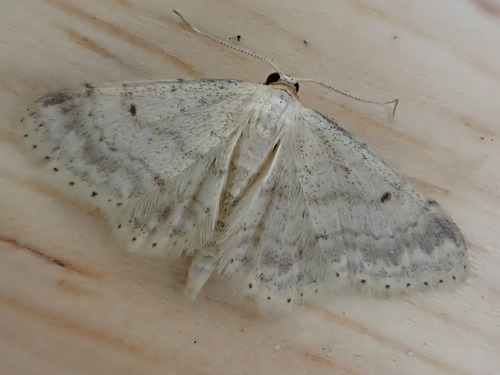
Clouded Border

Clouded Border

Lomaspilis marginata

Daily sighting probability ~10% · With luck
at Helsinki

In 3 days ~30% in a week ~50%

60 Verified sightings at Helsinki
239 In all 10 parks From 2019 to 2026
June Best month
☀️🌙 Day & Night When it's spotted

About the Clouded Border

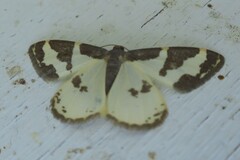
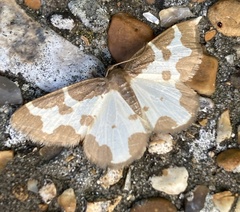
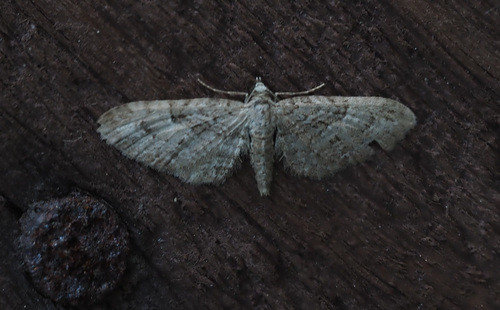
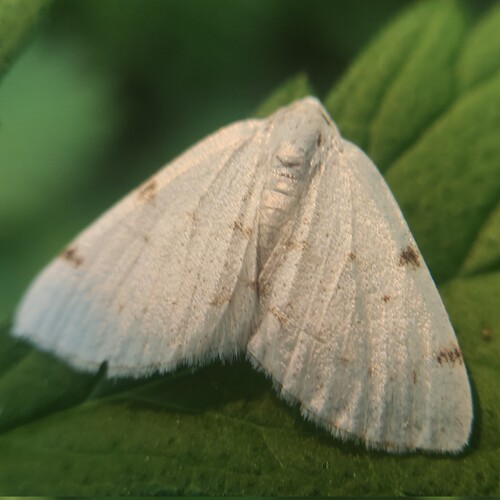
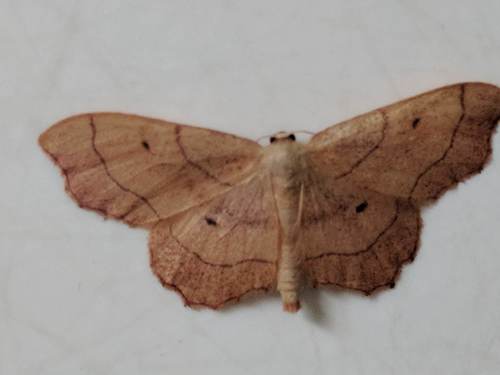
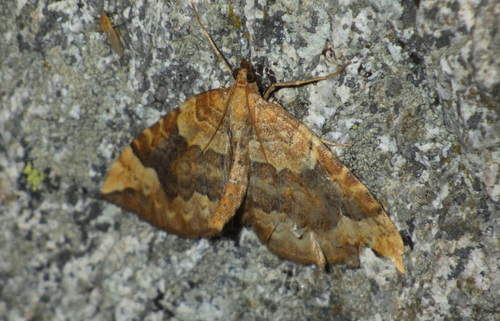
The clouded border (Lomaspilis marginata) is a moth of the family Geometridae. The species was first described by Carl Linnaeus in his 1758 10th edition of Systema Naturae. It is distributed across most of Europe to the Urals, western and central Siberia, Transbaikalia, Kazakhstan, Tian-Shan, northern Mongolia and parts of the Near East.

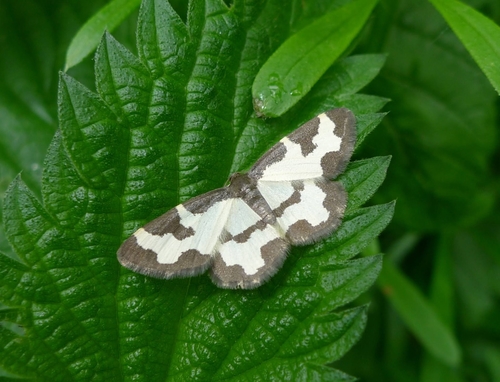
This is a very distinctive species with white wings marked with black blotches around the margins. The amount of black varies, with the males usually (though not always) having more extensive black areas than the females. Occasionally almost entirely white or black individuals are seen, although this is rare. The wingspan is 24–28 mm. Lomaspilis marginata is extremely variable. Linnaeus's form has complete black border to both wings, also on the forewing additional spots or patches at base and middle of costa.

Aberrations: ab. nigrofasciata Schoyen: the median band, at least on the forewing, is complete, the marginal area is normal. ab. mediofasciata Hofner: has a complete median band but no marginal band. ab. dumeei de Joannis: lacks also the basal costal patch.

ab. suffusa [Prout]: has the ground colour suffused with smoky yellow... Wikipedia →
Global Distribution

Parks Where Found

# Park Country Daily sighting probability
1 Hohe Tauern National Park 🇦🇹 Austria
~20%
2 Biebrza National Park 🇵🇱 Poland
~20%
3 Snowdonia National Park 🇬🇧 United Kingdom
~10%
4 Vanoise National Park 🇫🇷 France
~10%
5 Bavarian Forest National Park 🇩🇪 Germany
~10%
6 Mercantour National Park 🇫🇷 France
~10%
7 Wadden Sea National Park 🇩🇪 Germany
~10%
8 Cairngorms National Park 🇬🇧 United Kingdom
~10%
9 Ecrins National Park 🇫🇷 France
~10%
10 Pyrénées National Park 🇫🇷 France
~10%

Cities Where Found

# City Country Daily sighting probability
1 Porto 🇵🇹 Portugal
~10%
2 Helsinki 🇫🇮 Finland
~10%
3 Manchester 🇬🇧 United Kingdom
~10%
4 Liverpool 🇬🇧 United Kingdom
~10%
5 Minsk 🇧🇾 Belarus
~10%
6 Novosibirsk 🇷🇺 Russia
~10%
7 Warsaw 🇵🇱 Poland
~10%
8 Nizhny Novgorod 🇷🇺 Russia
~10%
9 Berlin 🇩🇪 Germany
~10%
10 Amsterdam 🇳🇱 Netherlands
~10%

Before you go

What are the chances of seeing a Clouded Border in Helsinki?

With luck

About 10% of wildlife watchers report a Clouded Border sighting in Helsinki on a given day, based on 60 verified sightings from GBIF citizen-science data. It is the 84th most-seen of the 838 insects we can rate there. Over three days the chance rises to about 30%, and over a week to about 50%, if each day is a fresh chance.

When is the best time to see a Clouded Border in Helsinki?

June and July

In those months about 20% of wildlife watchers report a Clouded Border in Helsinki on a given day, against under 5% in August to May, the lowest months.

What time of day is best to see a Clouded Border?

Between 11 pm and 2 am

Across all the parks we cover, that three-hour window holds the most Clouded Border sightings with a recorded time, and about half of them come between 6 am and 6 pm: it is seen both by day and at night.

Is Helsinki the best place to see a Clouded Border?

Among the best

Of the 19 cities where we can rate Clouded Border sightings, Helsinki ranks 2nd at about 10%, level with the leaders once rounded. The best odds are in Porto (Portugal, about 10%).

Which relatives of the Clouded Border live in Helsinki?

Same family: Geometridae

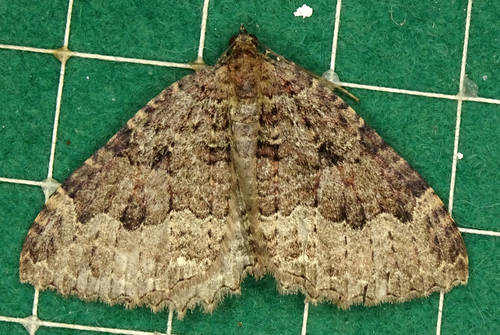
The closest relatives of the Clouded Border that you can see in Helsinki (family Geometridae, Geometer Moths) are Common Carpet Moth (about 10%), Mottled Umber (about 10%) and Latticed Heath (about 10%), with each one's daily chance of a sighting.

Where does the Clouded Border sighting chance come from?

GBIF citizen-science records

It is estimated from how often the Clouded Border is recorded against all the insects logged in Helsinki (60 verified sightings), calibrated against known sighting rates. Figures are rounded to the nearest 10% because citizen-science data supports honest approximations, not decimals, and months with records from fewer than five people show "—". How it works.

← Back to Helsinki