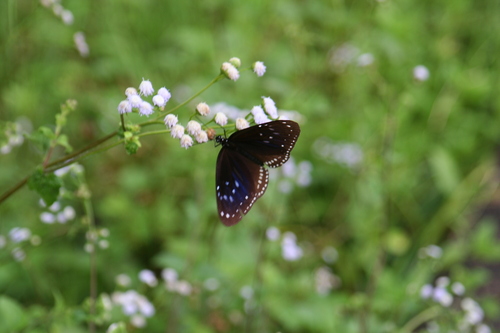
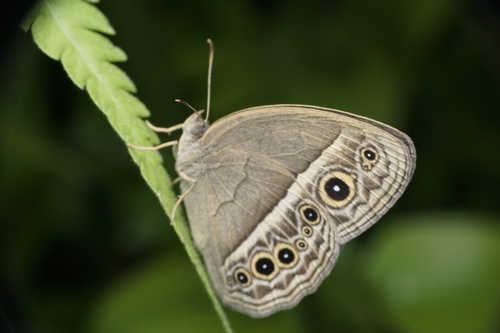
Tropical Swallowtail Moth

Tropical Swallowtail Moth

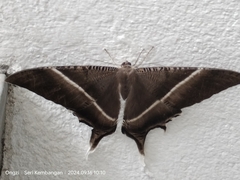
Lyssa zampa

Daily sighting probability ~20% · Possible
at Hong Kong

In 3 days ~50% in a week ~80%

307 Verified sightings at Hong Kong
145 In all 8 parks From 2019 to 2026
July Best month
☀️🌙 Day & Night When it's spotted

About the Tropical Swallowtail Moth

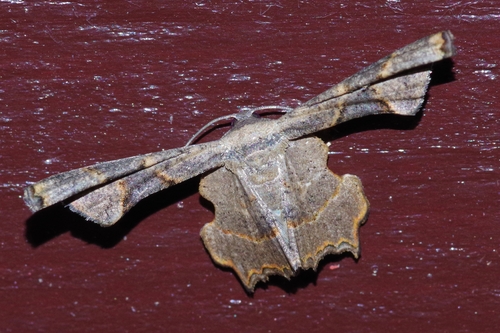
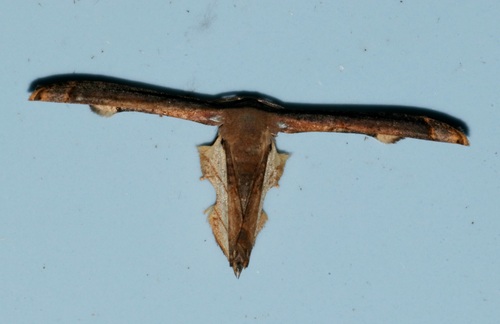
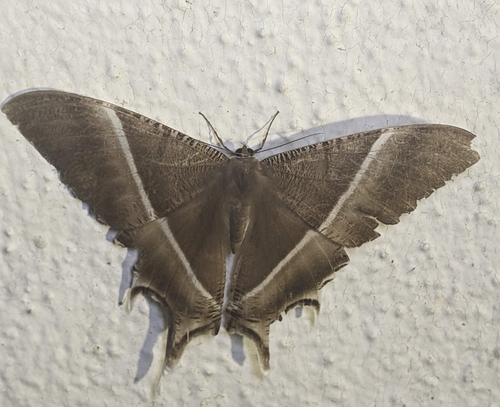
Lyssa zampa, the tropical swallowtail moth or Laos brown butterfly, is a moth of the family Uraniidae. The species was first described by British entomologist Arthur Gardiner Butler in 1869. The species is native to a wide range of tropical South-East Asia: Indonesia, Singapore, Malaysia, Thailand, and the Philippines. It is also recorded from Andaman Islands, southern China, the Himalayas, and sporadically in East Asia: Taiwan, Japan and South Korea. The forewing length is about 70 mm (2.8 in) and the wingspan reaches a maximum of 160 mm (6.3 in).

It is most abundant from May to November depending on the location. The genus Lyssa is generally categorized as a nocturnal or crepuscular group, but this species has been found to be active both during the day and at night. This species is also known for its mass emergence and migration. Because of that ecology and the habit that they are often attracted by urban bright lights, this species can attract human attention. Sightings in urban areas are attributed to dry spells in forests.

The larvae feed on Endospermum and other members of the rubber tree family (Euphorbiaceae). Media related to Lyssa zampa... Wikipedia →
Global Distribution

Parks Where Found

# Park Country Daily sighting probability
1 Kinabalu Park 🇲🇾 Malaysia
~30%
2 Khao Yai National Park 🇹🇭 Thailand
~20%
3 Taman Negara National Park 🇲🇾 Malaysia
~20%
4 Cat Tien National Park 🇻🇳 Vietnam
~20%
5 Gunung Leuser National Park 🇮🇩 Indonesia
~20%
6 Doi Inthanon National Park 🇹🇭 Thailand
~10%
7 Sepilok 🇲🇾 Malaysia
~10%
8 Kaeng Krachan National Park 🇹🇭 Thailand
~10%

Cities Where Found

# City Country Daily sighting probability
1 Manila 🇵🇭 Philippines
~30%
2 Kuching 🇲🇾 Malaysia
~30%
3 Kuala Lumpur 🇲🇾 Malaysia
~30%
4 Hong Kong 🇨🇳 China
~20%
5 Hanoi 🇻🇳 Vietnam
~20%
6 Nanning 🇨🇳 China
~20%
7 Davao City 🇵🇭 Philippines
~20%
8 Tuen Mun 🇨🇳 China
~20%
9 Johor Bahru 🇲🇾 Malaysia
~20%
10 Ho Chi Minh City 🇻🇳 Vietnam
~10%

Before you go

What are the chances of seeing a Tropical Swallowtail Moth in Hong Kong?

Possible

About 20% of wildlife watchers report a Tropical Swallowtail Moth sighting in Hong Kong on a given day, based on 307 verified sightings from GBIF citizen-science data. It is the 22nd most-seen of the 1125 insects we can rate there. Over three days the chance rises to about 50%, and over a week to about 80%, if each day is a fresh chance.

When is the best time to see a Tropical Swallowtail Moth in Hong Kong?

June and July

In those months about 40% of wildlife watchers report a Tropical Swallowtail Moth in Hong Kong on a given day, against under 5% in February and March, the lowest months. Those are among Hong Kong's wettest months, with about 230 mm of rain a month against 25 mm in December.

What time of day is best to see a Tropical Swallowtail Moth?

Between 8 and 11 pm

Across all the parks we cover, that three-hour window holds the most Tropical Swallowtail Moth sightings with a recorded time, and about half of them come between 6 am and 6 pm: it is seen both by day and at night.

Is Hong Kong the best place to see a Tropical Swallowtail Moth?

4th of 13

Of the 13 cities where we can rate Tropical Swallowtail Moth sightings, Hong Kong ranks 4th at about 20%. The best odds are in Manila (Philippines, about 30%), Kuching (Malaysia, about 30%) and Kuala Lumpur (Malaysia, about 30%).

Where does the Tropical Swallowtail Moth sighting chance come from?

GBIF citizen-science records

It is estimated from how often the Tropical Swallowtail Moth is recorded against all the insects logged in Hong Kong (307 verified sightings), calibrated against known sighting rates. Figures are rounded to the nearest 10% because citizen-science data supports honest approximations, not decimals, and months with records from fewer than five people show "—". How it works.

← Back to Hong Kong