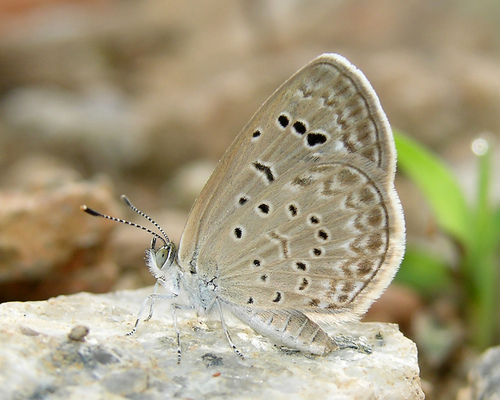
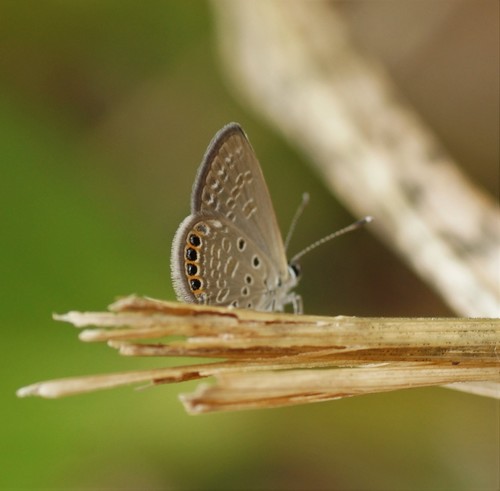
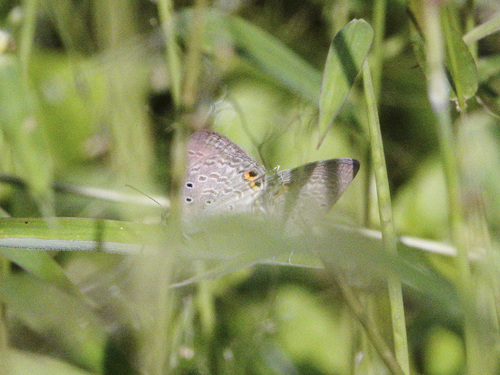
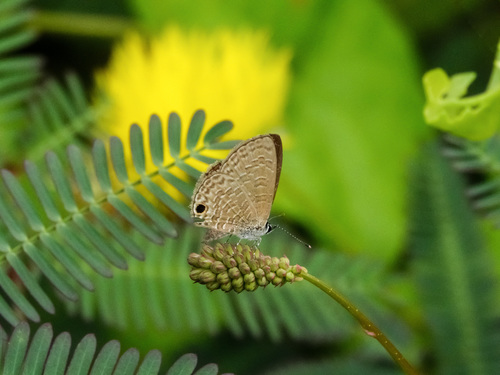
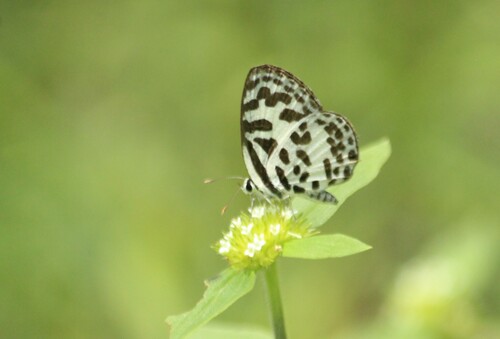
Common Pierrot

Common Pierrot

Castalius rosimon

Daily sighting probability ~20% · Possible
at Hyderabad

In 3 days ~40% in a week ~70%

48 Verified sightings at Hyderabad
185 In all 12 parks From 2019 to 2026
September Best month
☀️ Diurnal When it's spotted

About the Common Pierrot

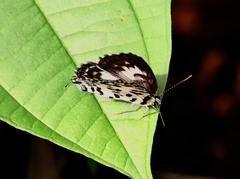
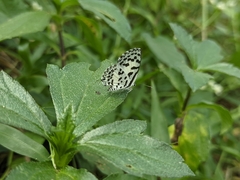
Castalius rosimon, the common Pierrot, is a small butterfly found in India that belongs to the lycaenids, or blues family. The species is found in Sri Lanka, Bangladesh, India, Myanmar; Tenasserim, extending into the Malayan subregion. In the Indonesian archipelago the butterfly occurs in north-eastern Sumatra, Kalimantan, eastern Java, Bali, Bangka, Timor, Wetar, Kissar, Sumbawa and Sulawesi.

In India the butterfly is found south of the outer ranges of the Himalayas, except in desert tracts; east India; the north-west Himalayas; Assam. The butterfly is also found in the Andaman Islands and the southern Nicobar Islands.

Forewing has the costa, apex and termen edged with black, the edging much broader on apex and termen; base outwards for a short distance more or less densely overlaid. with metallic blue scales which cover and make indistinct a large basal outwardly clavate (club-shaped) black spot; a transverse black oval spot on the discocellulars touching the black edging on the costa... Wikipedia →

Global Distribution

Parks Where Found

# Park Country Daily sighting probability
1 Taman Negara National Park 🇲🇾 Malaysia
~30%
2 Komodo National Park 🇮🇩 Indonesia
~30%
3 Mudumalai National Park 🇮🇳 India
~30%
4 Chitwan National Park 🇳🇵 Nepal
~20%
5 Kanha National Park 🇮🇳 India
~20%
6 Cat Tien National Park 🇻🇳 Vietnam
~20%
7 Kaeng Krachan National Park 🇹🇭 Thailand
~20%
8 Nagarhole National Park 🇮🇳 India
~20%
9 Khao Yai National Park 🇹🇭 Thailand
~20%
10 Satpura National Park 🇮🇳 India
~20%
11 Doi Inthanon National Park 🇹🇭 Thailand
~10%
12 Minneriya National Park 🇱🇰 Sri Lanka
~10%

Cities Where Found

# City Country Daily sighting probability
1 Jabalpur 🇮🇳 India
~40%
2 Dhaka 🇧🇩 Bangladesh
~40%
3 Thrissur 🇮🇳 India
~30%
4 Jamshedpur 🇮🇳 India
~30%
5 Thiruvananthapuram 🇮🇳 India
~30%
6 Vadodara 🇮🇳 India
~30%
7 Bhubaneshwar 🇮🇳 India
~30%
8 Chhatrapati Sambhajinagar 🇮🇳 India
~30%
9 Nagpur 🇮🇳 India
~30%
10 Surat 🇮🇳 India
~30%

Before you go

What are the chances of seeing a Common Pierrot in Hyderabad?

Possible

About 20% of wildlife watchers report a Common Pierrot sighting in Hyderabad on a given day, based on 48 verified sightings from GBIF citizen-science data. It is the 49th most-seen of the 318 insects we can rate there. Over three days the chance rises to about 40%, and over a week to about 70%, if each day is a fresh chance.

When is the best time to see a Common Pierrot in Hyderabad?

April, September and November–January

In those months about 20% of wildlife watchers report a Common Pierrot in Hyderabad on a given day, against under 5% in February and March, the lowest months. Those are among Hyderabad's driest months, with about 40 mm of rain a month against 190 mm in August.

What time of day is best to see a Common Pierrot?

Between 9 am and noon

Across all the parks we cover, that three-hour window holds the most Common Pierrot sightings with a recorded time, and about 9 in 10 of them come between 6 am and 6 pm: it is a daytime animal.

Is Hyderabad the best place to see a Common Pierrot?

23rd of 31

Of the 31 cities where we can rate Common Pierrot sightings, Hyderabad ranks 23rd at about 20%. The best odds are in Jabalpur (India, about 40%), Dhaka (Bangladesh, about 40%) and Thrissur (India, about 30%).

Which relatives of the Common Pierrot live in Hyderabad?

Same family: Lycaenidae

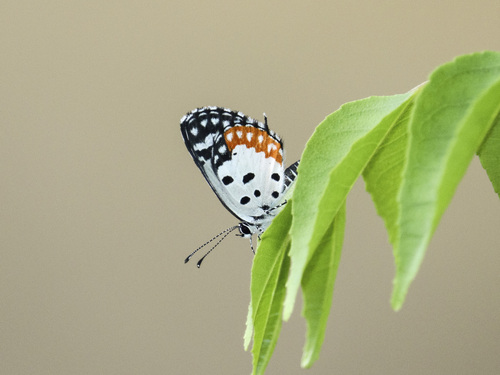
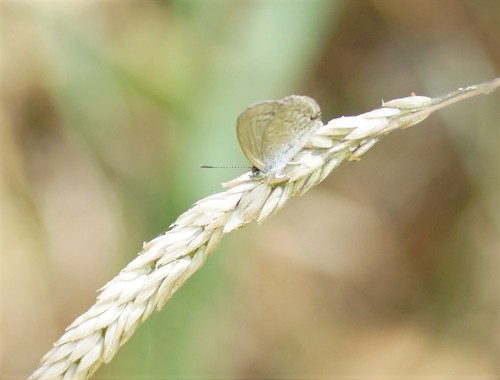
The closest relatives of the Common Pierrot that you can see in Hyderabad (family Lycaenidae, Gossamer-winged Butterflies) are Plains Cupid (about 30%), Red Pierrot (about 30%) and Zebra Blue (about 20%), with each one's daily chance of a sighting.

Where does the Common Pierrot sighting chance come from?

GBIF citizen-science records

It is estimated from how often the Common Pierrot is recorded against all the insects logged in Hyderabad (48 verified sightings), calibrated against known sighting rates. Figures are rounded to the nearest 10% because citizen-science data supports honest approximations, not decimals, and months with records from fewer than five people show "—". How it works.

← Back to Hyderabad