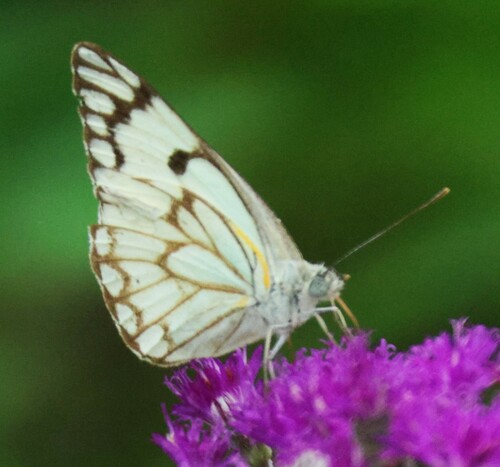
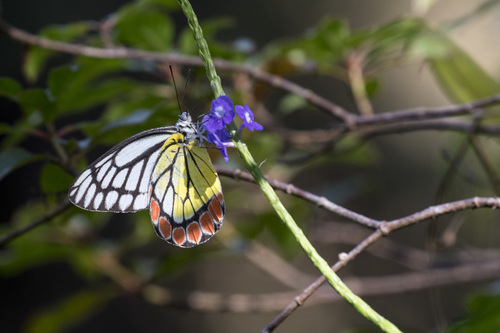
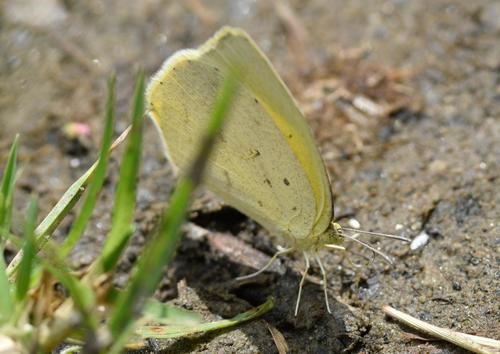
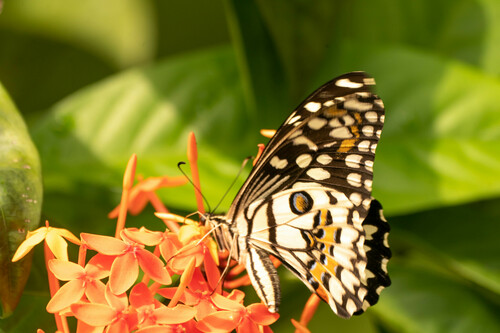
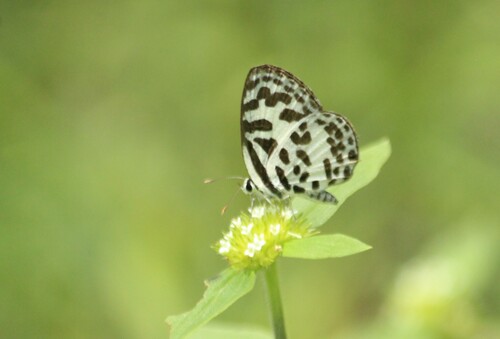
Common Gull (butterfly)

Common Gull (butterfly)

Cepora nerissa

Daily sighting probability ~40% · Likely
at Jabalpur

In 3 days ~70% in a week >90%

21 Verified sightings at Jabalpur
183 In all 6 parks From 2019 to 2026
February Best month
☀️ Diurnal When it's spotted

About the Common Gull (butterfly)

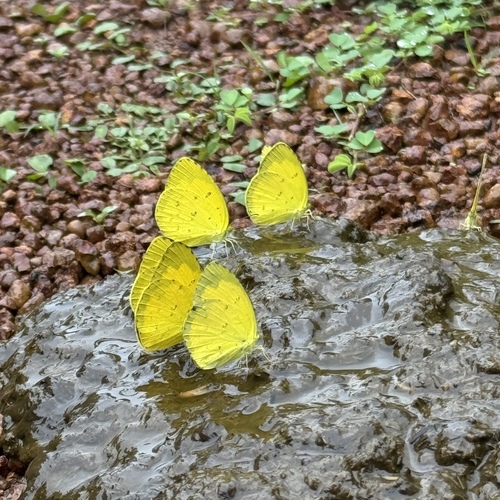
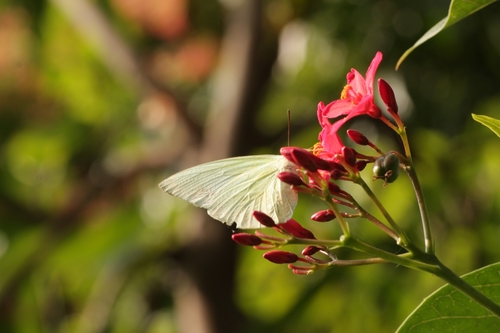
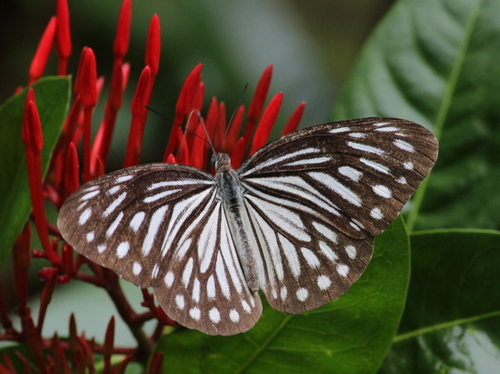
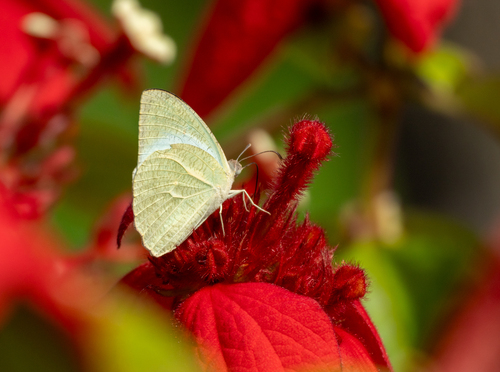
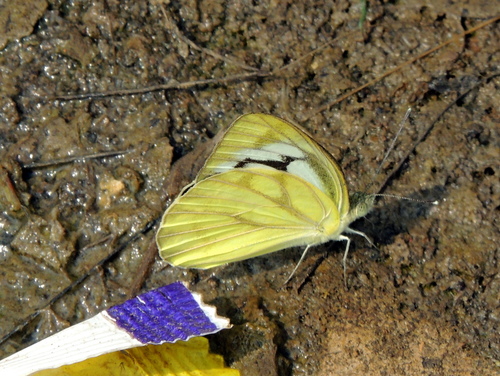
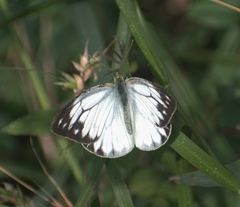
Cepora nerissa, the common gull, is a small to medium-sized butterfly of the family Pieridae, that is, the yellows and whites, which is native to Sri Lanka, India, China, southeast Asia, and Indonesia. Male upperside: white, a greyish-blue shade at base of the wings and along the veins, due to the dark markings on the underside that show through. Forewing: veins black; apex and termen black, the inner margin of that colour extended in an irregular curve from middle of costa to base of terminal third of vein 4, thence continued obliquely outwards to the tornal angle; interspaces 6 and 9 with short narrow greyish-white streaks of the ground colour that stretch into the black apical area but do not reach the margin; a short black subterminal bar between veins 3 and 4 and another, less clearly defined, between veins 1 and 2. Hindwing: veins 4 to 7 with outwardly dilated broad black edgings that coalesce sometimes and form an anterior, irregular, black, terminal margin to the wing. Underside, forewing: white, the veins broadly margined on both sides by dusky black; costal margin broadly and apex suffused with yellow; subterminal black bars between... Wikipedia →
Global Distribution

Parks Where Found

# Park Country Daily sighting probability
1 Cuc Phuong National Park 🇻🇳 Vietnam
~50%
2 Keoladeo National Park 🇮🇳 India
~40%
3 Cat Tien National Park 🇻🇳 Vietnam
~20%
4 Mudumalai National Park 🇮🇳 India
~20%
5 Kaeng Krachan National Park 🇹🇭 Thailand
~20%
6 Gunung Leuser National Park 🇮🇩 Indonesia
~10%

Cities Where Found

# City Country Daily sighting probability
1 Jabalpur 🇮🇳 India
~40%
2 Prayagraj 🇮🇳 India
~30%
3 Jamshedpur 🇮🇳 India
~30%
4 Salem 🇮🇳 India
~30%
5 Surat 🇮🇳 India
~30%
6 Vadodara 🇮🇳 India
~20%
7 Agra 🇮🇳 India
~20%
8 New Delhi 🇮🇳 India
~20%
9 Pune 🇮🇳 India
~20%
10 Mumbai 🇮🇳 India
~20%

Before you go

What are the chances of seeing a Common Gull (butterfly) in Jabalpur?

Likely

About 40% of wildlife watchers report a Common Gull (butterfly) sighting in Jabalpur on a given day, based on 21 verified sightings from GBIF citizen-science data. It is the 14th most-seen of the 88 insects we can rate there. Over three days the chance rises to about 70%, and over a week to over 90%, if each day is a fresh chance.

When is the best time to see a Common Gull (butterfly) in Jabalpur?

February

In that month about 60% of wildlife watchers report a Common Gull (butterfly) in Jabalpur on a given day, against under 5% in May and August, the lowest months. That is one of Jabalpur's driest months, with about 20 mm of rain against 410 mm in July.

What time of day is best to see a Common Gull (butterfly)?

Between 9 am and noon

Across all the parks we cover, that three-hour window holds the most Common Gull (butterfly) sightings with a recorded time, and nearly all of them come between 6 am and 6 pm: it is a daytime animal.

Is Jabalpur the best place to see a Common Gull (butterfly)?

Yes

Of the 21 cities where we can rate Common Gull (butterfly) sightings, Jabalpur has the highest daily chance: about 40%. Next come Prayagraj (India, about 30%) and Jamshedpur (India, about 30%).

Which relatives of the Common Gull (butterfly) live in Jabalpur?

Same family: Pieridae

The closest relatives of the Common Gull (butterfly) that you can see in Jabalpur (family Pieridae, Whites, Yellows, and Sulphurs) are Common Grass Yellow (about 40%), Lemon Migrant (about 30%) and Psyche (about 30%), with each one's daily chance of a sighting.

Where does the Common Gull (butterfly) sighting chance come from?

GBIF citizen-science records

It is estimated from how often the Common Gull (butterfly) is recorded against all the insects logged in Jabalpur (21 verified sightings), calibrated against known sighting rates. Figures are rounded to the nearest 10% because citizen-science data supports honest approximations, not decimals, and months with records from fewer than five people show "—". How it works.

← Back to Jabalpur