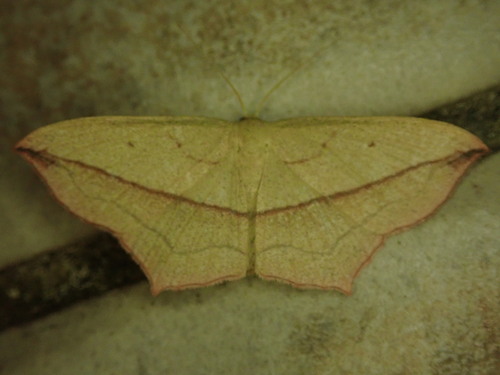
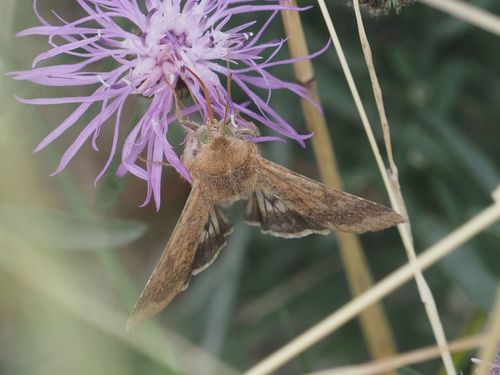
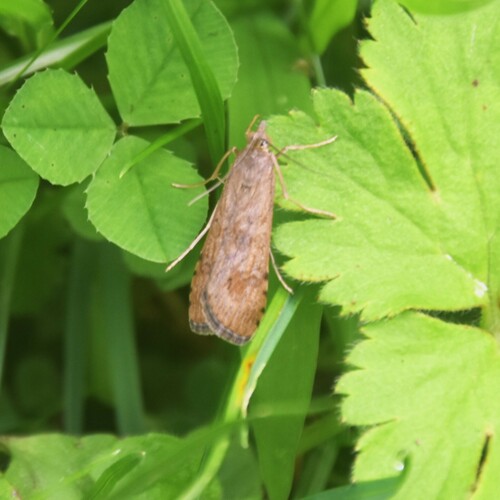
Meal Moth

Meal Moth

Pyralis farinalis

Daily sighting probability ~20% · Possible
at Kharkiv

In 3 days ~50% in a week ~80%

28 Verified sightings at Kharkiv
76 In all 9 parks From 2019 to 2026
August Best month
☀️🌙 Day & Night When it's spotted

About the Meal Moth

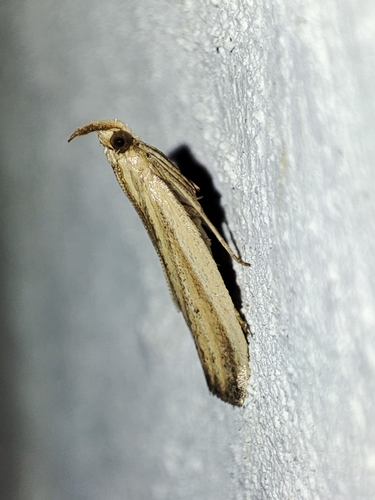
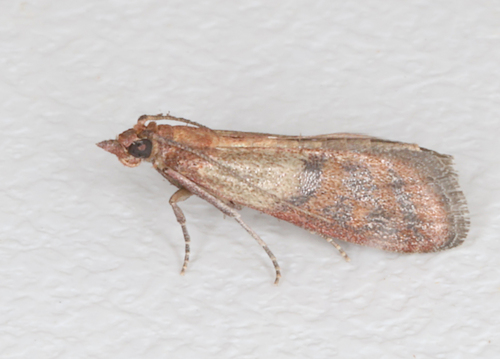
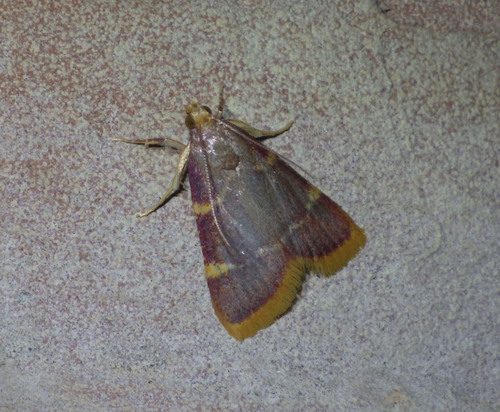
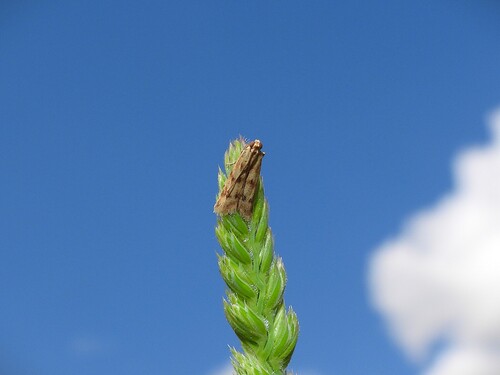
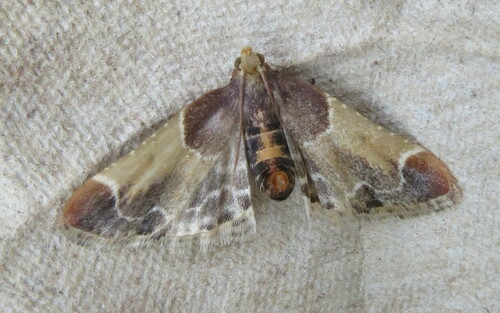
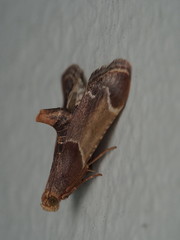
Pyralis farinalis, the meal moth, is a cosmopolitan moth of the family Pyralidae. Its larvae (caterpillars) are pests of certain stored foods, namely milled plant products. It is the type species of the genus Pyralis, and by extension of its entire tribe (Pyralini), subfamily (Pyralinae) and family. Its synanthropic habits were noted even by 18th- and 19th-century naturalists, who described it using terms like domesticalis ("of home and hearth"), fraterna ("as close as a brother"), or the currently-valid farinalis ("of the flour").

At rest, adult moths (imagines) typically hold the tip of their abdomen at 90° to their body. Their upperwings are fairly colourful by moth standards, and have a wingspan of 18–30 mm. Adults fly from June to August. As adults do not live long after mating and eggs hatch quickly, this moth has a quick life cycle and is able to produce multiple generations within a single year.

In Great Britain and some other locations – particularly outside its natural range – it is mostly restricted to anthropogenic habitats of stored grain, e.g. barns and warehouses. However, it has been found in almond orchards among plant detritus and poultry farms among chicken manure.

P. farinalis is a species that is well adapted to living among humans and the urbanization that comes along with them. Though considered a pest to most, since it can decimate grain storages, humans have found uses for the moth. In Chinese culture it is the main ingredient of "insect tea." This drink is popular enough that scientists have been studying the moth's optimum growth conditions so they can possibly cultivate it for commercial use. Wikipedia →
Global Distribution

Parks Where Found

# Park Country Daily sighting probability
1 Sierra Nevada National Park 🇪🇸 Spain
~10%
2 Cévennes National Park 🇫🇷 France
~10%
3 Bavarian Forest National Park 🇩🇪 Germany
~10%
4 Blue Mountains National Park 🇦🇺 Australia
~10%
5 Garden Route National Park 🇿🇦 South Africa
<5%
6 Acadia National Park 🇺🇸 United States
<5%
7 Pyrénées National Park 🇫🇷 France
<5%
8 Wadden Sea National Park 🇩🇪 Germany
<5%
9 Table Mountain National Park 🇿🇦 South Africa
<5%

Cities Where Found

# City Country Daily sighting probability
1 Kharkiv 🇺🇦 Ukraine
~20%
2 Valencia 🇪🇸 Spain
~20%
3 Ankara 🇹🇷 Turkey
~20%
4 Rome 🇮🇹 Italy
~10%
5 Kyiv 🇺🇦 Ukraine
~10%
6 Turin 🇮🇹 Italy
~10%
7 Istanbul 🇹🇷 Turkey
~10%
8 Budapest 🇭🇺 Hungary
~10%
9 Vienna 🇦🇹 Austria
~10%
10 Paris 🇫🇷 France
~10%

Before you go

What are the chances of seeing a Meal Moth in Kharkiv?

Possible

About 20% of wildlife watchers report a Meal Moth sighting in Kharkiv on a given day, based on 28 verified sightings from GBIF citizen-science data. It is the 31st most-seen of the 289 insects we can rate there. Over three days the chance rises to about 50%, and over a week to about 80%, if each day is a fresh chance.

When is the best time to see a Meal Moth in Kharkiv?

July to September

In those months about 30% of wildlife watchers report a Meal Moth in Kharkiv on a given day, against under 5% in October to April, the lowest months.

What time of day is best to see a Meal Moth?

Between 8 and 11 am

Across all the parks we cover, that three-hour window holds the most Meal Moth sightings with a recorded time, and about 6 in 10 of them come between 6 am and 6 pm: it is seen both by day and at night.

Is Kharkiv the best place to see a Meal Moth?

Yes

Of the 72 cities where we can rate Meal Moth sightings, Kharkiv has the highest daily chance: about 20%. Next come Valencia (Spain, about 20%) and Ankara (Turkey, about 20%).

Where does the Meal Moth sighting chance come from?

GBIF citizen-science records

It is estimated from how often the Meal Moth is recorded against all the insects logged in Kharkiv (28 verified sightings), calibrated against known sighting rates. Figures are rounded to the nearest 10% because citizen-science data supports honest approximations, not decimals, and months with records from fewer than five people show "—". How it works.

← Back to Kharkiv