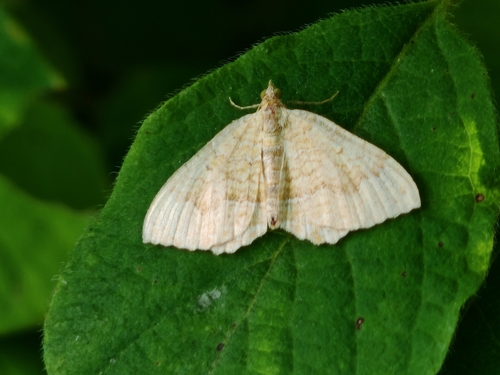
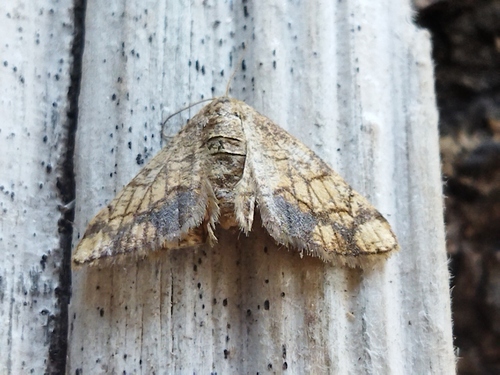
Small Engrailed

Small Engrailed

Ectropis crepuscularia

Daily sighting probability <5% · Rare
at Kyiv

In 3 days ~10% in a week ~20%

5 Verified sightings at Kyiv
274 In all 8 parks From 2019 to 2026
July Best month
☀️🌙 Day & Night When it's spotted

About the Small Engrailed

The engrailed and small engrailed (Ectropis crepuscularia) are moths of the family Geometridae found from the British Isles through central and eastern Europe to the Russian Far East and Kazakhstan. The western Mediterranean and Asia Minor and the Caucasus represent the southern limit of the distribution (with the Balkan countries). In the north, the distribution area ends at the Arctic Circle. It also occurs in North America. Debate exists as to whether they make up one species, or whether E. crepuscularia actually refers only to the small engrailed, with the engrailed proper being separable as E. bistortata.

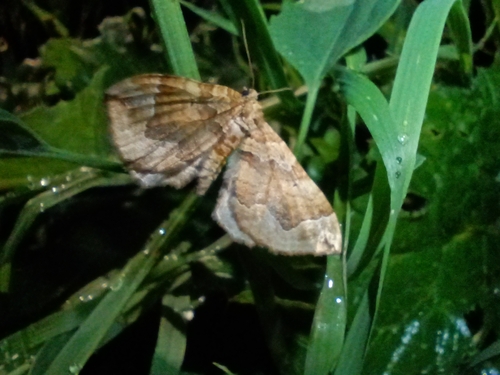
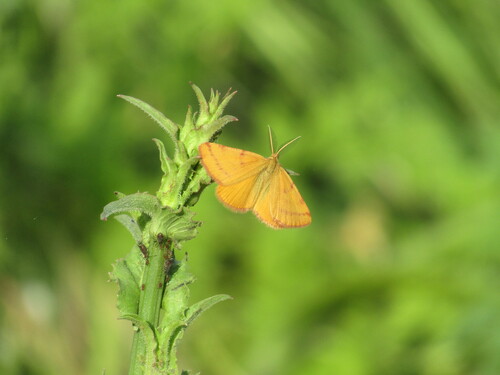
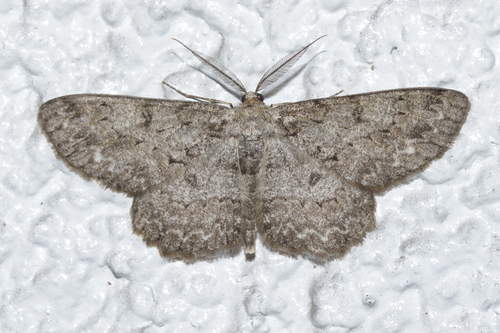
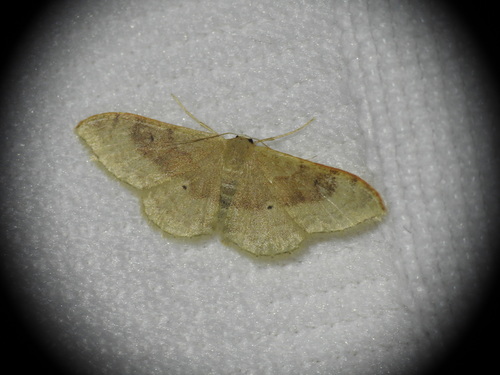
The ground colour of the wings is buff or grey, variably marked with darker fascia and a pale postdiscal crossline. The darker markings are not usually as strong as in the rather similar willow beauty. Melanic forms occur fairly frequently. The wingspan is 38–45 mm (1.5–1.8 in). One or two broods are produced each year. In the British Isles, the adults can be seen at any time between March and August; this time range may vary in other parts of this moth's range. The species flies at night and is attracted to light.

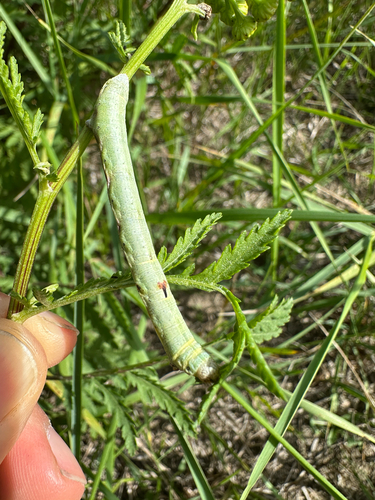
The greyish caterpillar is truly polyphagous, feeding on a huge range of plants. As a caterpillar, the species is known as the saddleback looper. The species overwinters as a pupa. Wikipedia →

Global Distribution

Parks Where Found

# Park Country Daily sighting probability
1 Snowdonia National Park 🇬🇧 United Kingdom
~20%
2 Wadden Sea National Park 🇩🇪 Germany
~10%
3 Triglav National Park 🇸🇮 Slovenia
~10%
4 Bavarian Forest National Park 🇩🇪 Germany
~10%
5 Cairngorms National Park 🇬🇧 United Kingdom
~10%
6 Pyrénées National Park 🇫🇷 France
~10%
7 Great Bear Rainforest 🇨🇦 Canada
~10%
8 Great Smoky Mountains National Park 🇺🇸 United States
~10%

Cities Where Found

# City Country Daily sighting probability
1 Porto 🇵🇹 Portugal
~10%
2 Liverpool 🇬🇧 United Kingdom
~10%
3 Berlin 🇩🇪 Germany
<5%
4 Helsinki 🇫🇮 Finland
<5%
5 Moscow 🇷🇺 Russia
<5%
6 Hamburg 🇩🇪 Germany
<5%
7 Nizhny Novgorod 🇷🇺 Russia
<5%
8 Kyiv 🇺🇦 Ukraine
<5%
9 Munich 🇩🇪 Germany
<5%
10 Prague 🇨🇿 Czechia
<5%

Before you go

What are the chances of seeing a Small Engrailed in Kyiv?

Rare

Under 5% of wildlife watchers report a Small Engrailed sighting in Kyiv on a given day, based on 5 verified sightings from GBIF citizen-science data. It is the 655th most-seen of the 753 insects we can rate there. Over three days the chance rises to about 10%, and over a week to about 20%, if each day is a fresh chance.

When is the best time to see a Small Engrailed in Kyiv?

July

In that month about 10% of wildlife watchers report a Small Engrailed in Kyiv on a given day, against under 5% in August to June, the lowest months.

What time of day is best to see a Small Engrailed?

Between 6 and 9 am

Across all the parks we cover, that three-hour window holds the most Small Engrailed sightings with a recorded time, and about half of them come between 6 am and 6 pm: it is seen both by day and at night.

Is Kyiv the best place to see a Small Engrailed?

8th of 19

Of the 19 cities where we can rate Small Engrailed sightings, Kyiv ranks 8th at under 5%. The best odds are in Porto (Portugal, about 10%), Liverpool (United Kingdom, about 10%) and Berlin (Germany, under 5%).

Which relatives of the Small Engrailed live in Kyiv?

Same family: Geometridae

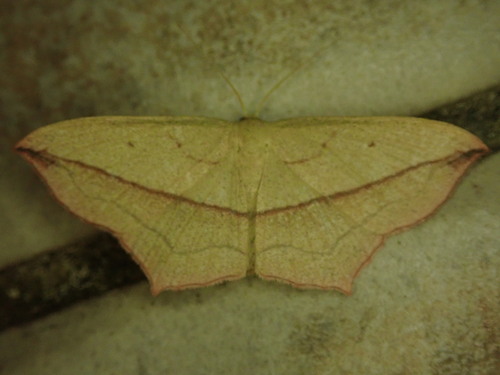
The closest relatives of the Small Engrailed that you can see in Kyiv (family Geometridae, Geometer Moths) are Willow Beauty (about 10%), Yellow Shell Moth (about 10%) and Blood Vein (about 10%), with each one's daily chance of a sighting.

Where does the Small Engrailed sighting chance come from?

GBIF citizen-science records

It is estimated from how often the Small Engrailed is recorded against all the insects logged in Kyiv (5 verified sightings), calibrated against known sighting rates. Figures are rounded to the nearest 10% because citizen-science data supports honest approximations, not decimals, and months with records from fewer than five people show "—". How it works.


← Back to Kyiv