About the Greater Bee Fly
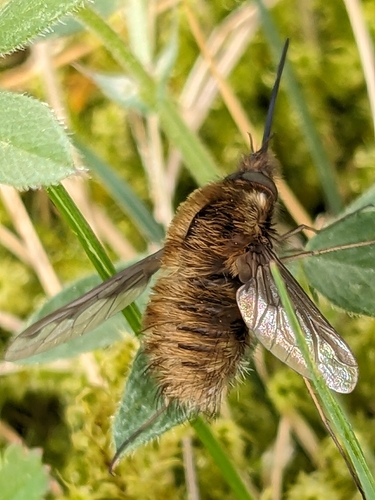
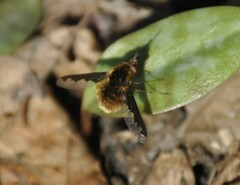
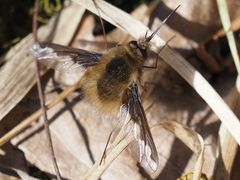
Bombylius major (commonly named the large bee-fly, the dark-edged bee-fly or the greater bee fly) is a parasitic bee mimic fly. B. major is the most common type of fly within the Bombylius genus. The fly derives its name from its close resemblance to bumblebees and is often mistaken for them.
Bombylius major exhibits a unique flight behavior known as "yawing" and plays a role in general pollination, without preference of flower types. The fly does not bite, sting, or spread disease. However, the fly uses this mimicry of bumblebees to its own advantage, allowing close access to host solitary bee and wasp nests in order to deposit its eggs. After hatching, the larvae find their way into the nests to parasitically feed on the grubs.
Bombylius major is part of the family Bombyliidae, with a reported 6000 species worldwide. The subfamily Bombyliinae contains approximately 1100 identified species. The genus Bombylius currently comprises around 450 described species.
Bombylius major can be found from April to June throughout temperate Europe, North America and some parts of Asia, concentrated in the northern hemisphere. The species occurs across a variety of environments... Wikipedia →