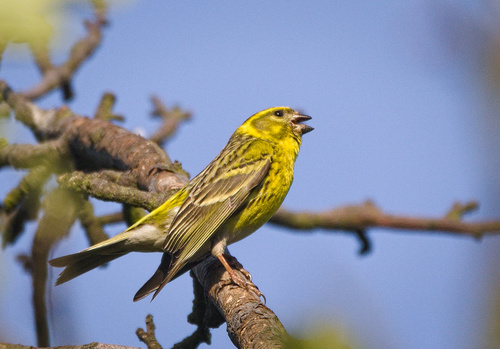
Leach's Petrel

Leach's Petrel

Oceanodroma leucorhoa

Silhouette: Richard Crossley · PhyloPic

LCNTVUVulnerableENCR
Daily sighting probability <5% · Rare
at Lisbon

In 3 days ~10% in a week ~20%

6 Verified sightings at Lisbon
390 In all 9 parks From 2019 to 2026
November Best month
☀️ Diurnal When it's spotted

About the Leach's Petrel

Leach's storm petrel or Leach's petrel (Hydrobates leucorhous) is a small seabird of the tubenose order. It is named after the British zoologist William Elford Leach. The scientific name is derived from Ancient Greek. Hydrobates is from hydōr "water", and batēs "walker", and leucorhous is from leukos, "white" and orrhos, "rump". It was formerly treated in the genus Oceanodroma before that genus was merged into Hydrobates.

It breeds on inaccessible islands in the colder northern areas of the North Atlantic and North Pacific Oceans. The only breeding colony in the Southern Hemisphere is located on Dassen Island in South Africa. It nests in colonies close to the sea in well concealed areas such as rock crevices, shallow burrows, or even logs. It lays a single white egg, which often has a faint ring of purple spots at the large end. This storm petrel is strictly nocturnal at the breeding sites to avoid predation by gulls and skuas, and even avoids coming to land on clear, moonlit nights. The largest colony of Leach's storm petrels can be found on Baccalieu Island off eastern Canada, an ecological reserve with ~1.95 million pairs of the birds at last estimate in 2013. As with European storm petrel, birds breeding at the northern limit of the species' range on the Arctic Circle in Norway have to delay their breeding until autumn to avoid the 24-hour daylight of the high summer. Wikipedia →

Sounds

Recording0:33

Canada · 2023

© Sean Vanderluit · iNaturalist · CC BY 4.0

Recording0:29

United States · 2026

© Tulipifera-ike · iNaturalist · CC BY-NC 4.0

Recording0:30

2024

Hunter Stevens · iNaturalist · CC0

Global Distribution

Parks Where Found

# Park Country Daily sighting probability
1 Isla del Coco National Park 🇨🇷 Costa Rica
<5%
2 Cabo Blanco Absolute Nature Reserve 🇨🇷 Costa Rica
<5%
3 Kenai Fjords National Park 🇺🇸 United States
<5%
4 Great Bear Rainforest 🇨🇦 Canada
<5%
5 Wadden Sea National Park 🇩🇪 Germany
<5%
6 Merritt Island National Wildlife Refuge 🇺🇸 United States
<5%
7 Olympic National Park 🇺🇸 United States
<5%
8 Acadia National Park 🇺🇸 United States
<5%
9 Doñana National Park 🇪🇸 Spain
<5%

Cities Where Found

# City Country Daily sighting probability
1 Lisbon 🇵🇹 Portugal
<5%
2 Dakar 🇸🇳 Senegal
<5%
3 Tel Aviv 🇮🇱 Israel
<5%
4 Liverpool 🇬🇧 United Kingdom
<5%
5 Miami 🇺🇸 United States
<5%
6 San Diego 🇺🇸 United States
<5%
7 Seattle 🇺🇸 United States
<5%

Before you go

What are the chances of seeing a Leach's Petrel in Lisbon?

Rare

Under 5% of wildlife watchers report a Leach's Petrel sighting in Lisbon on a given day, based on 6 verified sightings from GBIF citizen-science data. It is the 81st most-seen of the 186 birds we can rate there. Over three days the chance rises to about 10%, and over a week to about 20%, if each day is a fresh chance.

When is the best time to see a Leach's Petrel in Lisbon?

November

In that month about 10% of wildlife watchers report a Leach's Petrel in Lisbon on a given day, against under 5% in December to October, the lowest months. That is one of Lisbon's wettest months, with about 95 mm of rain against almost none in July.

What time of day is best to see a Leach's Petrel?

Between 10 am and 1 pm

Across all the parks we cover, that three-hour window holds the most Leach's Petrel sightings with a recorded time, and about 8 in 10 of them come between 6 am and 6 pm: it is a daytime animal.

Is Lisbon the best place to see a Leach's Petrel?

Yes

Of the 7 cities where we can rate Leach's Petrel sightings, Lisbon has the highest daily chance: under 5%. Next come Dakar (Senegal, under 5%) and Tel Aviv (Israel, under 5%).

Where does the Leach's Petrel sighting chance come from?

GBIF citizen-science records

It is estimated from how often the Leach's Petrel is recorded against all the birds logged in Lisbon (6 verified sightings), calibrated against known sighting rates. Figures are rounded to the nearest 10% because citizen-science data supports honest approximations, not decimals, and months with records from fewer than five people show "—". How it works.

← Back to Lisbon