Gatekeeper
Daily sighting probability ~30% · Possible
at Liverpool

In 3 days ~70% in a week ~90%

253 Verified sightings at Liverpool
527 In all 8 parks From 2019 to 2026
July Best month
☀️ Diurnal When it's spotted

About the Gatekeeper

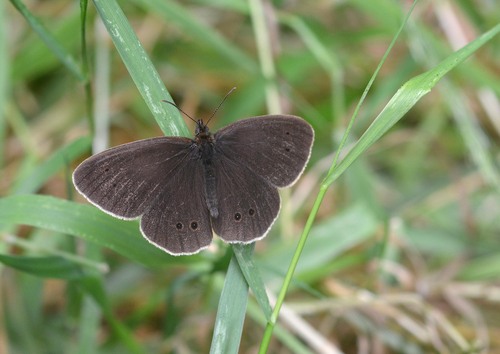
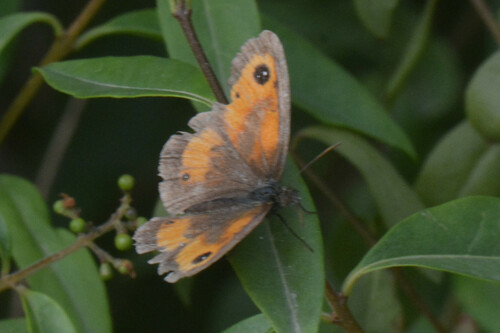
The gatekeeper or hedge brown (Pyronia tithonus) is a species of butterfly found across Europe. Given its preference for warmer weather, the restriction of range expansion can be assumed to be due to climate. Colonies vary in size depending on the available habitat, and can range from a few dozen to several thousand butterflies. Named for its rigorous patrol of hedges and woodland rides, the gatekeeper butterfly is a prime pollinator. The caterpillars primarily feed on fine grasses such as fescues (Festuca) and bents (Agrostis), which are common in meadows and roadside verges.

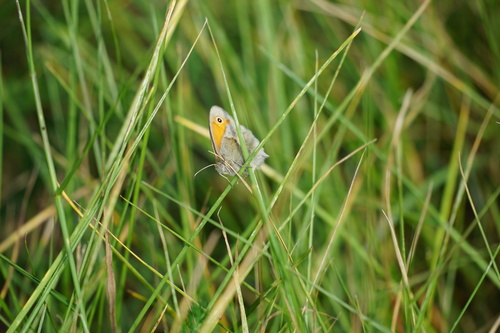
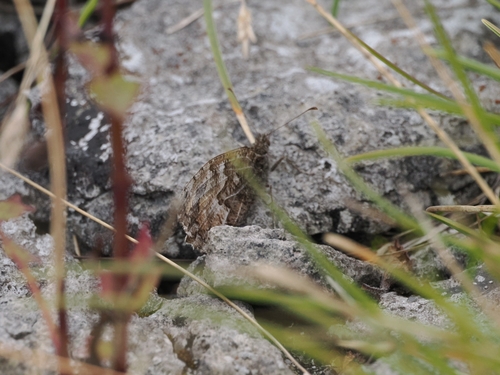
It is a member of the subfamily Satyrinae in the family Nymphalidae. A similar species is the meadow brown; the two species can be difficult to distinguish with closed wings, since the underwing markings are very similar. However, the gatekeeper tends to rest with its wings open, whereas the meadow brown usually rests with its wings closed. The gatekeeper is also smaller and more orange than the meadow brown and has double pupils on its eyespots.

Two other similar species of Pyronia are found in southern Europe, the southern gatekeeper (P. cecilia) and the Spanish gatekeeper... Wikipedia →

Global Distribution

Parks Where Found

# Park Country Daily sighting probability
1 Picos de Europa National Park 🇪🇸 Spain
~30%
2 Aigüestortes National Park 🇪🇸 Spain
~30%
3 Ordesa y Monte Perdido National Park 🇪🇸 Spain
~20%
4 Snowdonia National Park 🇬🇧 United Kingdom
~20%
5 Cévennes National Park 🇫🇷 France
~20%
6 Sierra Nevada National Park 🇪🇸 Spain
~20%
7 Sierra de Guadarrama National Park 🇪🇸 Spain
~20%
8 Pyrénées National Park 🇫🇷 France
~20%

Cities Where Found

# City Country Daily sighting probability
1 Birmingham 🇬🇧 United Kingdom
~30%
2 Liverpool 🇬🇧 United Kingdom
~30%
3 London 🇬🇧 United Kingdom
~30%
4 Manchester 🇬🇧 United Kingdom
~30%
5 Leeds 🇬🇧 United Kingdom
~20%
6 Rotterdam [The Hague] 🇳🇱 Netherlands
~10%
7 Brussels 🇧🇪 Belgium
~10%
8 Paris 🇫🇷 France
~10%
9 Porto 🇵🇹 Portugal
<5%

Before you go

What are the chances of seeing a Gatekeeper in Liverpool?

Possible

About 30% of wildlife watchers report a Gatekeeper sighting in Liverpool on a given day, based on 253 verified sightings from GBIF citizen-science data. It is the 31st most-seen of the 632 insects we can rate there. Over three days the chance rises to about 70%, and over a week to about 90%, if each day is a fresh chance.

When is the best time to see a Gatekeeper in Liverpool?

July

In that month about 70% of wildlife watchers report a Gatekeeper in Liverpool on a given day, against under 5% in September to May, the lowest months.

What time of day is best to see a Gatekeeper?

Between 10 am and 1 pm

Across all the parks we cover, that three-hour window holds the most Gatekeeper sightings with a recorded time, and about 9 in 10 of them come between 6 am and 6 pm: it is a daytime animal.

Is Liverpool the best place to see a Gatekeeper?

Among the best

Of the 9 cities where we can rate Gatekeeper sightings, Liverpool ranks 2nd at about 30%, level with the leaders once rounded. The best odds are in Birmingham (United Kingdom, about 30%).

Which relatives of the Gatekeeper live in Liverpool?

Same family: Nymphalidae

The closest relatives of the Gatekeeper that you can see in Liverpool (family Nymphalidae, Brush-footed Butterflies) are Speckled Wood (about 50%), European Comma (about 40%) and Red Admiral (about 40%), with each one's daily chance of a sighting.

Where does the Gatekeeper sighting chance come from?

GBIF citizen-science records

It is estimated from how often the Gatekeeper is recorded against all the insects logged in Liverpool (253 verified sightings), calibrated against known sighting rates. Figures are rounded to the nearest 10% because citizen-science data supports honest approximations, not decimals, and months with records from fewer than five people show "—". How it works.

← Back to Liverpool