Turnip Moth

Turnip Moth

Agrotis segetum

Daily sighting probability ~10% · With luck
at Liverpool

In 3 days ~20% in a week ~40%

18 Verified sightings at Liverpool
66 In all 4 parks From 2019 to 2026
June Best month
☀️🌙 Day & Night When it's spotted

About the Turnip Moth

Agrotis segetum, sometimes known as the turnip moth, is a moth of the family Noctuidae. The species was first described by Michael Denis and Ignaz Schiffermüller in 1775. It is a common European species and it is found in Africa and across Eurasia except for the northernmost parts.

It is a cutworm in the genus Agrotis, which possibly is the genus that includes the largest number of species of cutworms. It is usually known as the common cutworm in English. It is sometimes called the turnip moth in the United Kingdom.

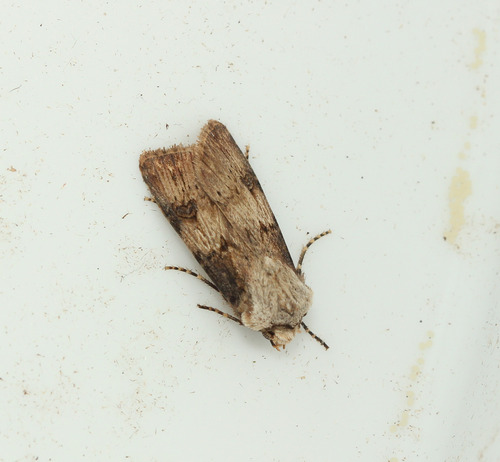
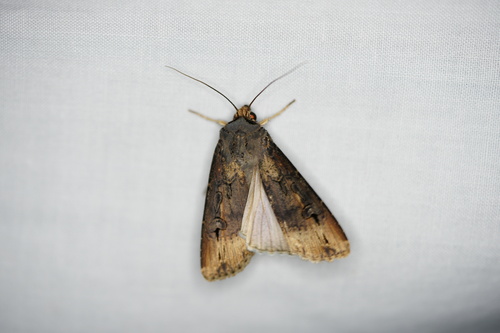
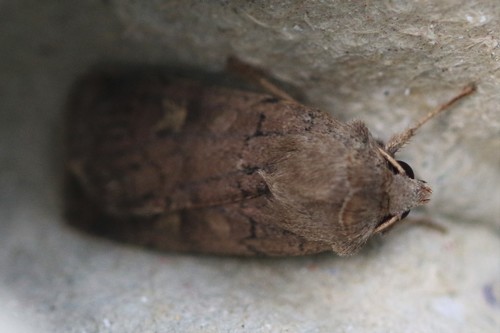
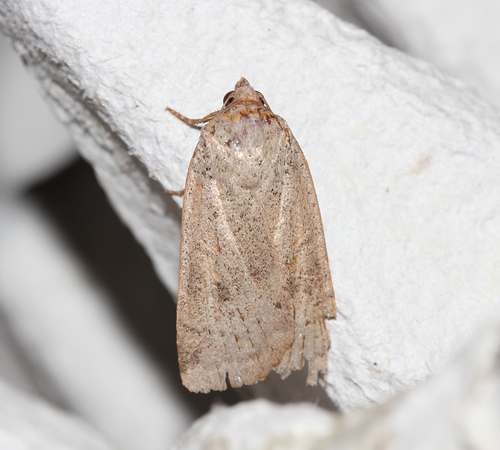
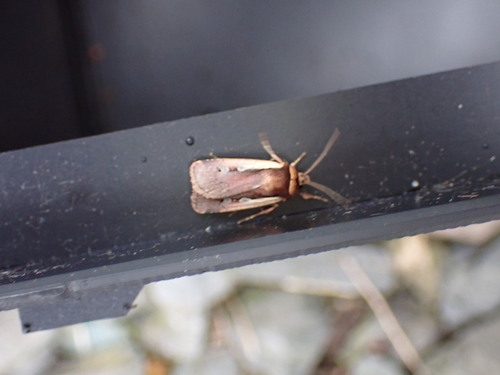
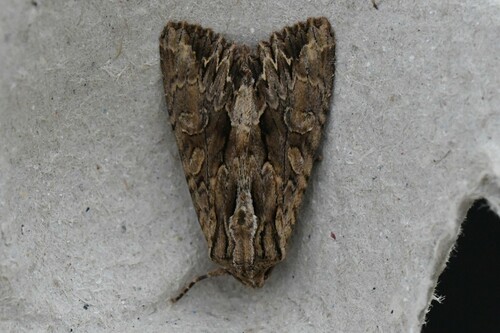
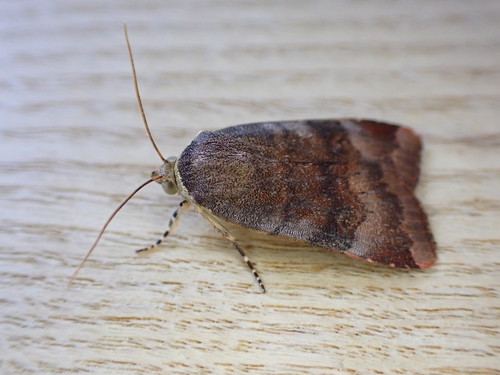
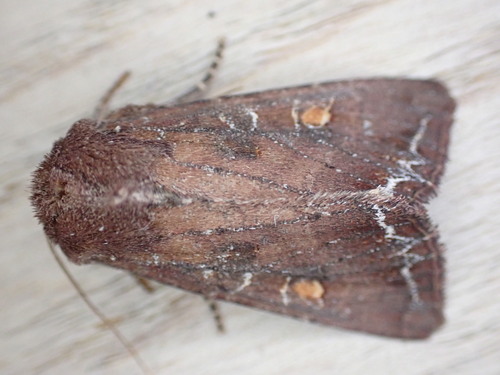
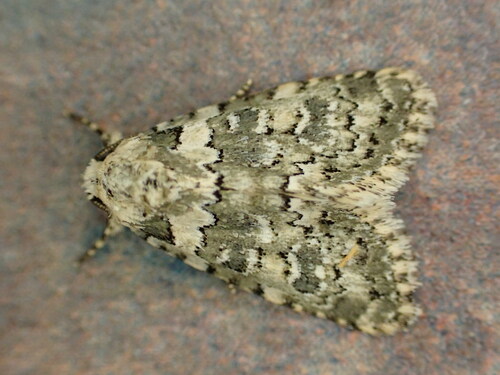
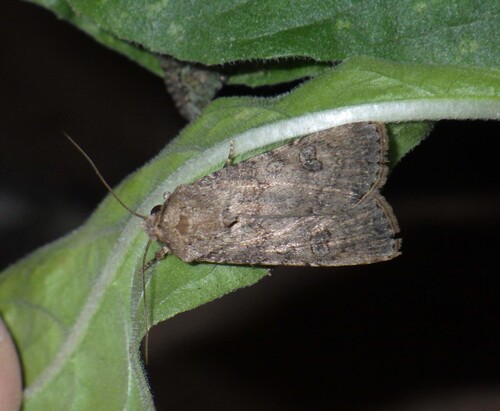
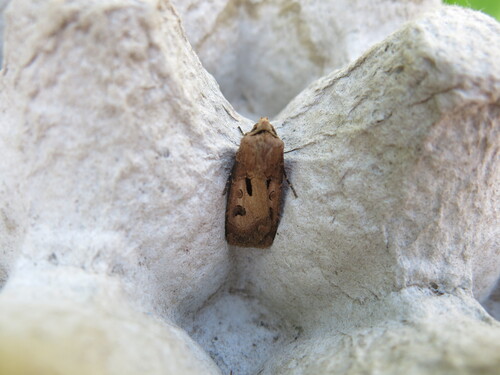
This is a very variable species with the fore-wings ranging from pale buff through to almost black. The paler forms have three dark-bordered stigmata on each fore-wing. Antennae of male bipectinated (comb like on both sides) with moderate length branches. The main feature distinguishing it from other Agrotis species is the shade of the hind-wings, pure white in the males and pearly grey in the females. The wingspan is 32–42 mm.

Edward Meyrick, an English schoolteacher who is especially notable for his study of the microlepidoptera, had this to say about the species: Wingspan 33–41 mm. Antennae in male bipectinated. Fore-wings brownish... Wikipedia →
Global Distribution

Parks Where Found

# Park Country Daily sighting probability
1 Sierra Nevada National Park 🇪🇸 Spain
~20%
2 Sierra de Guadarrama National Park 🇪🇸 Spain
~10%
3 Wadden Sea National Park 🇩🇪 Germany
<5%
4 Garden Route National Park 🇿🇦 South Africa
<5%

Cities Where Found

# City Country Daily sighting probability
1 Budapest 🇭🇺 Hungary
~10%
2 Porto 🇵🇹 Portugal
~10%
3 London 🇬🇧 United Kingdom
~10%
4 Kyiv 🇺🇦 Ukraine
~10%
5 Madrid 🇪🇸 Spain
~10%
6 Kharkiv 🇺🇦 Ukraine
~10%
7 Liverpool 🇬🇧 United Kingdom
~10%
8 Bucharest 🇷🇴 Romania
~10%
9 Essen 🇩🇪 Germany
~10%
10 Berlin 🇩🇪 Germany
~10%

Before you go

What are the chances of seeing a Turnip Moth in Liverpool?

With luck

About 10% of wildlife watchers report a Turnip Moth sighting in Liverpool on a given day, based on 18 verified sightings from GBIF citizen-science data. It is the 296th most-seen of the 632 insects we can rate there. Over three days the chance rises to about 20%, and over a week to about 40%, if each day is a fresh chance.

When is the best time to see a Turnip Moth in Liverpool?

May–September and November

In those months about 10% of wildlife watchers report a Turnip Moth in Liverpool on a given day, against under 5% in October and December–April, the lowest months.

What time of day is best to see a Turnip Moth?

Between 10 pm and 1 am

Across all the parks we cover, that three-hour window holds the most Turnip Moth sightings with a recorded time, and about 7 in 10 of them come between 6 pm and 6 am: it is seen both by day and at night.

Is Liverpool the best place to see a Turnip Moth?

Among the best

Of the 28 cities where we can rate Turnip Moth sightings, Liverpool ranks 7th at about 10%, level with the leaders once rounded. The best odds are in Budapest (Hungary, about 10%), Porto (Portugal, about 10%) and London (United Kingdom, about 10%).

Which relatives of the Turnip Moth live in Liverpool?

Same genus: Agrotis

The closest relatives of the Turnip Moth that you can see in Liverpool (genus Agrotis) are Heart And Dart (about 40%) and Shuttle-Shaped Dart (about 40%), with each one's daily chance of a sighting.

Where does the Turnip Moth sighting chance come from?

GBIF citizen-science records

It is estimated from how often the Turnip Moth is recorded against all the insects logged in Liverpool (18 verified sightings), calibrated against known sighting rates. Figures are rounded to the nearest 10% because citizen-science data supports honest approximations, not decimals, and months with records from fewer than five people show "—". How it works.

← Back to Liverpool