European Oak Beauty

European Oak Beauty

Biston strataria

Daily sighting probability ~10% · With luck
at London

In 3 days ~10% in a week ~30%

49 Verified sightings at London
56 In all 5 parks From 2019 to 2026
March Best month
☀️🌙 Day & Night When it's spotted

About the European Oak Beauty

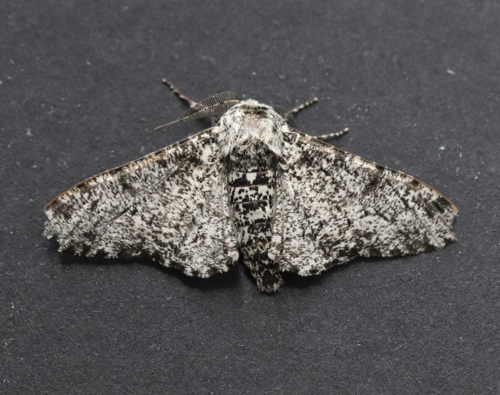
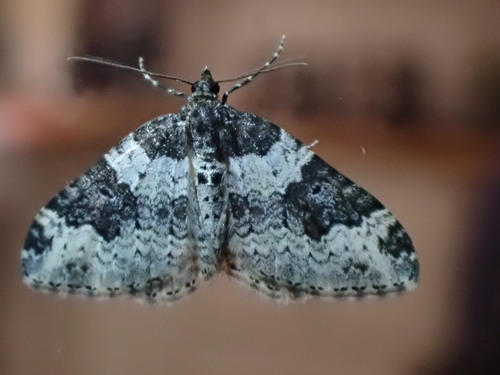
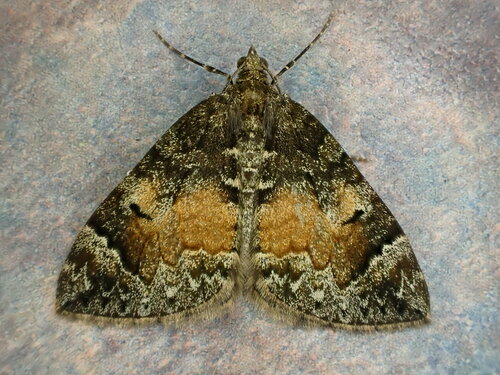
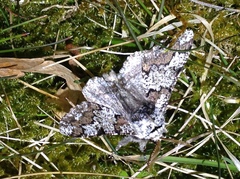
Biston strataria, the oak beauty, is a moth of the family Geometridae. It is native to Europe, the Balkan countries and the Black Sea region as far as Asia Minor and the Caucasus. The species was first described by Johann Siegfried Hufnagel in 1767. B. strataria is found in a variety of habitats, but is mostly found in woodlands where it rests on the bark of trees, camouflaged by its mottled black and grey wings. The male has feather-like antennae while those of the female are more thread-like. The moth has a wingspan of 40 to 56 mm (1.6 to 2.2 in).

The larvae are mainly brown with three lumps near the end of the abdomen. They have evolved to resemble sticks which helps protect them from predators. The larvae feed on many species of trees, but the most commonly used host plants are oaks.

The oak beauty has white forewings with two irregular broad brown bands along each wing. The first band is short, located near the base of the wing, and surrounded with a black border. The second band is located near the outer margin with a black border surrounding the inner edge. Between these two bands is a white space sprinkled with black dots as well as a crescent-shaped black... Wikipedia →
Global Distribution

Parks Where Found

# Park Country Daily sighting probability
1 Snowdonia National Park 🇬🇧 United Kingdom
~10%
2 Bavarian Forest National Park 🇩🇪 Germany
~10%
3 Sierra de Guadarrama National Park 🇪🇸 Spain
<5%
4 Wadden Sea National Park 🇩🇪 Germany
<5%
5 Pyrénées National Park 🇫🇷 France
<5%

Cities Where Found

# City Country Daily sighting probability
1 Liverpool 🇬🇧 United Kingdom
~10%
2 Porto 🇵🇹 Portugal
~10%
3 London 🇬🇧 United Kingdom
~10%
4 Birmingham 🇬🇧 United Kingdom
<5%
5 Helsinki 🇫🇮 Finland
<5%
6 Copenhagen 🇩🇰 Denmark
<5%
7 Prague 🇨🇿 Czechia
<5%
8 Berlin 🇩🇪 Germany
<5%
9 Vienna 🇦🇹 Austria
<5%
10 Moscow 🇷🇺 Russia
<5%

Before you go

What are the chances of seeing a European Oak Beauty in London?

With luck

About 10% of wildlife watchers report a European Oak Beauty sighting in London on a given day, based on 49 verified sightings from GBIF citizen-science data. It is the 477th most-seen of the 1504 insects we can rate there. Over three days the chance rises to about 10%, and over a week to about 30%, if each day is a fresh chance.

When is the best time to see a European Oak Beauty in London?

February and March

In those months about 20% of wildlife watchers report a European Oak Beauty in London on a given day, against under 5% in May to January, the lowest months.

What time of day is best to see a European Oak Beauty?

Between 9 pm and midnight

Across all the parks we cover, that three-hour window holds the most European Oak Beauty sightings with a recorded time, and about half of them come between 6 pm and 6 am: it is seen both by day and at night.

Is London the best place to see a European Oak Beauty?

Among the best

Of the 10 cities where we can rate European Oak Beauty sightings, London ranks 3rd at about 10%, level with the leaders once rounded. The best odds are in Liverpool (United Kingdom, about 10%) and Porto (Portugal, about 10%).

Where does the European Oak Beauty sighting chance come from?

GBIF citizen-science records

It is estimated from how often the European Oak Beauty is recorded against all the insects logged in London (49 verified sightings), calibrated against known sighting rates. Figures are rounded to the nearest 10% because citizen-science data supports honest approximations, not decimals, and months with records from fewer than five people show "—". How it works.

← Back to London