Oak Hook-Tip

Oak Hook-Tip

Watsonalla binaria

Daily sighting probability ~10% · With luck
at London

In 3 days ~20% in a week ~40%

82 Verified sightings at London
83 In all 5 parks From 2019 to 2026
August Best month
🌙 Nocturnal When it's spotted

About the Oak Hook-Tip

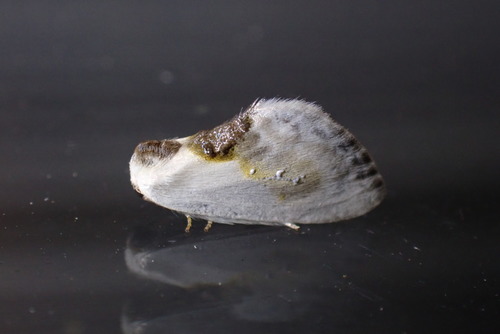
The oak hook-tip (Watsonalla binaria) is a moth of the family Drepanidae. It is found in most of Europe except the far north. It is quite common in England and Wales, but not found in Scotland and only recently in Ireland. The species was first described by Johann Siegfried Hufnagel in 1767.

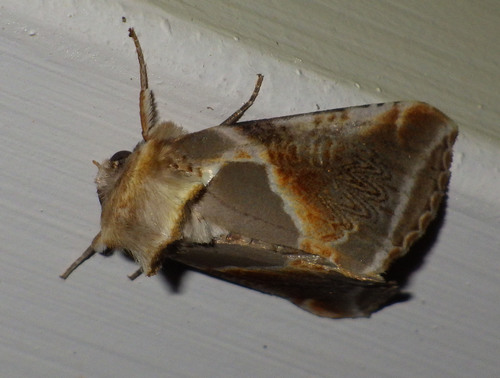
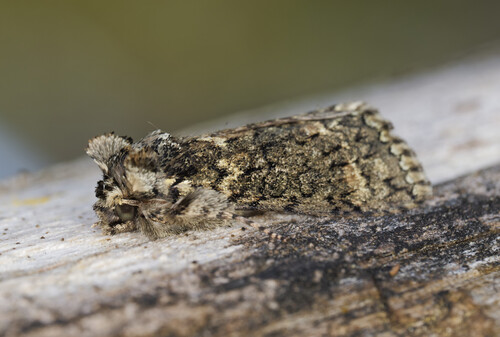
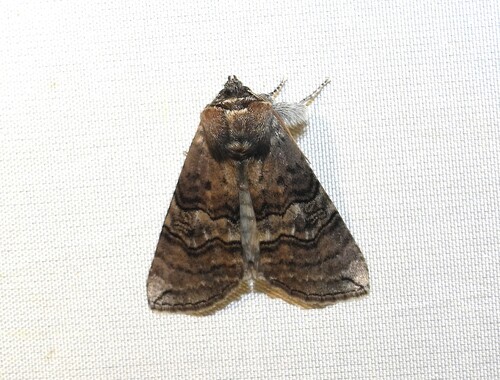
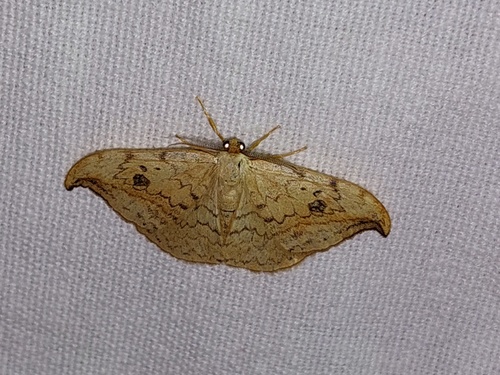
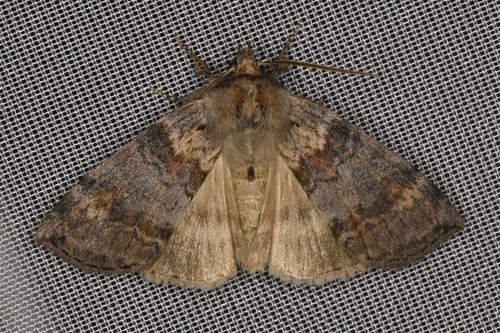
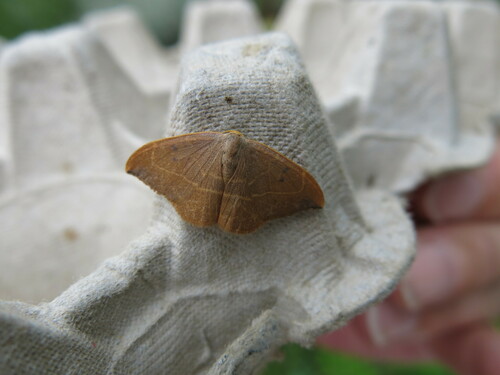
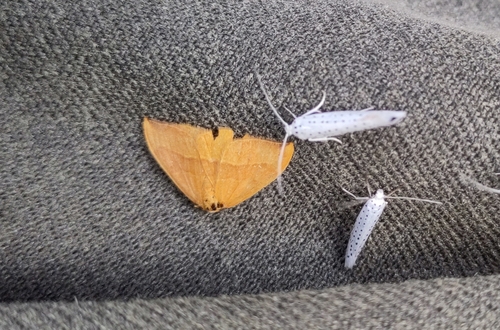
The sexes differ in size (male wingspan about 30 mm, female about 35 mm), but are similar in colour. The fore wings are orange-brown with three narrow yellow fascia (the outer one being faint and sometimes absent) with two dark discal spots between the inner two fascia. Sometimes, these occur, but weaker, on the rear wings. The apex of the fore wings is hook shaped, giving the species its name. The hind wings are lighter orange, again with three yellow fascia. Usually two broods are produced each year, the adults flying in May and June and again in August [1]. Second-generation moths are much smaller and slightly lighter coloured than those of the first. They are very similar to Watsonalla cultraria which also has a yellowish-brown colour. Two black twin points on the front wings are the clearest differentiator. The species sometimes flies during the day, but usually flies at night and is attracted to light.

The larva is brown with yellow markings and shows the typical drepanid shape with a tapered tail. It usually feeds on oak, but has also been recorded on alder, beech, and birch. The species overwinters as pupae. ^The flight season refers to the British Isles. This may vary in other parts of the range. Wikipedia →
Global Distribution

Parks Where Found

# Park Country Daily sighting probability
1 Bavarian Forest National Park 🇩🇪 Germany
~10%
2 Cévennes National Park 🇫🇷 France
~10%
3 Wadden Sea National Park 🇩🇪 Germany
~10%
4 Pyrénées National Park 🇫🇷 France
~10%
5 Sierra de Guadarrama National Park 🇪🇸 Spain
<5%

Cities Where Found

# City Country Daily sighting probability
1 London 🇬🇧 United Kingdom
~10%
2 Berlin 🇩🇪 Germany
~10%
3 Essen 🇩🇪 Germany
~10%
4 Prague 🇨🇿 Czechia
<5%
5 Paris 🇫🇷 France
<5%
6 Birmingham 🇬🇧 United Kingdom
<5%
7 Munich 🇩🇪 Germany
<5%
8 Vienna 🇦🇹 Austria
<5%

Before you go

What are the chances of seeing an Oak Hook-Tip in London?

With luck

About 10% of wildlife watchers report an Oak Hook-Tip sighting in London on a given day, based on 82 verified sightings from GBIF citizen-science data. It is the 371st most-seen of the 1504 insects we can rate there. Over three days the chance rises to about 20%, and over a week to about 40%, if each day is a fresh chance.

When is the best time to see an Oak Hook-Tip in London?

May and July–September

In those months about 10% of wildlife watchers report an Oak Hook-Tip in London on a given day, against under 5% in June and October–April, the lowest months.

What time of day is best to see an Oak Hook-Tip?

Between 11 pm and 2 am

Across all the parks we cover, that three-hour window holds the most Oak Hook-Tip sightings with a recorded time, and about 8 in 10 of them come between 6 pm and 6 am: it is mostly seen at night.

Is London the best place to see an Oak Hook-Tip?

Yes

Of the 8 cities where we can rate Oak Hook-Tip sightings, London has the highest daily chance: about 10%. Next come Berlin (Germany, about 10%) and Essen (Germany, about 10%).

Where does the Oak Hook-Tip sighting chance come from?

GBIF citizen-science records

It is estimated from how often the Oak Hook-Tip is recorded against all the insects logged in London (82 verified sightings), calibrated against known sighting rates. Figures are rounded to the nearest 10% because citizen-science data supports honest approximations, not decimals, and months with records from fewer than five people show "—". How it works.

← Back to London