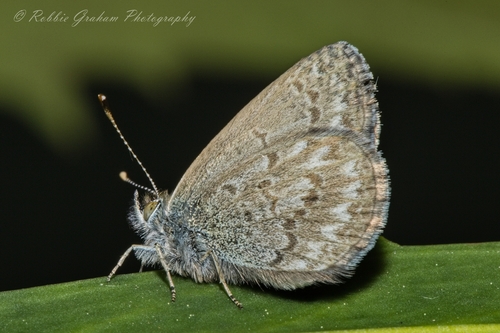
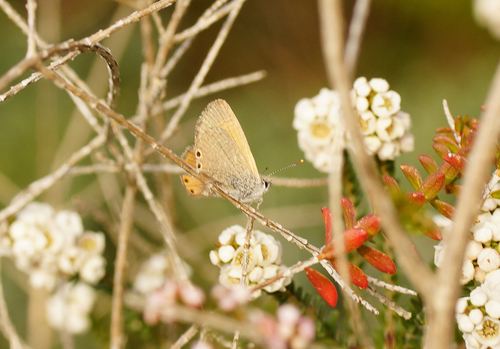
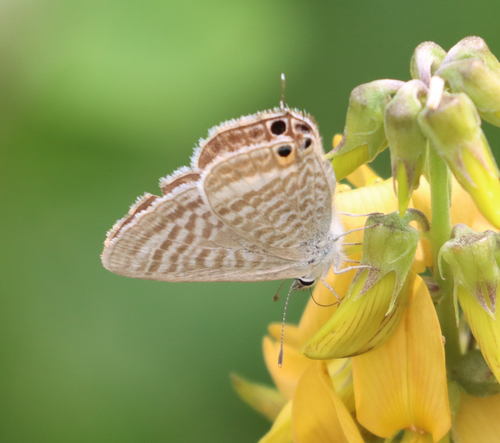
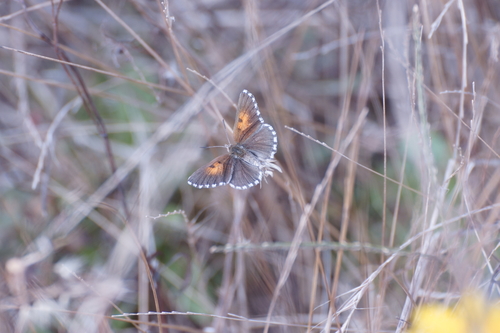
Common Imperial Blue

Common Imperial Blue

Jalmenus evagoras

Endemic
Daily sighting probability ~10% · With luck
at Melbourne

In 3 days ~20% in a week ~50%

261 Verified sightings at Melbourne
45 In all 2 parks From 2019 to 2026
December Best month
☀️ Diurnal When it's spotted

About the Common Imperial Blue

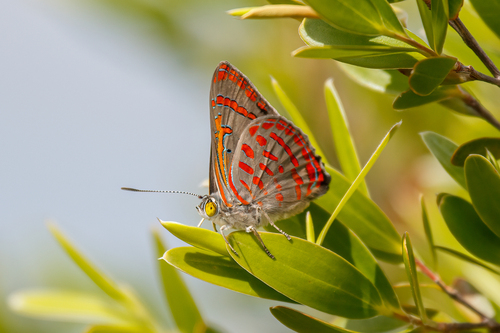
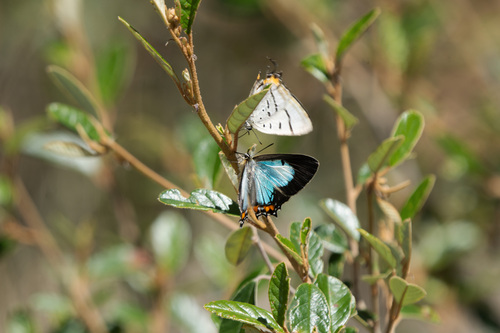
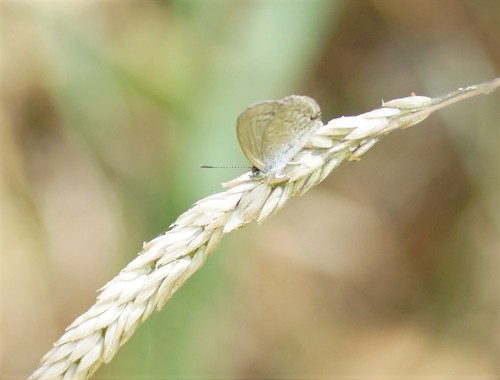
Jalmenus evagoras, the imperial hairstreak, imperial blue, or common imperial blue, is a small, metallic blue butterfly of the family Lycaenidae. It is commonly found in eastern coastal regions of Australia. This species is notable for its unique mutualism with ants of the genus Iridomyrmex. The ants provide protection for juveniles and cues for adult mating behavior. They are compensated with food secreted from J. evagoras larvae. The ants greatly enhance the survival and reproductive success of the butterflies. J. evagoras lives and feeds on Acacia plants, so butterfly populations are localized to areas with preferred species of both host plants and ants.

The wings of Jalmenus evagoras are metallic blue outlined with black. The hindwings have tails and orange spots towards the bottom. On the ventral side, wings are buff-coloured with black streaks and orange hindwing spots similar to the dorsal side. The butterfly has a maximum wingspan of 4 cm.

Little to no sexual dimorphism is observed between male and female adult butterflies. In the pupal stage, females can be up to 60% larger than males. Jalmenus evagoras lives along the east coast of Australia in... Wikipedia →
Global Distribution

Parks Where Found

# Park Country Daily sighting probability
1 Blue Mountains National Park 🇦🇺 Australia
~10%
2 Royal National Park 🇦🇺 Australia
~10%

Cities Where Found

# City Country Daily sighting probability
1 Brisbane 🇦🇺 Australia
~10%
2 Melbourne 🇦🇺 Australia
~10%
3 Sydney 🇦🇺 Australia
<5%

Before you go

What are the chances of seeing a Common Imperial Blue in Melbourne?

With luck

About 10% of wildlife watchers report a Common Imperial Blue sighting in Melbourne on a given day, based on 261 verified sightings from GBIF citizen-science data. It is the 73rd most-seen of the 875 insects we can rate there. Over three days the chance rises to about 20%, and over a week to about 50%, if each day is a fresh chance.

When is the best time to see a Common Imperial Blue in Melbourne?

October to April

In those months about 10% of wildlife watchers report a Common Imperial Blue in Melbourne on a given day, against under 5% in May to September, the lowest months.

What time of day is best to see a Common Imperial Blue?

Between 1 and 4 pm

Across all the parks we cover, that three-hour window holds the most Common Imperial Blue sightings with a recorded time, and about 9 in 10 of them come between 6 am and 6 pm: it is a daytime animal.

Is Melbourne the best place to see a Common Imperial Blue?

Among the best

Of the 3 cities where we can rate Common Imperial Blue sightings, Melbourne ranks 2nd at about 10%, level with the leaders once rounded. The best odds are in Brisbane (Australia, about 10%).

Which relatives of the Common Imperial Blue live in Melbourne?

Same family: Lycaenidae

The closest relatives of the Common Imperial Blue that you can see in Melbourne (family Lycaenidae, Gossamer-winged Butterflies) are Lesser Grass Blue (about 20%), Zizina labradus (about 10%) and Saltbush Blue (about 10%), with each one's daily chance of a sighting.

Where does the Common Imperial Blue sighting chance come from?

GBIF citizen-science records

It is estimated from how often the Common Imperial Blue is recorded against all the insects logged in Melbourne (261 verified sightings), calibrated against known sighting rates. Figures are rounded to the nearest 10% because citizen-science data supports honest approximations, not decimals, and months with records from fewer than five people show "—". How it works.

← Back to Melbourne