Eastern Billabongfly

Eastern Billabongfly

Austroagrion watsoni

Daily sighting probability ~10% · With luck
at Melbourne

In 3 days ~10% in a week ~30%

92 Verified sightings at Melbourne
141 In all 4 parks From 2019 to 2026
January Best month
☀️ Diurnal When it's spotted

About the Eastern Billabongfly

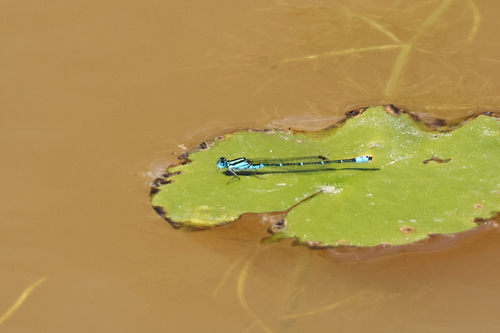
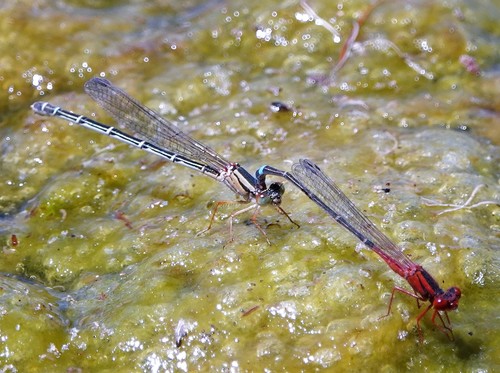
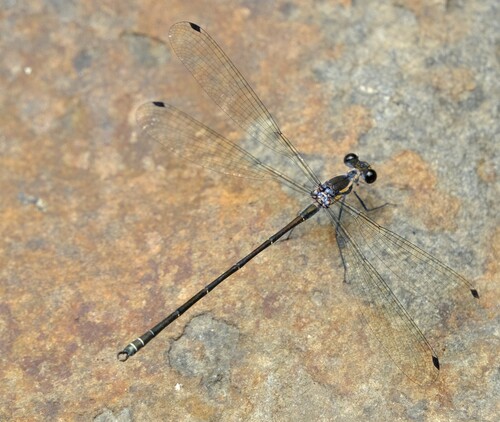
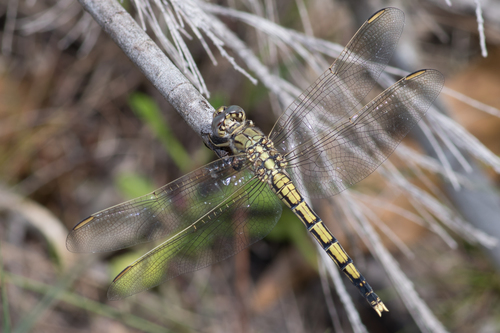
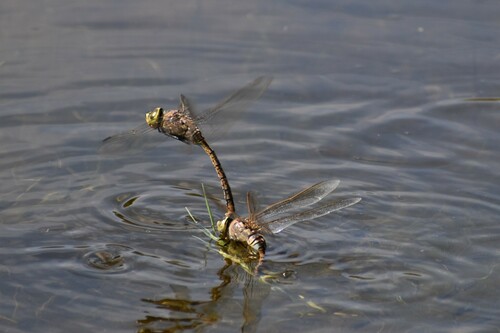
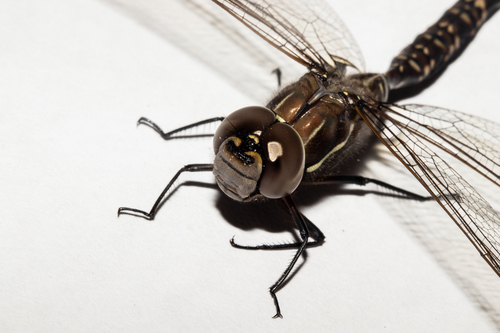
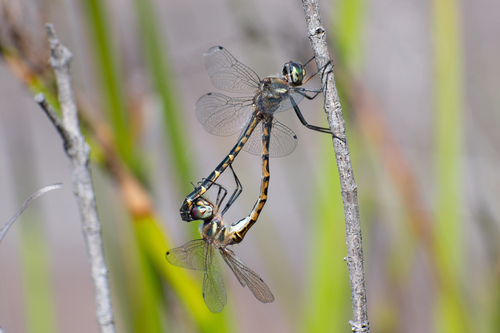
The eastern billabongfly (Austroagrion watsoni) is a damselfly in the family Coenagrionidae. It is also known as the eastern dart. Eastern billabongflies are small damselflies about 25mm (1 inch) in length. They are found near slow running water or still water, such as lakes, ponds and ditches. Male and female eastern billabongflies mate in a wheel position.

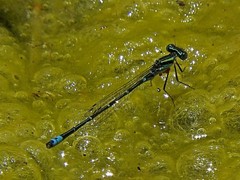
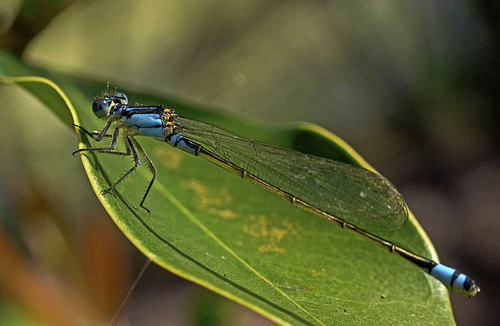
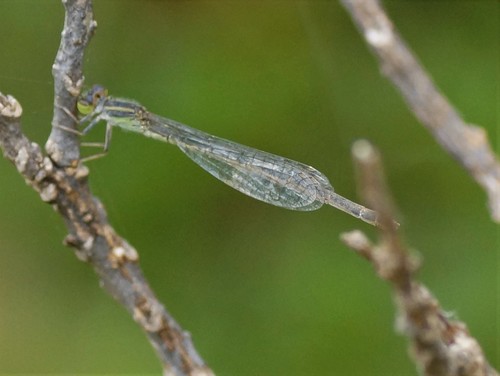
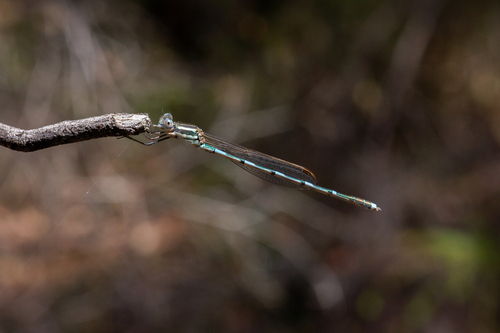
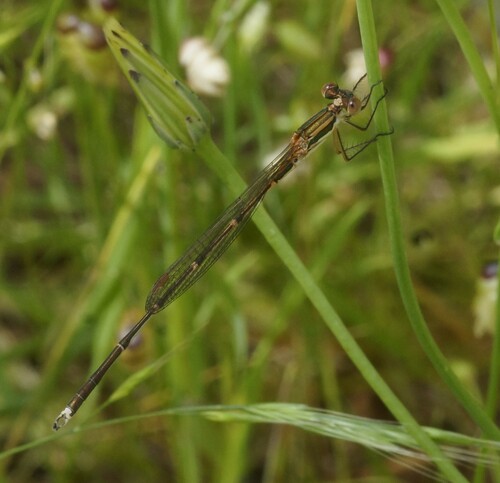
The male eastern billabongfly has a bright blue thorax with black markings, and a long and slender black abdomen with blue rings and a blue tip. The female is a similar size to the male and is pale blue to grayish-green in colour. The antehumeral stripe of the female is a contrastingly bright green.

Eastern billabongflies usually rest on plants either in a pond or at the waters edge, and sit very close to the water surface. They are relatively quick flyers. Eastern billabongflies appear similar to common bluetails and blue riverdamsels. Eastern billabongflies are smaller. Eastern billabongflies have a blue bar just behind their eyes where the common bluetail has two blue spots. The tips of the tails of eastern billabongflies have two black squares, whereas the common bluetail... Wikipedia →

Global Distribution

Parks Where Found

# Park Country Daily sighting probability
1 Lamington National Park 🇦🇺 Australia
~20%
2 Springbrook National Park 🇦🇺 Australia
~10%
3 Grampians National Park 🇦🇺 Australia
~10%
4 Blue Mountains National Park 🇦🇺 Australia
~10%

Cities Where Found

# City Country Daily sighting probability
1 Brisbane 🇦🇺 Australia
~10%
2 Melbourne 🇦🇺 Australia
~10%
3 Sydney 🇦🇺 Australia
<5%

Before you go

What are the chances of seeing an Eastern Billabongfly in Melbourne?

With luck

About 10% of wildlife watchers report an Eastern Billabongfly sighting in Melbourne on a given day, based on 92 verified sightings from GBIF citizen-science data. It is the 173rd most-seen of the 875 insects we can rate there. Over three days the chance rises to about 10%, and over a week to about 30%, if each day is a fresh chance.

When is the best time to see an Eastern Billabongfly in Melbourne?

November to March

In those months about 10% of wildlife watchers report an Eastern Billabongfly in Melbourne on a given day, against under 5% in April to October, the lowest months.

What time of day is best to see an Eastern Billabongfly?

Between 10 am and 1 pm

Across all the parks we cover, that three-hour window holds the most Eastern Billabongfly sightings with a recorded time, and nearly all of them come between 6 am and 6 pm: it is a daytime animal.

Is Melbourne the best place to see an Eastern Billabongfly?

Among the best

Of the 3 cities where we can rate Eastern Billabongfly sightings, Melbourne ranks 2nd at about 10%, level with the leaders once rounded. The best odds are in Brisbane (Australia, about 10%).

Which relatives of the Eastern Billabongfly live in Melbourne?

Same family: Coenagrionidae

The closest relatives of the Eastern Billabongfly that you can see in Melbourne (family Coenagrionidae, Narrow-winged Damselflies) are Australian Bluetail (about 10%), Aurora Bluetail (about 10%) and Red And Blue Damsel (about 10%), with each one's daily chance of a sighting.

Where does the Eastern Billabongfly sighting chance come from?

GBIF citizen-science records

It is estimated from how often the Eastern Billabongfly is recorded against all the insects logged in Melbourne (92 verified sightings), calibrated against known sighting rates. Figures are rounded to the nearest 10% because citizen-science data supports honest approximations, not decimals, and months with records from fewer than five people show "—". How it works.

← Back to Melbourne