Red And Blue Damsel

Red And Blue Damsel

Xanthagrion erythroneurum

Daily sighting probability ~10% · With luck
at Melbourne

In 3 days ~20% in a week ~30%

104 Verified sightings at Melbourne
55 In all 4 parks From 2019 to 2026
December Best month
☀️ Diurnal When it's spotted

About the Red And Blue Damsel

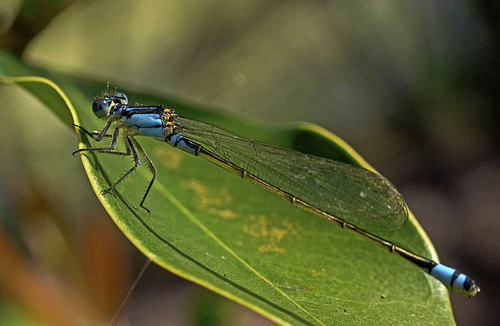
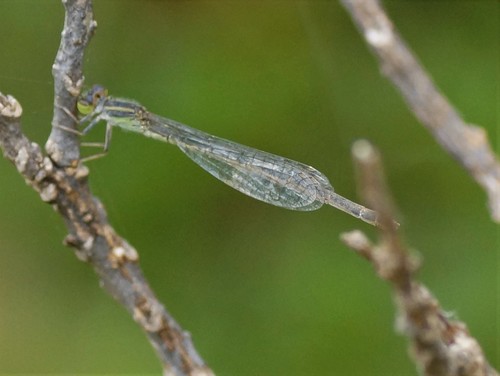
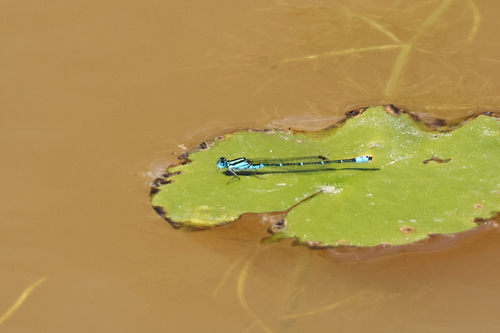
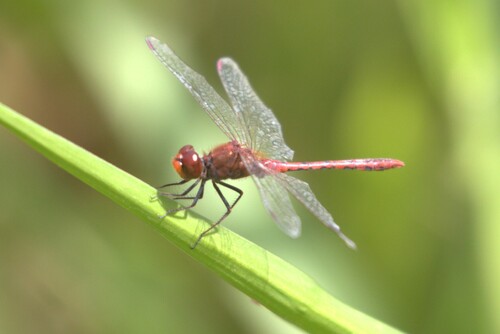
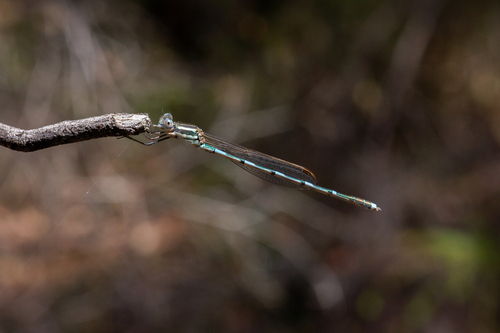
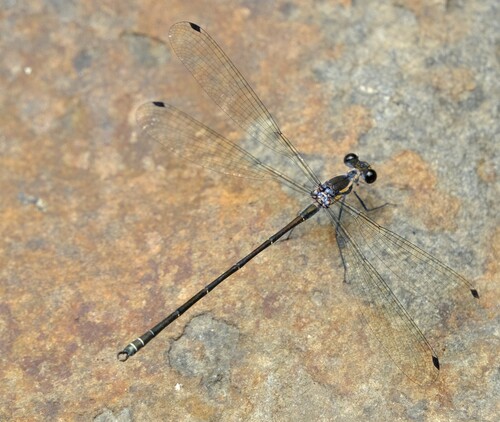
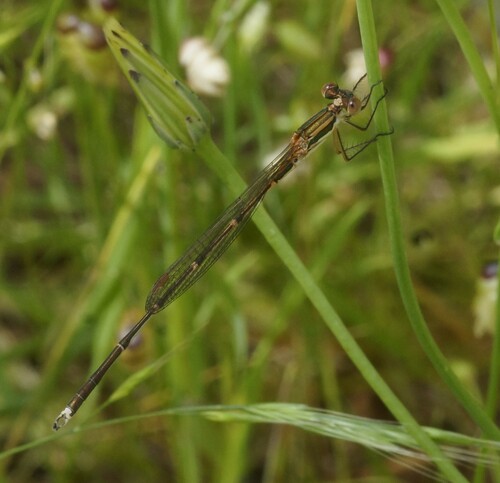
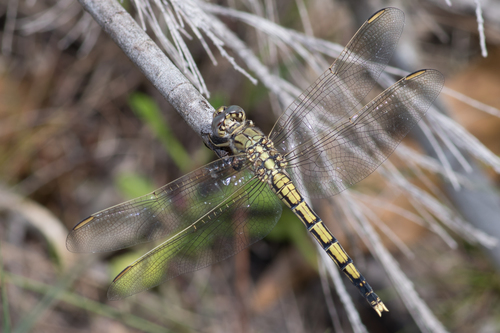
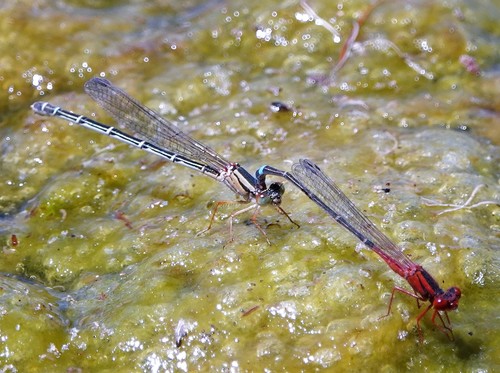
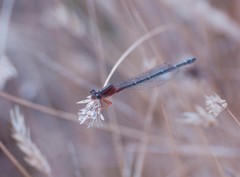
The red and blue damsel, (Xanthagrion erythroneurum) is a damselfly in the family Coenagrionidae. It is the only member of the monotypic genus Xanthagrion. A red and blue damsel has a bright red face and thorax. Its abdomen is pale in colour and 2.2-2.4 cm long. Females and males are similar in colour.

The red and blue damsel is widespread across all Australian states, as well as Fiji, New Caledonia, and other islands in the Pacific. It is found in north and eastern Tasmania. It is typically found near dams, marshes and slow watercourses.

The genus name Xanthagrion is derived from the Greek ξανθός (xanthos, "yellow") and Agrion, a genus name derived from the Greek ἄγριος (agrios, "wild"). Agrion was the name applied by Johan Christian Fabricius in 1775 to all damselflies.

The species name erythroneurum is derived from the Greek ἐρυθρός (erythros, "red") and νεῦρον (neuron, "nerve" or "sinew"), referring to the colour of the major wing veins. Wikipedia →
Global Distribution

Parks Where Found

# Park Country Daily sighting probability
1 Hattah-Kulkyne National Park 🇦🇺 Australia
~30%
2 Grampians National Park 🇦🇺 Australia
~10%
3 Kosciuszko National Park 🇦🇺 Australia
~10%
4 Great Otway National Park 🇦🇺 Australia
~10%

Cities Where Found

# City Country Daily sighting probability
1 Perth 🇦🇺 Australia
~10%
2 Sydney 🇦🇺 Australia
~10%
3 Melbourne 🇦🇺 Australia
~10%
4 Brisbane 🇦🇺 Australia
<5%

Before you go

What are the chances of seeing a Red And Blue Damsel in Melbourne?

With luck

About 10% of wildlife watchers report a Red And Blue Damsel sighting in Melbourne on a given day, based on 104 verified sightings from GBIF citizen-science data. It is the 153rd most-seen of the 875 insects we can rate there. Over three days the chance rises to about 20%, and over a week to about 30%, if each day is a fresh chance.

When is the best time to see a Red And Blue Damsel in Melbourne?

October to March

In those months about 10% of wildlife watchers report a Red And Blue Damsel in Melbourne on a given day, against under 5% in April to September, the lowest months.

What time of day is best to see a Red And Blue Damsel?

Between 1 and 4 pm

Across all the parks we cover, that three-hour window holds the most Red And Blue Damsel sightings with a recorded time, and about 8 in 10 of them come between 6 am and 6 pm: it is a daytime animal.

Is Melbourne the best place to see a Red And Blue Damsel?

Among the best

Of the 4 cities where we can rate Red And Blue Damsel sightings, Melbourne ranks 3rd at about 10%, level with the leaders once rounded. The best odds are in Perth (Australia, about 10%) and Sydney (Australia, about 10%).

Which relatives of the Red And Blue Damsel live in Melbourne?

Same family: Coenagrionidae

The closest relatives of the Red And Blue Damsel that you can see in Melbourne (family Coenagrionidae, Narrow-winged Damselflies) are Australian Bluetail (about 10%), Aurora Bluetail (about 10%) and Eastern Billabongfly (about 10%), with each one's daily chance of a sighting.

Where does the Red And Blue Damsel sighting chance come from?

GBIF citizen-science records

It is estimated from how often the Red And Blue Damsel is recorded against all the insects logged in Melbourne (104 verified sightings), calibrated against known sighting rates. Figures are rounded to the nearest 10% because citizen-science data supports honest approximations, not decimals, and months with records from fewer than five people show "—". How it works.

← Back to Melbourne