Red-Spotted Jezebel

Red-Spotted Jezebel

Delias aganippe

Endemic
Daily sighting probability <5% · Rare
at Melbourne

In 3 days ~10% in a week ~30%

47 Verified sightings at Melbourne
22 In all 3 parks From 2019 to 2026
March Best month
☀️ Diurnal When it's spotted

About the Red-Spotted Jezebel

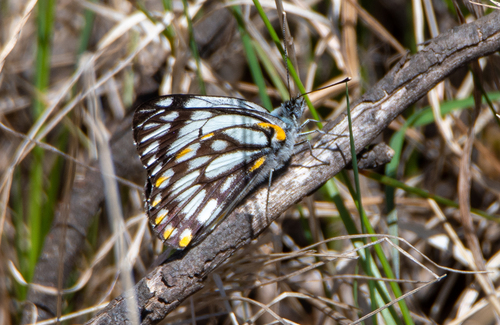
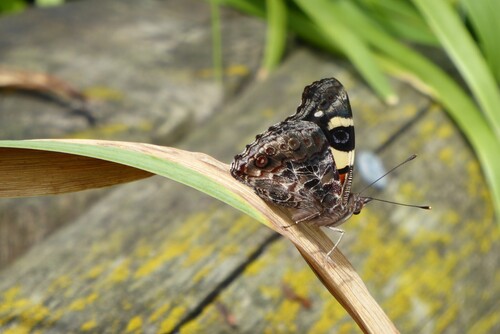
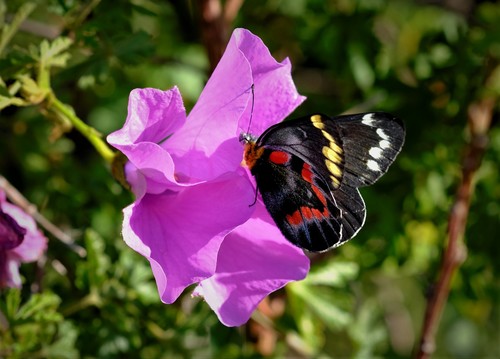
Delias aganippe, the wood white or red-spotted Jezebel, is a butterfly in the family Pieridae. The Red Spotted Jezebel (Delias aglaia) is a striking butterfly known for its vibrant and contrasting coloration. The upper side of the forewings is predominantly black with a white band, which appears grey in males and cream in females. The underside of the hindwings showcases bright red and yellow spots [1]. Notably, the hindwings are without tails, and the butterfly features clubbed antennae. With a wingspan reaching up to 7 cm, this butterfly is both conspicuous and visually captivating [2].

Delias aganippe can reach a wingspan of about 60–70 mm (2.4–2.8 in) [3]. The upper surface of the wings shows a silver-grey colour, with black margins and a row of white spots. Moreover, the females have a round black spot in the middle of the forewings. In both sexes, the underside of the hindwings shows large yellow patches and subterminal bands of red spots

Red Spotted Jezebels are most commonly observed during the summer months. Their life cycle is closely linked to mistletoe plants, on which they breed [4]. Males are known to patrol the tallest trees on... Wikipedia →

Global Distribution

Parks Where Found

# Park Country Daily sighting probability
1 Grampians National Park 🇦🇺 Australia
~10%
2 Great Otway National Park 🇦🇺 Australia
~10%
3 Blue Mountains National Park 🇦🇺 Australia
<5%

Cities Where Found

# City Country Daily sighting probability
1 Melbourne 🇦🇺 Australia
<5%
2 Brisbane 🇦🇺 Australia
<5%
3 Sydney 🇦🇺 Australia
<5%

Before you go

What are the chances of seeing a Red-Spotted Jezebel in Melbourne?

Rare

Under 5% of wildlife watchers report a Red-Spotted Jezebel sighting in Melbourne on a given day, based on 47 verified sightings from GBIF citizen-science data. It is the 256th most-seen of the 875 insects we can rate there. Over three days the chance rises to about 10%, and over a week to about 30%, if each day is a fresh chance.

When is the best time to see a Red-Spotted Jezebel in Melbourne?

March and December

In those months about 10% of wildlife watchers report a Red-Spotted Jezebel in Melbourne on a given day, against under 5% in January–February and April–November, the lowest months.

What time of day is best to see a Red-Spotted Jezebel?

Between 11 am and 2 pm

Across all the parks we cover, that three-hour window holds the most Red-Spotted Jezebel sightings with a recorded time, and nearly all of them come between 6 am and 6 pm: it is a daytime animal.

Is Melbourne the best place to see a Red-Spotted Jezebel?

Yes

Of the 3 cities where we can rate Red-Spotted Jezebel sightings, Melbourne has the highest daily chance: under 5%. Next come Brisbane (Australia, under 5%) and Sydney (Australia, under 5%).

Where does the Red-Spotted Jezebel sighting chance come from?

GBIF citizen-science records

It is estimated from how often the Red-Spotted Jezebel is recorded against all the insects logged in Melbourne (47 verified sightings), calibrated against known sighting rates. Figures are rounded to the nearest 10% because citizen-science data supports honest approximations, not decimals, and months with records from fewer than five people show "—". How it works.

← Back to Melbourne