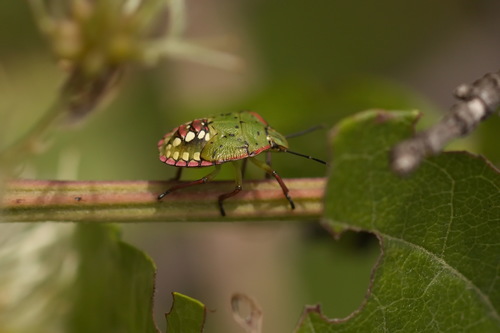
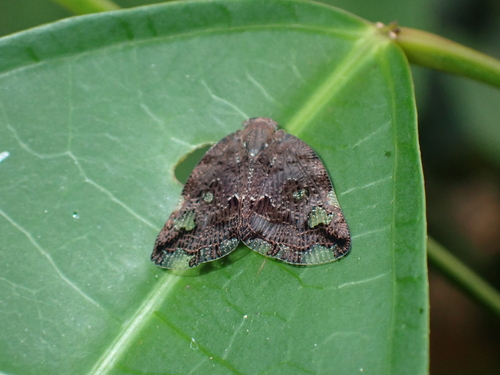
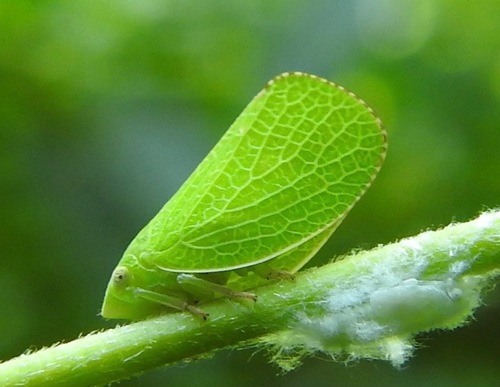
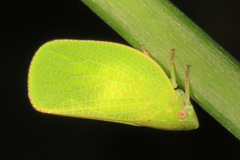
Green Cone-Headed Planthopper

Green Cone-Headed Planthopper

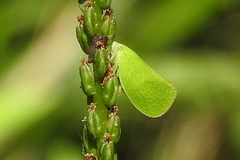
Acanalonia conica

Daily sighting probability ~10% · With luck
at Milan

In 3 days ~30% in a week ~50%

40 Verified sightings at Milan
26 In all 2 parks From 2019 to 2026
July Best month
☀️🌙 Day & Night When it's spotted

About the Green Cone-Headed Planthopper

Acanalonia conica is a species of planthopper in the family Acanaloniidae. It is found in North America and Europe. More accurately, it is native to North America, and was first found in Europe in Italy in 2003, most likely through human activity. It has since spread throughout Europe.

The species is native to the Nearctic realm, but has been found in Northern Italy for the first time in 2003. It was then found in Slovenia, Switzerland, France, Hungary, Austria, Romania, Bulgaria and Russia. A. conica is known to be a very polyphagous species, capable of developing on diverse host plants, including cultivated species. Since its introduction in Italy, the species has been observed to form populations much denser than the ones in its native range. It was estimated that due to its similarities to another introduced planthopper, Metcalfa pruinosa, it is at risk of spreading further and becoming a pest.

In its native range, A. conica is very often living in association with three flatid planthopper species. The species has only one generation per year (univoltine). Eggs are laid in the summer and in the Autumn, individually encased in concavities... Wikipedia →
Global Distribution

Parks Where Found

# Park Country Daily sighting probability
1 Shenandoah National Park 🇺🇸 United States
~10%
2 Great Smoky Mountains National Park 🇺🇸 United States
<5%

Cities Where Found

# City Country Daily sighting probability
1 Milan 🇮🇹 Italy
~10%
2 Turin 🇮🇹 Italy
~10%
3 Washington 🇺🇸 United States
~10%
4 Boston 🇺🇸 United States
~10%
5 Baltimore 🇺🇸 United States
~10%
6 Minneapolis [Saint Paul] 🇺🇸 United States
~10%
7 Austin 🇺🇸 United States
~10%
8 Toronto 🇨🇦 Canada
~10%
9 Bucharest 🇷🇴 Romania
~10%
10 Chicago 🇺🇸 United States
~10%

Before you go

What are the chances of seeing a Green Cone-Headed Planthopper in Milan?

With luck

About 10% of wildlife watchers report a Green Cone-Headed Planthopper sighting in Milan on a given day, based on 40 verified sightings from GBIF citizen-science data. It is the 76th most-seen of the 351 insects we can rate there. Over three days the chance rises to about 30%, and over a week to about 50%, if each day is a fresh chance.

When is the best time to see a Green Cone-Headed Planthopper in Milan?

July

In that month about 30% of wildlife watchers report a Green Cone-Headed Planthopper in Milan on a given day, against under 5% in October to May, the lowest months.

What time of day is best to see a Green Cone-Headed Planthopper?

Between 9 am and noon

Across all the parks we cover, that three-hour window holds the most Green Cone-Headed Planthopper sightings with a recorded time, and about 6 in 10 of them come between 6 am and 6 pm: it is seen both by day and at night.

Is Milan the best place to see a Green Cone-Headed Planthopper?

Yes

Of the 18 cities where we can rate Green Cone-Headed Planthopper sightings, Milan has the highest daily chance: about 10%. Next come Turin (Italy, about 10%) and Washington (United States, about 10%).

Which relatives of the Green Cone-Headed Planthopper live in Milan?

Same order: Hemiptera

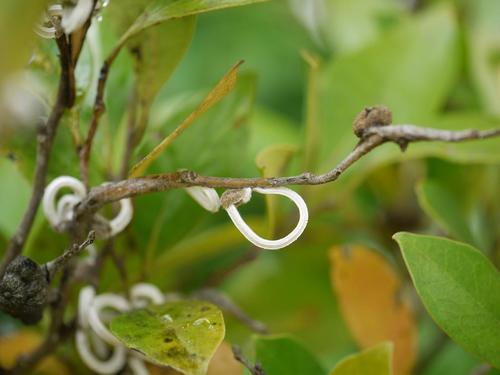
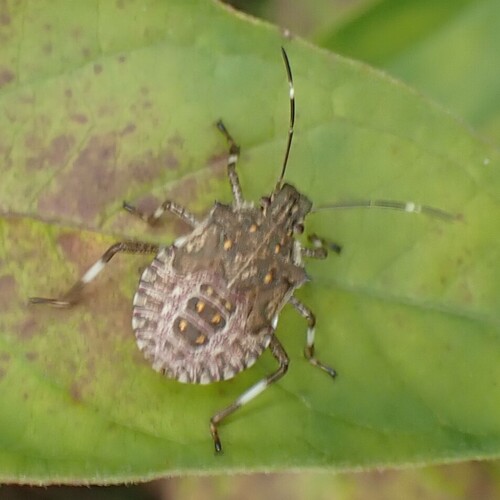
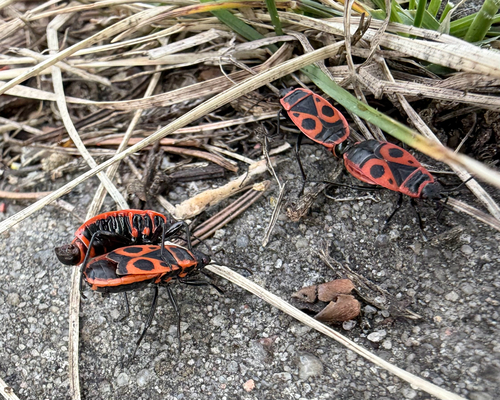
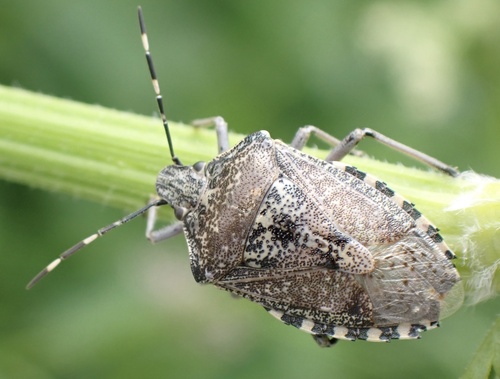
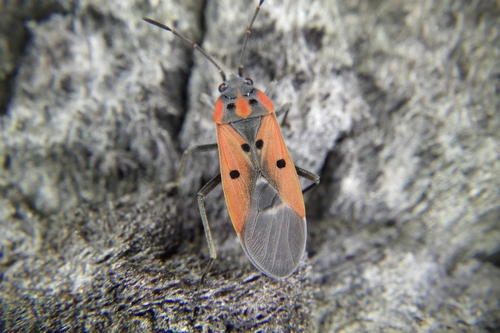
The closest relatives of the Green Cone-Headed Planthopper that you can see in Milan (order Hemiptera, True Bugs, Hoppers, Aphids, and allies) are String Cottony Scale (about 30%), Brown Marmorated Stink Bug (about 20%) and European Firebug (about 20%), with each one's daily chance of a sighting.

Where does the Green Cone-Headed Planthopper sighting chance come from?

GBIF citizen-science records

It is estimated from how often the Green Cone-Headed Planthopper is recorded against all the insects logged in Milan (40 verified sightings), calibrated against known sighting rates. Figures are rounded to the nearest 10% because citizen-science data supports honest approximations, not decimals, and months with records from fewer than five people show "—". How it works.

← Back to Milan